7 Best Needlepoint Frames For Small Projects To Try
Discover the 7 best needlepoint frames for small projects. This guide compares top options to help you choose the perfect frame for your next craft endeavor.
Finding the right frame for small-scale needlepoint is much like selecting the perfect set of circular needles for a delicate lace project; it fundamentally changes your tension and comfort. A well-chosen frame acts as an extension of your hands, allowing you to focus on stitch placement rather than fighting the fabric. Whether you are working on a tiny ornament or a detailed coaster, the right support system prevents hand fatigue and keeps your stitches uniform. Here are seven frames that elevate the small-project experience from a chore to a craft.
Evertote Lap Stand: Best Overall Frame Choice


The Evertote Lap Stand is a favorite among needleworkers who value portability without sacrificing the sturdy support of a floor stand. It sits comfortably on your lap, keeping your work at eye level and freeing up both hands for complex needle manipulation.
This stand excels because it is highly adjustable, allowing you to tilt and rotate your project to find the perfect angle for your wrists. When you are working on small, intricate designs, being able to flip your work to check the back for clean starts and stops is invaluable.
The trade-off here is the learning curve for the assembly, as it requires a bit of fiddling to get the tension just right. However, once it’s set up, it provides a stable, ergonomic platform that rivals much larger, more expensive systems.
Needlework System 4: Top Choice for Stability

If you suffer from hand tremors or simply prefer a rock-solid work surface, the Needlework System 4 is the industry gold standard. Its heavy-duty construction ensures that your frame doesn’t wobble, which is critical when you are working on fine-gauge canvas.
Stability matters because it allows for consistent tension, much like using a fixed-circular needle keeps your gauge steady compared to slippery double-pointed needles. When your frame is immovable, you can focus entirely on the rhythm of your stitching.
The main downside is the significant footprint and the price, which represents a serious investment. If you are a casual hobbyist, this might be overkill, but for a dedicated stitcher, it is a lifetime tool that pays for itself in comfort.
Edmunds Universal Craft Stand: Best Versatility
The Edmunds Universal Craft Stand is a classic for a reason: it adapts to almost any frame you already own. If you have a collection of small hoops and scroll frames, this stand acts as a neutral base that accommodates them all.
It is particularly useful for those who switch between different project sizes frequently. You aren’t locked into a proprietary system, meaning you can swap out a small hoop for a slightly larger frame without buying a new stand.
Because it uses a universal clamping mechanism, it can feel less "locked in" than dedicated systems. You will need to tighten the knobs occasionally, but for the price, the flexibility it offers is hard to beat.
Lowery Workstand: Best for Ergonomic Comfort
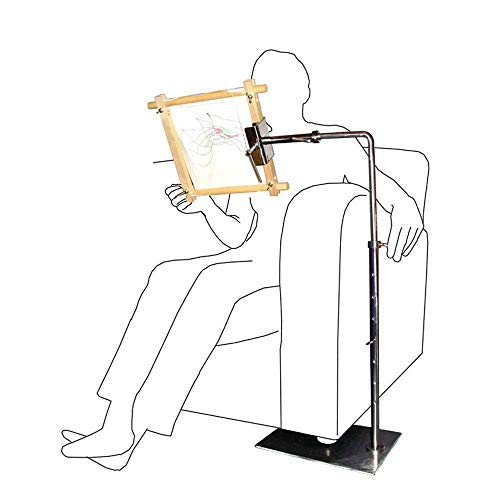
The Lowery Workstand is designed with the human body in mind, featuring a unique "L" shape that allows it to slide right under your favorite chair. It brings the work to you, rather than forcing you to hunch over your lap.
For those of us who spend hours stitching, this ergonomic advantage is the difference between finishing a project and having to stop due to neck or shoulder strain. It is a game-changer for maintaining good posture during long sessions.
The primary trade-off is the height adjustment, which can be a bit stiff until it’s broken in. It is a highly specialized piece of gear, but for those who prioritize long-term physical comfort, it is worth every penny.
Omanik Frame: Best for Precision Tensioning

The Omanik frame is a masterpiece of engineering, specifically designed for those who obsess over drum-tight fabric. Its tensioning system is incredibly precise, allowing you to pull your canvas taut without distorting the weave.
In fiber arts, consistent tension is the secret to a professional finish; just as uneven yarn tension ruins a sweater, loose canvas ruins a needlepoint piece. This frame ensures your stitches sit perfectly flat every time.
The complexity of the system means it takes longer to mount your fabric initially. If you prefer to jump straight into a project, this might feel tedious, but the results are undeniably superior for detailed work.
Elbesee Versatile Seat Frame: Best for Travel

The Elbesee Versatile Seat Frame is the ultimate companion for the stitcher on the move. It is lightweight, compact, and designed to be held in place by your own weight while you sit, making it perfect for stitching in a car or at a café.
It is surprisingly sturdy for something so portable, providing just enough tension to keep your work steady. It won’t replace a heavy-duty floor stand, but it is excellent for small, quick projects that you want to take on the go.
Because it relies on your seating position, it can be slightly less ergonomic than a dedicated floor stand. If you have back issues, ensure you are sitting in a supportive chair when using this frame.
Q-Snap Needlecraft Frame: Best Budget Option

The Q-Snap is a staple in the needlepoint community, functioning much like a plastic embroidery hoop but with a square shape that prevents the "creasing" you often get with round hoops. It is inexpensive, lightweight, and incredibly easy to use.
This is the perfect entry-level tool for beginners who aren’t ready to invest in a stand. It holds fabric firmly and allows you to move the frame around your work easily as you complete different sections of your design.
The trade-off is that it doesn’t provide the same hands-free experience as a stand. If you find that holding a frame causes hand cramping, you may eventually want to upgrade to a floor or lap stand.
How to Choose the Right Frame for Your Project
- Project Size: Small projects often benefit from handheld frames, while larger pieces require the support of a stand.
- Ergonomics: Consider where you sit most often; a floor stand is better for a sofa, while a lap stand works well for a recliner.
- Tension Needs: If your project requires perfect, even tension, prioritize a frame with a screw-tightening mechanism.
- Portability: If you take your stitching to meetings or travel, look for frames that break down quickly and fit into a tote bag.
Understanding Frame Tension and Fabric Care
Maintaining proper tension is about finding the balance between "tight" and "distorted." If you pull your canvas too tight, you risk warping the grid, which makes it nearly impossible to keep your stitches square.
Always start by securing your fabric in the center and working outward, similar to how you would block a wet sweater to ensure even shape. Avoid leaving your project in the frame for months at a time, as the pressure can create permanent indentations in the canvas fibers.
When you finish a session, it is good practice to loosen the tension slightly if you aren’t going to pick it up for a few days. This simple habit preserves the integrity of your fabric and ensures your final piece looks crisp and professional.
Essential Tips for Maintaining Your Frame Setup
- Check Hardware: Periodically tighten all wingnuts and screws, as vibration during stitching can loosen them over time.
- Protect Your Fabric: If your frame has wooden edges, consider wrapping them in soft cotton tape to prevent snagging delicate threads.
- Clean Surfaces: Wipe down plastic or metal frames to remove hand oils, which can attract dust and eventually stain your fabric.
- Invest in Accessories: Consider adding a magnifying lamp or a pattern holder to your setup to reduce eye strain and keep your charts organized.
Selecting the right frame is a deeply personal choice that depends as much on your physical comfort as it does on your specific project needs. By testing these options, you will eventually find the system that allows your hands to move with ease and your stitches to shine. Remember that tools are meant to serve your creativity, so don’t be afraid to experiment until you find the perfect fit. Happy stitching, and may your tension remain as steady as your passion for the craft.