6 Best Sewing Needles For Finishing Seams To Try
Discover the top six sewing needles for flawless seam finishing. Learn which specialized tips and sizes ensure professional, durable results for every fabric.
There is nothing more heartbreaking than finishing a beautiful, hand-knit sweater only to have the seams look bulky or uneven. The secret to a professional finish often hides in the tiny, overlooked tool at the end of your project: the finishing needle. Choosing the right needle is just as important as choosing your yarn, as it dictates how smoothly your tail weaves through delicate stitches. Here are the tools I rely on to ensure every seam looks like it came straight from a boutique.
Clover Chibi Bent Tip Needles: Best Overall Choice


These needles are a staple in my notions bag for a reason. The bent tip allows you to slide under stitches without splitting the yarn, which is a common frustration when using straight needles.

When you are working with a complex cable pattern or a dense, twisted stitch, that slight curve acts like a hook. It finds the path of least resistance through your fabric, making the weaving process significantly faster.
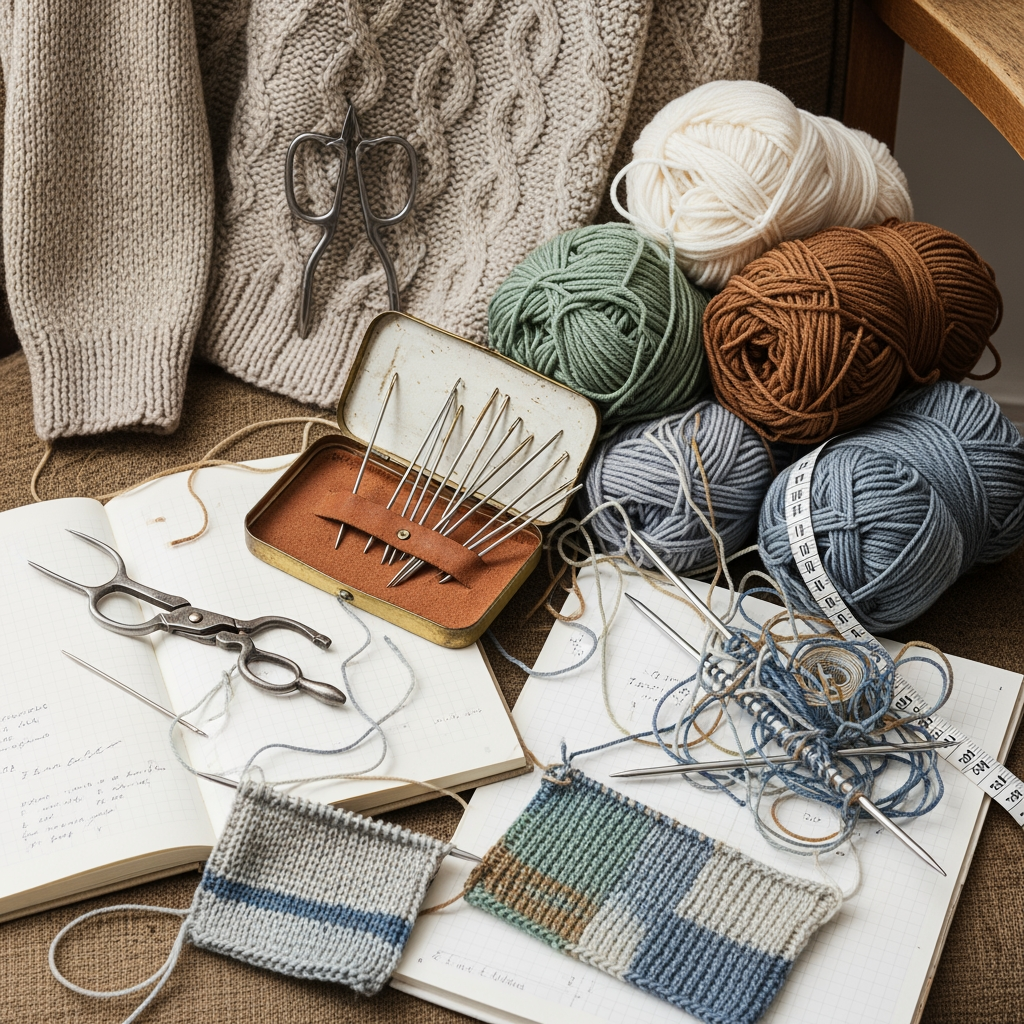
The set comes in a convenient carrying case, which is a lifesaver for those of us who tend to lose small tools in the couch cushions. If you only buy one set of finishing needles, make it this one.
Bohin Extra Fine Tapestry Needles: For Fine Yarn

When you are working with lace-weight yarn or delicate fingering-weight wool, a standard needle often feels like a sledgehammer. Bohin needles are incredibly slim, allowing them to pass through fine stitches without distorting the fabric.
Their extra-fine gauge means you can weave ends into even the tightest ribbing without adding unwanted bulk. This is essential for delicate garments where you want the seam to remain flexible and invisible.
Because they are so fine, they can be slightly more prone to bending if you force them through heavy wool. Use these specifically for your luxury fibers and light-weight projects to keep them in top shape.
Dritz Yarn Darner Needles: Best For Thick Fibers
If you are working with chunky, super-bulky yarns, a standard tapestry needle will often be too small to thread comfortably. Dritz Yarn Darners are long and sturdy, designed specifically to handle those thick, roving-style yarns.

The length is a major advantage here. It allows you to weave in long tails in one or two passes, which is much more secure for heavier garments that experience more stress at the seams.
While they are excellent for thick fibers, they are not suitable for anything finer than a worsted weight. Keep these in your kit for your winter sweaters and home decor projects like heavy blankets.
Susan Bates Finishing Needles: Best Value Option
You do not always need high-end materials to get a professional result. Susan Bates needles are the reliable workhorses of the knitting world, offering consistent quality at an accessible price point.
These needles are typically made from polished steel, which offers a nice glide against most natural fibers. They are perfect for beginners who are still learning how to weave in ends and might be prone to losing their tools.
While they may not have the ergonomic bent tip of more expensive options, they are incredibly durable. They are a fantastic "utility" choice for everyday projects where you just need to get the job done.
Tulip Tapestry Needles: Best For Delicate Seams
Tulip needles are renowned for their high-quality manufacturing and incredibly smooth eyes. When you are working with silk, mohair, or expensive cashmere, you want a needle that won’t snag the fibers.
The eye of a Tulip needle is polished to perfection, meaning your yarn won’t fray as you pull it through the seam. This is critical for fibers that are prone to splitting or pilling under friction.
They feel substantial in the hand, offering a level of control that lighter needles sometimes lack. If you are finishing a heirloom-quality project, these are well worth the investment.
ChiaoGoo Stainless Steel Needles: Most Durable

ChiaoGoo is a brand that understands the mechanics of knitting, and their finishing needles are no exception. These stainless steel needles are virtually indestructible and resistant to rust or corrosion.
Because they are made of steel, they are slightly heavier than plastic or aluminum alternatives. This weight can actually help you maintain consistent tension as you weave, as the needle pulls the yarn through with gravity.
They are an excellent choice for knitters who work with damp-blocking or steam-blocking techniques. Since they won’t react to moisture, they are the safest option for wet-finishing your garments.
Why Needle Eye Size Matters For Seamless Finishes
The eye of your needle should be large enough to thread your yarn without excessive fraying, but not so large that it stretches your stitches. If the eye is too wide, you will inevitably distort the surrounding fabric as you pull the needle through.
Always aim for a needle where the yarn fills about 70-80% of the eye’s width. This provides a secure hold on the yarn while keeping the profile of the needle as slim as possible.
- Too small: The yarn bunches up and frays, making it impossible to thread.
- Too large: The needle leaves a permanent, unsightly hole in your finished fabric.
Understanding Bent Tips Versus Straight Needle Tips
Bent tips are designed for efficiency and ease of entry. By angling the tip, you can easily "scoop" up the loops of your stitches without having to maneuver your wrist at an awkward angle.
Straight needles, however, offer more precision for specific techniques like duplicate stitch or grafting. When you need to follow a very specific path through a stitch, a straight tip allows for better visibility and control.
- Bent tips: Best for general seaming, mattress stitch, and speed.
- Straight tips: Best for intricate embroidery, kitchener stitch, and tight, detailed work.
How To Select The Right Needle For Your Fiber Type
Matching your needle to your fiber is the difference between a clean seam and a tangled mess. For slick fibers like bamboo or silk, you want a needle with a slightly grippy surface or a balanced weight.
For grippy fibers like high-twist wool or mohair, you need a very smooth, polished needle. This prevents the needle from catching on the "hooks" of the wool fibers, which can cause the yarn to break or the seam to look fuzzy.
- Superwash wool: Use a smooth steel or nickel-plated needle.
- Mohair/Angora: Use a blunt, polished needle to avoid snagging the halo.
- Cotton/Linen: Use a slightly larger, blunt needle to prevent splitting the individual plies.
Pro Tips For Achieving Professional Seam Tension
The biggest mistake I see beginners make is pulling their seam too tight. A seam should have the same elasticity as the rest of your fabric; if you pull it too hard, the seam will pucker and ruin the drape of your garment.
When weaving in ends, always follow the path of the stitch (the "v" shape). This makes your weaving invisible and ensures that the yarn tail is locked securely into the structure of the fabric.
Finally, remember to block your piece before you weave in your ends. The fabric will shift and settle during the blocking process, and you don’t want your carefully woven seams to become loose or distorted once the garment is dry.
Mastering the art of finishing is what separates a homemade project from a professional-looking garment. By selecting the right needle for your specific yarn and project, you ensure that your hard work stays secure and beautiful for years to come. Take the time to experiment with these different types, and you will soon find the tools that perfectly complement your personal knitting style. Happy seaming, and may all your ends be perfectly hidden.