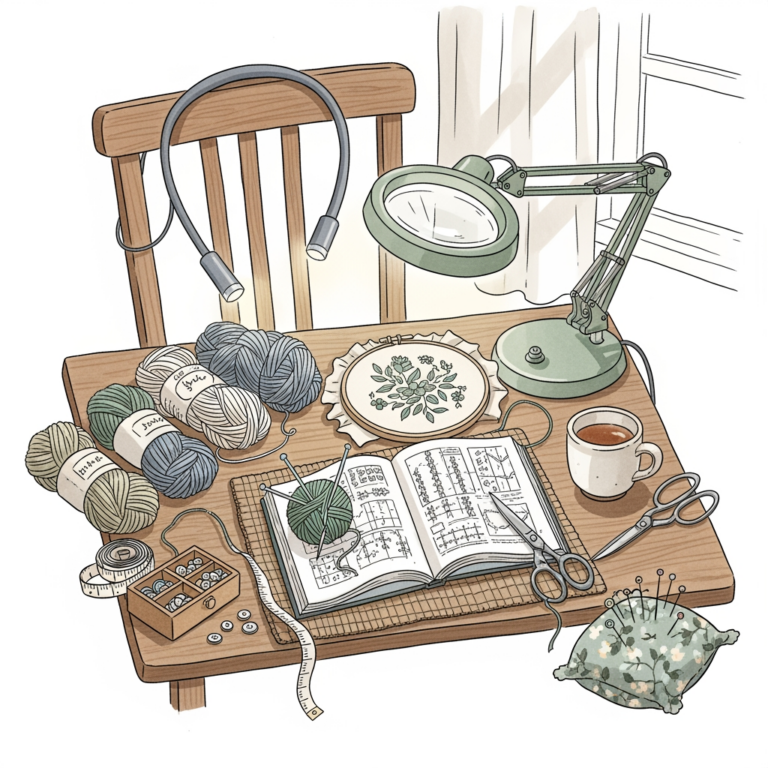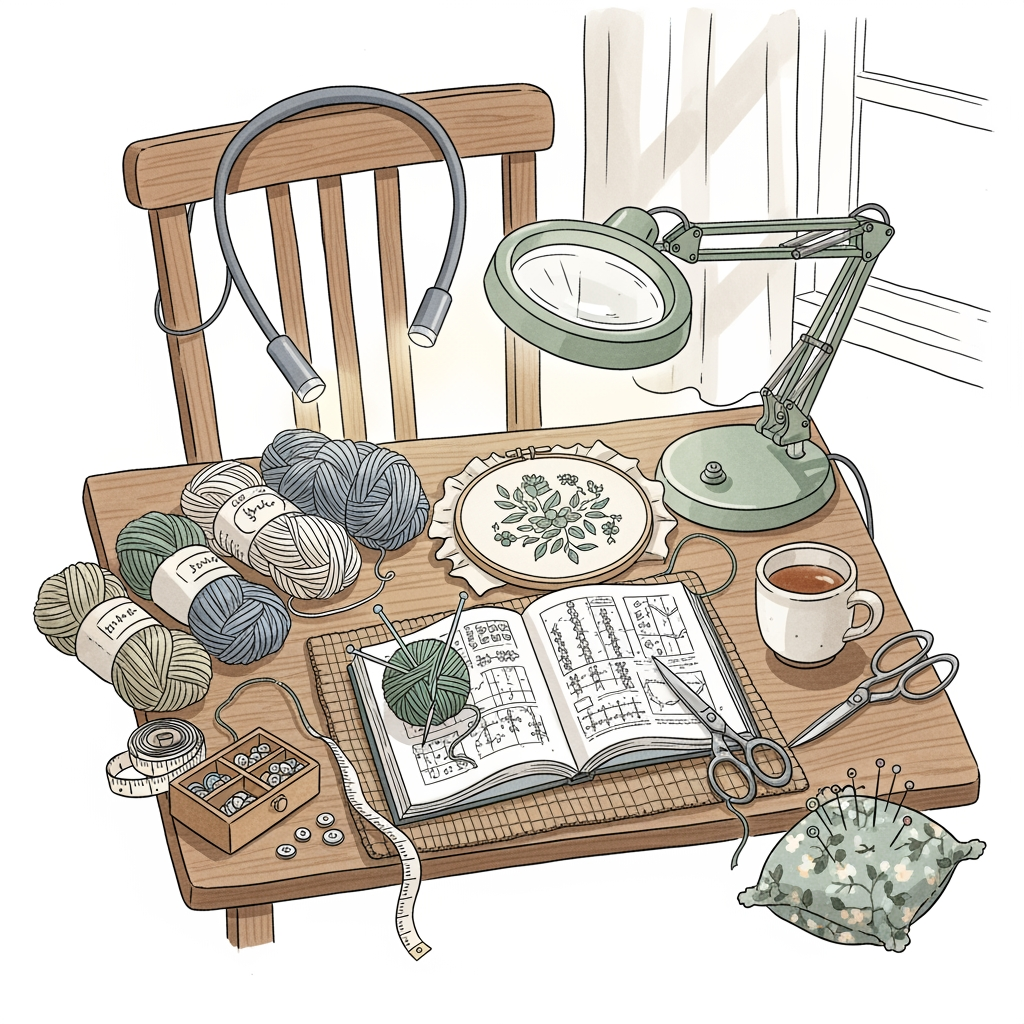
7 Best Dimmable Lamps For Evening Knitting Sessions
Illuminate your craft with our top seven dimmable lamps. We evaluate brightness, color accuracy, and flexibility to enhance your evening knitting comfort.
Knitting by candlelight might sound romantic, but your eyes will certainly pay the price during a late-night lace project. Finding the right light is just as essential as choosing the correct needle size or fiber content for your pattern. A dedicated dimmable lamp transforms your evening stitching from a squinting struggle into a relaxing, productive ritual. These seven selections are designed to keep your stitches sharp and your tension consistent long after the sun goes down.
Brightech LightView Pro: Best Overall Magnifier
If you are working on intricate cable charts or fixing a dropped stitch in a dark mohair blend, a standard lamp often falls short. The LightView Pro integrates a high-quality magnifying lens directly into the light source, which is a game-changer for detailed work.
This is particularly useful when you are navigating the "invisible" stitches of dark-colored fibers or working with fine-gauge lace. The magnification allows you to see the ply of the yarn clearly, ensuring you aren’t accidentally splitting a strand while picking up a loop.
The trade-off here is the weight of the head; it can be a bit heavy on the neck, so ensure your workspace allows for a stable base. Bottom line: This is your best friend for complex patterns where precision is non-negotiable.
OttLite 2-in-1 LED Floor Lamp: Best Versatility


Every knitter knows the frustration of switching between a comfy armchair and a dedicated project desk. The OttLite 2-in-1 is built for this exact scenario, transitioning seamlessly from a full-height floor lamp to a compact table-top unit.
I recommend this for knitters who frequently move their projects between the living room and a craft room. Because it offers multiple brightness settings, you can dial down the intensity when you’re working on mindless garter stitch rows and crank it up for complex colorwork.
Keep in mind that the base footprint is somewhat wide, so measure your floor space near your favorite knitting chair. Bottom line: It is the ultimate utility player for knitters who need one lamp to do it all.
Verilux Heritage Floor Lamp: Best Full Spectrum

Color accuracy is the most overlooked aspect of knitting, especially when you are working with variegated yarns or matching dye lots. The Verilux Heritage mimics natural daylight, which prevents the "yellow cast" that often tricks your eyes into misidentifying subtle shade differences.
When you are stranded colorwork knitting, seeing the true contrast between your main color and contrast color is vital. If your light is too warm, two different blues might look identical, leading to a disastrous mistake in your pattern repeat.
The lamp’s design is elegant and fits well in a living room, though it lacks the extreme adjustability of a task-specific arm. Bottom line: Choose this if you prioritize color fidelity above all else in your projects.
Neatfi XL 2,200 Lumens LED: Best Task Lighting
When you are working on a massive project like a king-sized blanket, you need a wide, expansive beam of light to cover your lap. The Neatfi XL provides a massive 20-inch wide lamp head that illuminates your entire knitting area without needing to constantly reposition the light.
This lamp is a powerhouse for those long, marathon knitting sessions where you don’t want to break your rhythm to adjust your equipment. The 2,200 lumens provide a crisp, clean light that makes counting stitches across a long row much less taxing on your eyes.
Be aware that this lamp is industrial-looking and quite large, so it’s better suited for a dedicated studio space than a small apartment corner. Bottom line: The best choice for large-scale projects and wide-coverage needs.
TaoTronics LED Floor Lamp: Best Budget Choice
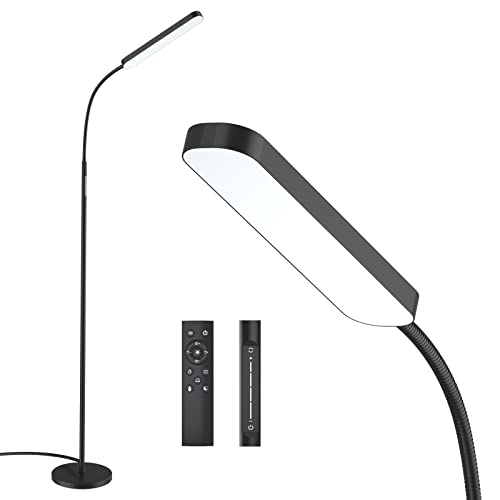
You don’t need to spend a fortune to get a reliable light source that saves your eyesight. The TaoTronics lamp offers a minimalist design with a surprisingly robust range of dimming and color temperature settings, making it an excellent entry-level choice.
It is perfect for students or beginners who are investing their budget into quality needles and natural fibers rather than expensive hardware. Despite the lower price point, the gooseneck design is surprisingly sturdy and holds its position well while you work.
The touch controls can be a little sensitive, so be careful not to bump them with your yarn ball while knitting. Bottom line: An honest, capable lamp that gets the job done without unnecessary frills.
Lepower Metal Floor Lamp: Best Modern Aesthetic

For many of us, our knitting area is also our living room, and we don’t want a piece of clinical medical equipment dominating the decor. The Lepower Metal Floor Lamp offers a sleek, industrial aesthetic that looks like a high-end furniture piece while providing focused, dimmable task lighting.
This is ideal for the knitter who values a clean, cohesive look in their home. It provides a directional beam that is perfect for highlighting your needles and yarn without flooding the entire room with light, which is great for late-night knitting while others are watching TV.
Because it is a directional lamp, you will need to adjust it occasionally as you progress through your row. Bottom line: The perfect marriage of interior design and functional knitting utility.
BenQ Genie Eye-Care Lamp: Best for Dark Yarns

Knitting with black or navy yarn is a rite of passage that usually ends in a massive headache. The BenQ Genie is specifically engineered to reduce flicker and glare, which are the primary culprits behind eye fatigue during long sessions with dark, low-contrast fibers.
The light curve is designed to spread light evenly, which prevents the "hot spots" of glare that reflect off slick metal or nickel-plated needles. When you are using dark yarn, that glare is your enemy; this lamp effectively kills it.
It is a significant investment, but for the knitter who loves the look of dark wool but hates the strain, it is worth every penny. Bottom line: Your best defense against the dreaded "black yarn fatigue."
Key Features to Look for in Knitting Task Lamps
- Dimmability: You need the ability to lower the light for relaxed knitting and brighten it for chart-reading.
- Color Temperature Control: Look for adjustable Kelvin settings; 3000K is soft for relaxing, while 5000K is crisp for identifying stitch details.
- Flexibility: A gooseneck or multi-pivot arm is essential for directing light exactly onto your needle tips.
- Flicker-Free Technology: Cheap LEDs flicker at a rate the eye can detect, causing rapid fatigue.
- Base Stability: Ensure the lamp won’t tip over if your yarn bowl tugs on the cord.
Why Color Rendering Index Matters for Knitters
The Color Rendering Index (CRI) measures how accurately a light source reveals colors compared to natural sunlight. For knitters, a high CRI (90+) is essential because it ensures that the deep plum yarn you are using doesn’t look like brown under your lamp.
If you are working on a project involving complex color transitions or ombré effects, a low CRI light will lead to color-matching errors. You might think you’ve matched your yarn perfectly, only to step outside and realize your project looks completely different.
Always check the product specifications for a CRI rating. If the manufacturer doesn’t list it, you are likely looking at a generic light that will compromise your color work.
Tips for Reducing Eye Strain During Night Knits
- The 20-20-20 Rule: Every 20 minutes, look at something 20 feet away for 20 seconds to reset your eye muscles.
- Use Contrast: If you struggle to see your stitches, place a light-colored pillow or a white knitting bag on your lap to create a high-contrast background.
- Adjust Your Position: Don’t hunch over your needles; bring the work closer to your eyes rather than bringing your eyes down to the work.
- Hydration and Breaks: Eye fatigue is often exacerbated by general physical fatigue; stand up and stretch your hands and shoulders every hour.
Investing in a quality lamp is just as important as choosing the right yarn for your next project. By choosing lighting that supports your specific needs—whether that is magnification for lace or high-CRI bulbs for colorwork—you protect your vision for decades of future making. Take the time to set up your knitting nook properly, and your eyes will thank you during those midnight casting-on sessions. Happy knitting, and may your stitches always be even and your light always bright.