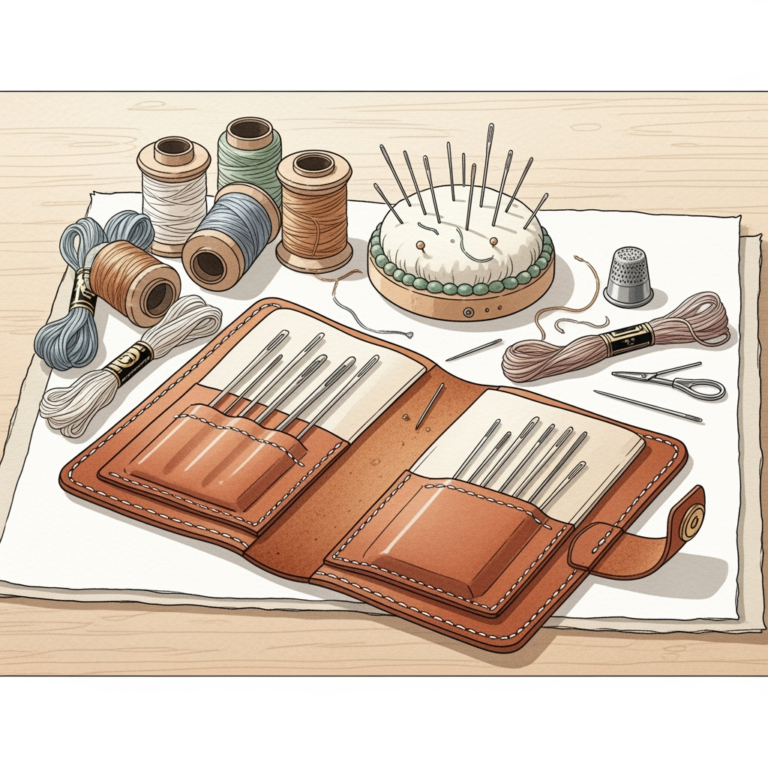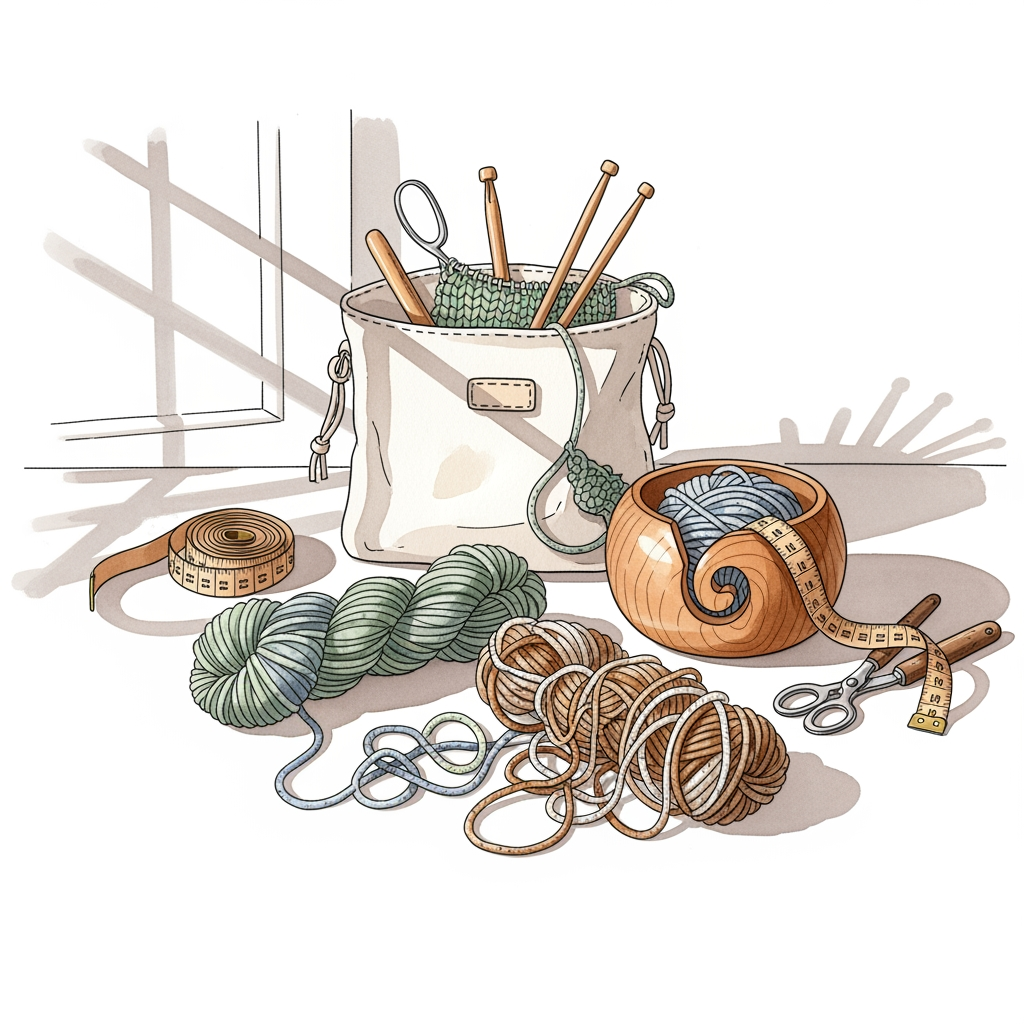
7 Best organized supply trays for workstation efficiency
Maximize productivity with our top 7 supply tray picks. Discover how these organized solutions declutter your desk and streamline your daily workflow today.
A cluttered workspace is the silent enemy of a smooth knitting flow, often turning a relaxing evening of lace work into a frustrating search for a dropped stitch marker. By curating your tools with intentional organization, you reclaim the mental space needed to focus on complex cable charts or delicate colorwork transitions. These seven supply trays offer distinct ways to manage your knitting ecosystem, ensuring your essential notions are always exactly where you need them. Investing in the right storage is just as important as choosing the perfect wool for your next heirloom project.
Muji Polypropylene Stackable Tray: Best Overall


These trays are the gold standard for knitters who appreciate minimalist, functional design. Their modular nature means you can build a system that grows alongside your stash of interchangeable needle tips and cable connectors.
The beauty of these trays lies in their neutral aesthetic, which doesn’t distract from the vibrant colors of your yarn. Because they are stackable, they maximize vertical space on a crowded desk without requiring a massive footprint.
However, they don’t have built-in dividers, so you will need to purchase small silicone inserts or use tiny bowls to keep your tapestry needles separate from your stitch counters. If you value a clean, uniform look that keeps your workspace calm, this is your best bet.
IKEA Godmorgon Box: Best for Large Tool Collections

If you have spent two decades accumulating every size of double-pointed needle and a vast array of crochet hooks, this is your solution. These boxes are deep enough to house long tools that usually poke out of standard organizers.
The transparent lid is a game changer for the forgetful knitter. You can instantly see if you’re running low on locking stitch markers or if your favorite row counter has migrated to the bottom of the box.
The primary trade-off is the sheer size; these take up significant real estate on a table. If your knitting station is a small lap desk, you might find these a bit cumbersome compared to slimmer options.
Martha Stewart Desktop Organizer: Best for Notions

This organizer is designed for the knitter who loves to keep everything categorized by task. With dedicated slots for scissors, measuring tapes, and gauge rulers, it turns a chaotic pile of notions into a curated collection.
It is particularly useful for those who work on multiple projects simultaneously. You can dedicate one section to your sock knitting essentials—like your 2.25mm needles and point protectors—and another to your bulky sweater tools.
Keep in mind that the vertical compartments are best for items that stand upright. If you have a collection of loose, tiny beads for decorative knitting, you might want to place them in a small jar before setting them in the tray.
Container Store Acrylic Tray: Best for Visibility

Acrylic trays are the ultimate tool for the knitter who needs to identify their gear at a glance. When you are in the middle of a complex lace repeat, you don’t want to be fumbling through opaque boxes to find your cable needle.
The crystal-clear material allows light to pass through, making it much easier to spot small, metallic items like tapestry needles or stitch holders. This visibility prevents the "lost tool" syndrome that often leads to mid-project panic.
The downside is that acrylic can scratch over time if you toss heavy metal circular needles into it daily. Consider lining the bottom with a small piece of felt to protect both your tray and your high-end needle tips.
Creative Options Pro-Latch Tray: Best for Portability
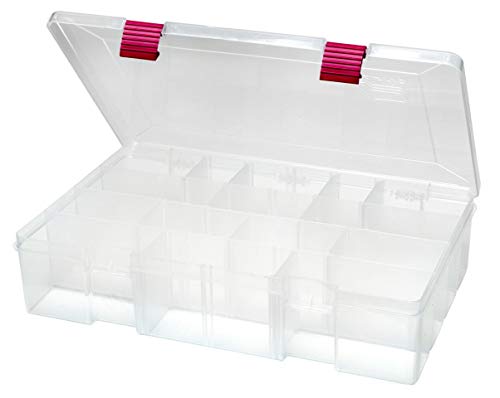
If you are a traveling knitter who frequently attends guilds or retreats, you need a secure way to transport your notions. The Pro-Latch system ensures that your stitch markers don’t end up scattered across the floor of your knitting bag.
These trays are incredibly durable and designed to withstand the wear and tear of being tossed into a tote. The latches are robust, meaning you won’t have to worry about accidental spills when you’re on the go.
While they are excellent for storage, the internal dividers are fixed. This means you have less flexibility to customize the space for unusually shaped tools like oversized pom-pom makers or bulky blocking pins.
InterDesign Linus Drawer Tray: Best for Small Spaces

These slim, low-profile trays are designed to slide into standard desk drawers, keeping your surface clear for your current knitting project. They are perfect for the knitter who works in a shared living space and needs to "hide" their tools quickly.
The shallow depth is ideal for notions that you use frequently but don’t want cluttering your workspace. You can keep your scissors, snips, and needle gauge perfectly aligned and ready for action.
Because they are shallow, they aren’t suitable for storing large quantities of yarn or circular needle sets in their original packaging. Use these for your "daily drivers" rather than your entire collection.
Rubbermaid Drawer Organizer: Best Budget Solution
Sometimes the most effective tool is the one you already have or can pick up for a few dollars. These basic plastic organizers are surprisingly effective for separating your notions by size or frequency of use.
They are lightweight and incredibly easy to clean if you happen to spill a bit of yarn dust or blocking spray. While they lack the "professional studio" look, they provide the exact same utility as more expensive brands.
Don’t be afraid to mix and match these in a drawer to create a custom layout that fits your specific needs. It’s a low-risk way to experiment with your workspace organization before committing to a more permanent system.
How to Design Your Ideal Knitting Workstation Setup
Your workstation should reflect how you actually knit, not just how you think you should knit. Start by placing your "always-on" tools—scissors, tape measure, and row counter—within arm’s reach of your dominant hand.
Consider your lighting situation carefully. If you are working with dark-colored wool, ensure your tray is placed under a bright, neutral light source to prevent eye strain and help you spot mistakes in your stitch pattern.
- Group by function: Keep all blocking tools in one area, and all "in-progress" notions in another.
- Prioritize accessibility: The tools you use every five minutes should be on top.
- Leave room to grow: Don’t fill every square inch; leave space for the inevitable new needles you’ll buy.
Essential Knitting Notions to Keep Within Reach
Beyond your needles and yarn, there are a few non-negotiables that should live in your tray. A high-quality pair of snips is vital for clean yarn ends, especially when working with high-twist wool that tends to fray.
Stitch markers are the most commonly misplaced item; keep a variety of styles, from locking markers for cables to simple rings for lace. A reliable needle gauge is also mandatory, as needle sizes can rub off over years of friction.
- Tapestry needles: Keep both bent-tip and straight options for weaving in ends.
- Measuring tape: Essential for checking gauge and garment length.
- Point protectors: Crucial for keeping stitches safe when you put your project down.
Maximizing Small Craft Spaces for Fiber Projects
If you are knitting in a small apartment, vertical storage is your best friend. Use wall-mounted pegboards above your desk to hold your trays or hang your most-used circular needles so they don’t tangle.
Focus on multi-functional furniture; a small side table with a drawer can act as both a coffee rest and a hidden home for your notions tray. Keep your yarn stash in clear bins underneath the desk to keep the visual clutter down.
Always remember that your space should support your creativity, not limit it. If a specific organizational system feels like a chore to maintain, change it; the goal is to spend more time knitting and less time searching for your gear.
Organizing your knitting workspace is a personal journey that evolves as your skills and project preferences change. Whether you opt for a stackable Muji tray or a simple budget-friendly drawer organizer, the goal remains the same: creating a frictionless environment where your creativity can thrive. Take the time to audit your tools, discard what you no longer use, and give your essential notions a proper home. Your future self, currently in the middle of a complex row, will thank you for the extra effort.