
7 Best Swivel Hooks For Crochet Edge Finishes
Discover the top 7 swivel hooks to elevate your crochet edges. This guide reviews essential tools for seamless, professional finishes on every project.
Achieving a professional, polished edge on your crochet projects often comes down to the precision of your tool. While "swivel" is a term more commonly used in swivel-base craft lamps or rotating project stands, the concept of a "swivel-friendly" hook refers to those that allow for fluid, non-binding wrist motion during intricate edging work. Selecting the right hook for delicate borders can transform a tedious task into a rhythmic, enjoyable experience. Here are the top choices to elevate your finishing work.
Clover Amour Crochet Hooks: Best Overall Choice


Clover Amour hooks are the gold standard for a reason: the perfect balance between a slick aluminum throat and a soft, grippy handle. When you are working on a dense picot edge or a complex shell border, you need a hook that glides through the yarn without snagging.
The elastomer handle is neither too squishy nor too firm, providing just enough resistance to prevent hand fatigue during long edging sessions. Because the aluminum head is perfectly smooth, it works exceptionally well with cotton thread or delicate lace-weight wools that tend to catch on cheaper, unpolished hooks.
If you struggle with hand cramping while working small-scale stitches, these are your best bet. The consistent shape of the hook head ensures your gauge remains steady even when you are tired. Bottom line: This is the most reliable, "buy it once" hook for any crocheter.
Tulip Etimo Rose Hooks: For Ergonomic Comfort

Tulip Etimo Rose hooks are widely considered the most comfortable tools on the market for those who spend hours perfecting a crochet border. The cushion grip is designed to sit naturally in the hand, reducing the need for a tight, tension-inducing grip.
The polished finish of the hook is distinct; it is slightly more refined than standard aluminum, which helps when you are pulling through multiple loops for a cluster stitch. This refinement allows the yarn to "swivel" or rotate over the hook head with minimal friction.
These are particularly useful for working with slippery fibers like silk or bamboo blends. Because the hook head is so smooth, you don’t have to fight the yarn to maintain your rhythm. Bottom line: Invest in these if you suffer from repetitive strain or work on large-scale afghan borders.
Addi Swing Crochet Hooks: Unique Angled Grip

The Addi Swing features a unique, ergonomic bend that forces your hand into a neutral position. This design is a departure from traditional straight-shaft hooks and requires a slight adjustment period to master the grip.
The primary benefit here is the way the handle forces your wrist to stay straight, which is crucial when you are working tight, intricate edging. By keeping your wrist aligned, you reduce the torque placed on your joints during the repetitive motions of a crochet border.
However, the plastic material can feel a bit "sticky" compared to metal if your hands tend to sweat. If you prefer a lighter tool, the weight distribution of the Swing can feel slightly bottom-heavy. Bottom line: A fantastic choice for those with arthritis who need to keep their wrists in a neutral, pain-free position.
Furls Odyssey Hooks: Best Heavyweight Option
Furls Odyssey hooks are constructed with a heavy, nickel-plated finish that provides a substantial feel in the hand. The weight of the hook actually does some of the work for you, helping to carry the yarn through the stitch with minimal effort.
This weight-forward design is excellent for creating consistent, even tension on decorative edges. Because the hook is heavy, you don’t need to exert as much downward pressure to pull the yarn through, which preserves your energy for longer projects.
The surface is incredibly slick, making it one of the fastest hooks for working with metallic threads or stiff cottons. Just be aware that the weight can be a drawback for some; if you have very sensitive wrists, the added mass might lead to quicker fatigue. Bottom line: Perfect for the crocheter who prefers a substantial, high-speed tool that glides effortlessly.
Boye Ergonomic Aluminum Hooks: Best Value Pick
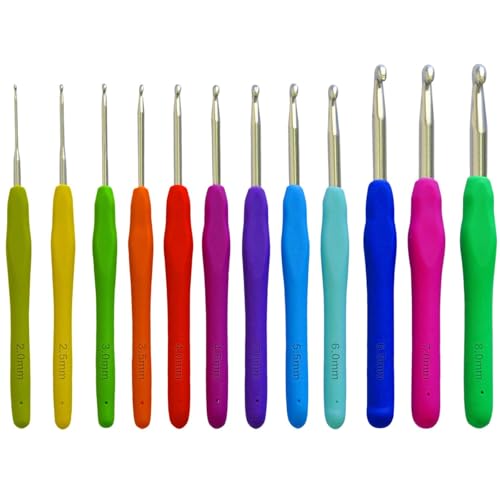
Boye hooks are the classic choice that many of us started with, but their ergonomic line offers a significant upgrade in comfort without a high price tag. They feature a simple, rubberized handle that provides a secure grip for beginners.
These hooks are ideal for those who are just learning to work with edging and don’t want to invest heavily yet. The aluminum head is durable and performs well across a variety of yarn weights, from chunky wool to fine lace thread.
While they lack the ultra-refined finish of more expensive brands, they are consistent and widely available. They are perfect for keeping in a travel kit or a secondary project bag. Bottom line: You get reliable, functional performance that won’t break the bank.
Susan Bates Silvalume Hooks: Classic Precision

Susan Bates hooks are famous for their "inline" head design, which is vastly different from the tapered heads found on most other brands. The deep, sharp throat is incredibly effective at grabbing yarn, which is a massive advantage when working complex edging stitches.
Because the hook is inline, it helps you maintain a very consistent stitch size, which is essential for uniform borders. If you find yourself accidentally dropping loops or having uneven stitches in your edging, the precision of a Susan Bates hook can help correct your technique.
The aluminum is lightweight and has a matte-like finish that prevents the yarn from sliding off too easily. This "grip" is actually a feature, not a bug, for those who find slick hooks too fast to control. Bottom line: The best choice for crocheters who prioritize stitch precision and control over sheer speed.
KnitPro Waves Hooks: Soft Grip for Beginners

KnitPro Waves hooks are a great middle-ground option, offering a soft-touch grip that is color-coded by size. This makes it incredibly easy to organize your collection and find exactly what you need at a glance.
The aluminum shafts are smooth and well-finished, providing a good balance between speed and control. They are neither too slick nor too grippy, making them a very forgiving tool for those still developing their crochet muscle memory.
These are an excellent entry point into ergonomic hooks. They provide enough comfort to prevent soreness without the steep learning curve of more radical handle shapes. Bottom line: A solid, reliable, and accessible option for any crocheter’s toolkit.
Why Swivel Hooks Enhance Crochet Edging Speed
When we talk about "swivel" in the context of edging, we are really talking about the ease of rotation. Edging often requires you to work in tight spaces or pivot the hook to pick up loops from a previous round.
A hook with a smooth, well-rounded head allows the yarn to slip and rotate naturally as you pull it through the fabric. If your hook is too sharp or poorly finished, the yarn will catch, forcing you to manually manipulate the hook or the yarn, which breaks your flow.
Consistency is the ultimate goal. When the hook moves fluidly, your brain stops focusing on the tool and starts focusing on the pattern. This is how you achieve that professional, uniform look on your finished blankets and garments.
Choosing the Right Hook Size for Lace Edging
- For fine lace thread: Use a 1.25mm to 1.75mm hook to ensure the stitches remain delicate and crisp.
- For standard yarn: Use a hook that is one size smaller than the one used for the main body of the project to help the edge lay flat.
- Check your gauge: Always crochet a small swatch of the border pattern first to see if the edge ruffles (hook too big) or pulls in (hook too small).
- Fiber matters: Use slicker hooks for sticky fibers like mohair and grippier hooks for slippery fibers like silk or rayon.
How to Maintain Your Crochet Hook Collection
Even the best hooks can lose their luster over time, especially if you work with abrasive yarns like wool-nylon blends. Periodically wipe your hooks down with a soft, lint-free cloth to remove skin oils and yarn residue.
If you notice a burr on an aluminum hook, you can gently smooth it out with a very fine-grit nail buffer. Never use harsh chemicals or abrasive scrubbers, as these will ruin the finish and cause the hook to snag your yarn.
Store your hooks in a dedicated case to prevent the heads from getting nicked or bent. A damaged hook head is the quickest way to ruin a delicate lace border, so treat your tools with the same care you give your hand-dyed yarns.
Choosing the right hook for your edging is a personal journey that balances ergonomics, yarn texture, and your own unique tension. Whether you prefer the weight of a Furls Odyssey or the precision of a Susan Bates inline hook, the best tool is the one that feels like an extension of your hand. Experiment with these options, pay attention to how your wrists feel, and you will find the perfect match for your next project. Happy crocheting!