6 Best Needle Sizers For Ergonomic Comfort To Own
Discover the 6 best ergonomic needle sizers designed to reduce hand strain. Learn how these tools improve precision and comfort for your next knitting project.
Every knitter has experienced the frustration of picking up a stray needle only to find the size markings have rubbed off entirely. Without a reliable way to verify your tool diameter, your carefully planned gauge swatch is essentially a shot in the dark. Investing in a high-quality needle sizer is the simplest way to ensure your project dimensions remain consistent from start to finish. Here are the six best tools to keep your knitting stash organized and accurate.
Susan Bates Knit Chek: The Classic Metal Standard
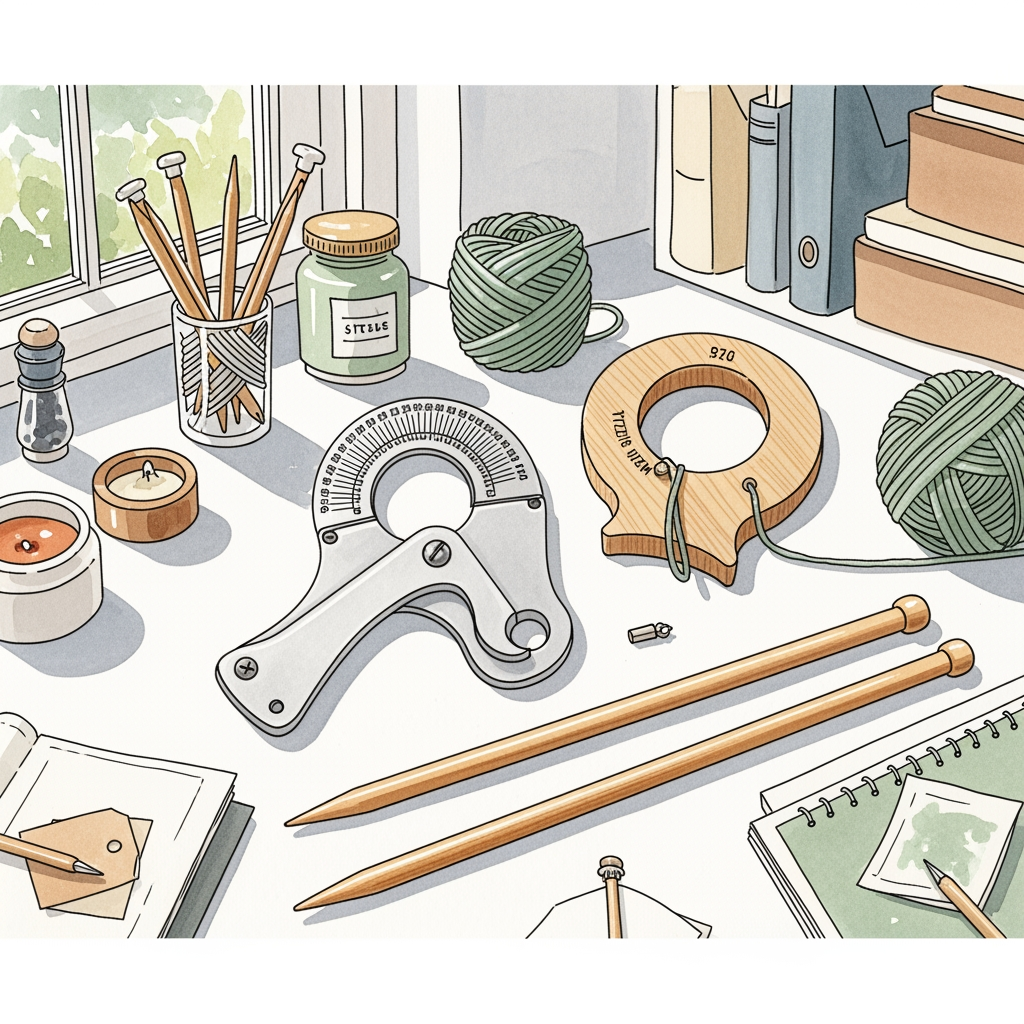
The Susan Bates Knit Chek is the tool most of us grew up using, and for good reason. It is a simple, no-nonsense aluminum plate that includes both a needle gauge and a handy ruler for measuring your swatch.
Because it is made of lightweight metal, it is incredibly durable and won’t warp or snap in your knitting bag. The holes are clearly punched, allowing you to slide your needle through quickly to find the perfect fit.
The tradeoff here is that the printed markings on the aluminum can eventually wear off with heavy use. However, the physical hole size remains constant, so you can always check your needle against the hole even if the ink fades.
Knitter’s Pride Ginger Needle Gauge: Best Wood Feel


If you prefer natural materials, the Knitter’s Pride Ginger gauge offers a beautiful, tactile experience. Crafted from the same birch wood as their popular needles, it feels warm and smooth in your hands.

This gauge is particularly helpful if you use wooden needles, as it doesn’t have the "clatter" or potential for scratching that metal tools might have. It adds a touch of elegance to your knitting kit that plastic or metal tools simply lack.
Keep in mind that wood can be slightly more susceptible to environmental changes than metal. It is a beautiful desktop tool, but avoid leaving it in a damp knitting bag where the wood might swell or warp over time.
ChiaoGoo Needle Gauge: The Precision Steel Choice
When you are working with fine lace or intricate sock projects, precision is non-negotiable. The ChiaoGoo needle gauge is made from high-quality stainless steel, ensuring that the holes remain perfectly round and true to size.
This gauge is exceptionally thin, making it easy to slip into a needle case or a pocket in your project bag. It feels like a professional engineer’s tool, which is perfect for those who appreciate the technical side of knitting.
Because it is steel, it is virtually indestructible. If you are the type of knitter who is hard on their tools, this is the one piece of equipment you will likely only ever need to buy once.
Cocoknits Maker’s Keep: Best Wearable Gauge Tool
The Cocoknits Maker’s Keep is a brilliant solution for the knitter who is always losing their notions. It is a magnetic slap bracelet that keeps your needle gauge and stitch markers literally at your fingertips.
This tool is a game-changer for those who find themselves constantly setting their gauge down and forgetting where it went. It keeps your essential measuring tool attached to your wrist while you work.
The gauge itself is made of sturdy, colorful plastic that is easy to read at a glance. It is a fantastic choice for those who value ergonomics and workflow efficiency above all else.
Clover Knitting Needle Gauge: Best Budget Option
Clover’s plastic needle gauge is the reliable workhorse of the knitting world. It is affordable, lightweight, and features a wide range of sizing options that cover almost every common needle diameter.
The plastic construction is gentle on your needles, ensuring you won’t accidentally scratch the finish of your expensive bamboo or carbon fiber tips. It is also bright and easy to spot at the bottom of a crowded yarn bin.
While it lacks the "heirloom" feel of metal or wood, its utility is unmatched for the price. It is the perfect tool to keep in a secondary project bag for when you are knitting on the go.
HiyaHiya Multi-Gauge: Best for Unusual Sizes

If you are a fan of vintage needles or specialty imports, you know the struggle of finding a size that doesn’t fit standard US or Metric charts. The HiyaHiya Multi-Gauge is designed to handle these oddities with ease.
It includes a wide variety of holes, including those for very small-diameter needles used in delicate lace or sock knitting. It is an essential tool for the collector who has a mix of needles from different eras and manufacturers.
The layout is logical and easy to navigate, even when you are tired after a long knitting session. It takes the guesswork out of "mystery needles" that have lost their original markings.
Why Needle Accuracy Matters for Your Gauge Swatch
Your gauge swatch is your map for the entire project, and the needle size is the primary variable you control. If you think you are using a 4mm needle but are actually using a 4.25mm, your finished garment could end up significantly larger than intended.
Consistency is the hallmark of an experienced knitter. By measuring your needles before you start, you ensure that your tension remains consistent across different projects and yarn types.
Never assume a needle’s size based on the label alone, especially with older needles or hand-carved tools. Always verify the diameter to ensure your stitch count matches your pattern requirements.
Understanding Metric vs US Needle Size Standards
Most of the world uses the Metric system (measured in millimeters), which is the most accurate way to define needle size. US sizes, by contrast, are often arbitrary and can vary slightly between manufacturers.
If you are following a pattern written in US sizes, always check the millimeter equivalent listed in the pattern introduction. Using a metric gauge will help you bridge the gap between different sizing systems.
When in doubt, trust the millimeter measurement. It is the universal language of fiber arts and will prevent the most common sizing disasters.
How to Prevent Needle Markings from Fading Away
The markings on your needles fade because of the constant friction against yarn and the oils from your hands. To protect them, you can apply a tiny amount of clear nail polish or a thin layer of specialized sealant over the printed size.
However, be careful not to create a raised texture that could snag your delicate fibers. A very thin, even coat is all you need to keep those numbers visible for years to come.
Alternatively, store your needles in individual sleeves or labeled pouches. Limiting the contact between needles in your storage case will significantly reduce the wear on the printed markings.
Tips for Measuring Needles with Worn Markings
If you have a needle with a completely faded label, use your needle gauge to find the smallest hole the needle fits through snugly. Do not force the needle; it should slide in with just a bit of resistance.
If a needle seems to fall between two sizes, use a digital caliper if you have one, or check your gauge swatch. Sometimes, a needle may be slightly non-standard due to its material or age.

Always measure the needle at the shaft, not the tip, where the diameter is most consistent. This is where your stitches are actually formed, so that is the measurement that truly dictates your gauge.
Choosing the right needle sizer is about more than just organization; it is about respecting the integrity of your hard work. Whether you prefer the weight of steel or the warmth of wood, having a reliable tool will save you from countless sizing headaches. Take the time to verify your needles before every cast-on, and your finished projects will thank you for the extra effort. Happy knitting, and may your gauge always be spot on.