6 Best Metal Dpns For Tight Tension To Try
Struggling with tight tension? Discover our top 6 metal DPN picks that offer the ideal glide and durability to make your intricate knitting projects easier.
Mastering tight tension requires more than just practice; it demands the right tools to navigate the resistance of your yarn. Metal double-pointed needles (DPNs) provide the necessary slickness to slide through even the most stubborn, tightly packed stitches. When your hands naturally grip the yarn with force, these six options offer the structural integrity and surface speed you need. Choosing the right metal needle can transform a frustrating, cramp-inducing project into a smooth, rhythmic experience.
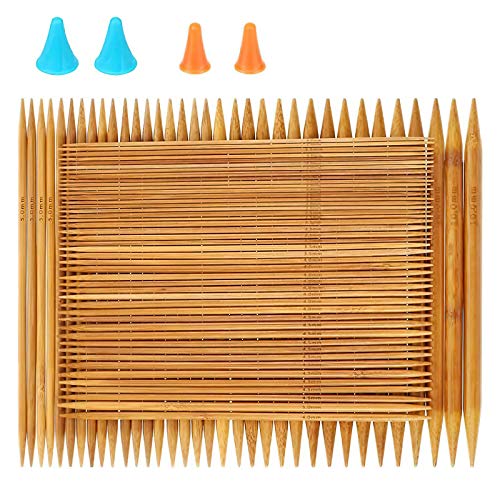

ChiaoGoo Red Lace DPNs: The Precision Choice

ChiaoGoo Red Lace needles are the gold standard for knitters who demand a razor-sharp tip. When you are working with a tight gauge, these needles act like a surgical tool, easily piercing the center of a stitch to prevent splitting.
The stainless steel construction is incredibly durable and maintains its shape even after years of heavy use. Because the surface is exceptionally smooth, the yarn travels across the metal with minimal friction, which helps counteract the drag created by a tight grip.
However, the sharpness can be a double-edged sword for those who push the needle tip with their index finger. If you have a habit of "finger-driving" your needles, you might find the tips a bit aggressive during long sessions.
HiyaHiya Sharp Steel DPNs: For Tight Stitches

HiyaHiya Sharp Steel needles feature a polished finish that feels almost frictionless in your hands. This is a game-changer if you struggle with "death grip" tension, as the needle does the work of sliding through the loops for you.
The taper on these needles is long and sophisticated, allowing for easy manipulation of complex stitches like cables or bobbles. When working with tight tension, this taper helps you pick up stitches without distorting the surrounding fabric.
The primary tradeoff here is the weight; they are quite light, which is great for hand fatigue but might feel "fiddly" to knitters accustomed to heavier, wooden needles. They are a top-tier choice for those who want speed above all else.
Knitter’s Pride Nova Platina: Smooth Efficiency

Nova Platina needles are plated with chrome, giving them a slightly different "drag" than raw stainless steel. This subtle texture can actually be a benefit if you find that slicker needles cause your stitches to slide off too easily.
The tips are pointed but not overly aggressive, striking a balance between precision and comfort. If you are a knitter who tends to poke your fingertips, the Nova Platina offers a more forgiving experience than the sharper lace-style needles.
These needles are excellent for working with sticky fibers like wool or mohair, where a bit of surface glide is necessary to keep the yarn moving. They are a reliable, mid-range workhorse for any sock knitter’s kit.
Addi CraSyTrio Needles: Flexible DPN Solution
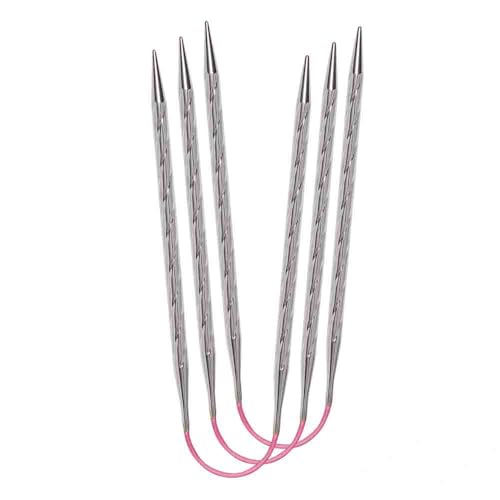
The Addi CraSyTrio isn’t a traditional set of DPNs, but a flexible, three-piece system that solves the "laddering" issue common with tight tension. By using a short cable to connect two ends, you eliminate the constant movement of multiple rigid needles.
This system is particularly effective for small circumferences like sock cuffs or mittens. Because the stitches are held on a flexible cord rather than a rigid stick, the transition between needles is much smoother and less prone to tension gaps.
It does require a slight adjustment period to get used to the mechanics of the system. Once you master the rhythm, however, it is arguably the most ergonomic way to manage tight, small-diameter knitting.
Signature Needle Arts: The Luxury Metal Option
Signature Needle Arts needles are precision-engineered in the USA and offer a weight and balance that is unmatched in the market. They are machined from high-grade aluminum, which provides a unique "click" and feel that many experienced knitters find deeply satisfying.
The standout feature here is the ability to choose your tip style—Stiletto or Middy. If you knit with extremely tight tension, the Stiletto tip is a dream for maneuvering through dense, compacted stitches.
These are an investment piece, certainly, but for a dedicated sock knitter, they offer a tactile experience that justifies the cost. They are exceptionally durable and resistant to bending, even in the smallest diameters.
Kollage Square DPNs: Ergonomic Metal Design

Kollage Square needles are a radical departure from the round norm, featuring a square cross-section that is designed to be easier on the joints. If your tight tension is causing hand or wrist pain, the flat sides provide a more natural surface to grip.
Many knitters report that the square shape actually helps them achieve a more even gauge. Because the stitches sit on a flat surface, they are less likely to "twirl" around the needle, resulting in a more consistent, professional-looking fabric.
The metal is firm and smooth, providing that classic metal-on-yarn glide. They are a must-try for any knitter dealing with arthritis or repetitive strain, as they require less pressure to hold securely.
Why Metal Needles Help With Tight Tension Issues
Tight tension often results from the friction between the yarn and the needle surface. Wooden or bamboo needles have a natural "grab" that can exacerbate this, forcing you to pull harder to move your stitches.
Metal needles, by contrast, allow the yarn to slide with minimal resistance. This reduces the physical effort required for every single stitch, which naturally helps you relax your hands and soften your tension over time.
- Reduced Friction: Allows stitches to move without tugging.
- Structural Rigidity: Prevents the needle from bowing under pressure.
- Tip Precision: Helps you enter tight stitches without splitting the fiber.
Understanding Needle Coatings and Surface Friction
Not all metal needles are created equal; the coating determines how the needle interacts with your specific yarn. Chrome-plated needles tend to be faster and more slippery, while raw stainless steel offers a slightly more controlled glide.
If you are using a slippery fiber like silk or bamboo, a slightly textured metal needle can actually be helpful to prevent stitches from flying off. Conversely, if you are working with a fuzzy wool, you want the slickest needle possible to prevent the fibers from locking together.
Always consider the "drag" of your yarn before selecting a needle. A high-twist yarn will behave differently than a loosely plied single, and your needle choice should compensate for those inherent fiber characteristics.
How to Choose the Right DPN Length for Your Socks
The length of your DPNs should be dictated by the circumference of your project and your personal comfort. For standard socks, a 6-inch needle is the industry standard, providing enough room for the stitches without excessive "tail" hanging off the ends.
If you find that your needles are constantly getting in each other’s way, you may be using needles that are too long. Shorter 5-inch needles are excellent for small-diameter work, though they can be harder to grip if you have larger hands.
- 5-inch: Best for small circumferences (socks, mittens) and portability.
- 6-inch: The versatile "Goldilocks" length for most projects.
- 8-inch: Better for larger projects like sleeves or hats where more stitches need to be held.
Troubleshooting Common DPN Laddering Techniques
Laddering—the appearance of loose, elongated stitches where the needles meet—is the most common frustration for DPN users. It usually happens because the tension on the first stitch of the new needle is not pulled tight enough.
To fix this, try the "two-stitch trick": pull the first two stitches of the new needle tight, rather than just the first one. This distributes the tension across more fabric and prevents that single, unsightly loose column.
Another technique is to rotate your needles every few rounds so that the "seam" of the join is constantly moving. This prevents a single, permanent line of loose stitches from forming, effectively hiding any minor tension irregularities.
Finding the perfect metal DPN is a journey of matching your personal knitting style to the specific properties of the tool. Whether you prioritize the razor-sharp precision of ChiaoGoo or the ergonomic relief of Kollage, the right metal needle will make your tight tension feel manageable and even rhythmic. Don’t be afraid to experiment with different surfaces and shapes until you find the one that makes your hands feel at home. Happy knitting, and may your stitches always be even.