7 Best Knitting Books For Technique Reference
Master essential skills with our top seven knitting reference books. These guides offer clear instructions to refine your technique and elevate every project.
Every knitter eventually hits a point where a pattern instruction feels like a foreign language or a stitch doesn’t look quite right. Having a library of technical references is the difference between unraveling your work in frustration and finding a clever fix. These seven books serve as the backbone of a professional-grade knitting practice. They turn mysterious techniques into manageable, repeatable skills.
Vogue Knitting: The Ultimate Knitting Book Review


This book is the heavy-duty encyclopedia every knitter should eventually own. It covers everything from basic cast-ons to complex finishing techniques like grafting and mattress stitch.
Think of this as your primary troubleshooting companion. When you are halfway through a sweater and realize your picked-up stitches look messy, this book provides the visual clarity needed to correct your tension.
It is particularly strong on the "how-to" of garment construction. If you want to understand how a shoulder seam actually bears weight, this is the resource that explains the mechanics.
Principles of Knitting by June Hemmons Hiatt Review

June Hemmons Hiatt’s work is less of a casual guide and more of a scientific study of the craft. It is dense, thorough, and arguably the most technically accurate book on the market.
This is not a book for quick patterns; it is a book for understanding the why behind the how. If you want to know exactly how fiber twist affects the drape of your fabric, you will find your answer here.
The trade-off is the sheer volume of information. It can be overwhelming for a beginner, but for an intermediate knitter looking to master the nuances of knitting, it is indispensable.
The Knitter’s Bible by Claire Crompton Essentials
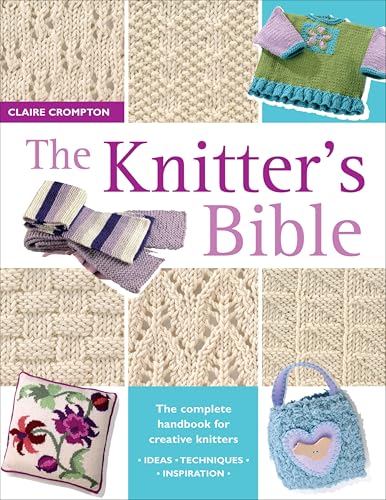
If you prefer a concise, visual-heavy approach, this book hits the sweet spot. It focuses on the essentials, making it perfect for someone who wants to learn a new skill without reading a dissertation.
The layout is designed for quick reference while your hands are busy with needles. It covers a wide range of styles, from cables to lace, providing just enough information to get you moving.
It excels at breaking down complex concepts into bite-sized steps. It is an excellent "first reference" for a knitter who is ready to move beyond basic garter stitch scarves.
Cast On, Bind Off by Leslie Ann Best Techniques
Nothing ruins a beautiful project faster than a cast-on that is too tight or a bind-off that flares out. This book is dedicated entirely to those two critical transition points.
Leslie Ann provides a massive variety of methods, categorized by their specific utility. You will learn which cast-on provides the necessary stretch for a sock cuff versus which one creates a sturdy, decorative edge for a blanket.
Having this book on your shelf means you will never again have to guess which edge finish suits your yarn. It turns the start and end of your project into a deliberate design choice.
The Principles of Knitting: A Reference Masterpiece
This section serves as a reminder that true mastery requires a deep dive into the mechanics of the stitch. Hiatt’s work remains the gold standard for those who treat knitting as an engineering challenge.
The book explores the geometry of knitting. It explains how different increases and decreases alter the shape of your fabric, which is vital for anyone moving into custom garment design.
If you are tired of following patterns blindly and want to start modifying them, this is your textbook. It teaches you to think like a designer rather than just a follower of instructions.
Knitting Without Tears by Elizabeth Zimmermann Tips

Elizabeth Zimmermann’s classic is less about technical diagrams and more about the philosophy of knitting. It is essential for learning how to knit with confidence and, more importantly, how to fix your own mistakes.
She famously encourages knitters to "unvent" their own patterns. Her advice on gauge and yarn substitution is timeless and practical, focusing on the reality of the materials rather than rigid rules.
This book will help you stop fearing the "oops" moments. It teaches you that a dropped stitch is just a temporary setback, not a reason to abandon a project.
Japanese Knitting Stitch Bible for Texture Lovers
This book is a masterclass in visual inspiration and complex stitch patterns. It uses a unique charting system that, once learned, opens up a world of intricate lace and cable combinations.
The textures are sophisticated and distinct from traditional Western stitch dictionaries. If you find your current projects looking a bit "flat," these patterns will add professional-level depth.
It is a specialized tool for those who want to elevate their aesthetic. It is not for learning to knit, but for learning to create truly breathtaking, high-end fabric.
How to Select a Comprehensive Knitting Reference
When building your library, consider your specific learning style. Do you need step-by-step photography, or do you prefer detailed written explanations and diagrams?
Look for books that address your current "pain points." If you struggle with finishing, prioritize a book with a strong section on sewing seams and weaving in ends.
- Visual Learners: Look for books with high-resolution photography.
- Analytical Learners: Prioritize books with detailed text and structural theory.
- Project-Based Learners: Choose books that include technique guides alongside patterns.
Why Every Knitter Needs a Technical Library Guide
Knitting is a lifelong skill, and your needs will evolve as you grow. A reference book you find intimidating today might be your most-used resource in three years.
A technical library allows you to experiment with confidence. When you know you have a reliable guide for complex techniques like short rows or brioche, you are more likely to push your boundaries.
Don’t rely solely on online video tutorials. Books offer a curated, organized way to learn that helps you see the broader context of your craft.
Essential Skills for Every Level of Knitting Craft
Regardless of your experience, you must master the fundamentals of gauge, tension, and finishing. These are the "big three" that separate a homemade look from a professional-quality garment.
- Gauge: Always swatch with the fiber you intend to use.
- Tension: Practice holding your yarn consistently to avoid uneven stitches.
- Finishing: Blocking is not optional; it is the final step in the construction process.
Invest in books that cover these areas in depth. When you have a solid grasp of these essentials, you can knit anything with success.
A well-curated library is the secret weapon of every master knitter. By investing in these references, you equip yourself to solve any problem and elevate your craft to a professional standard. Don’t be afraid to dog-ear the pages and keep these books right next to your yarn stash. Your hands will thank you when you finally master that tricky technique you’ve been avoiding.