
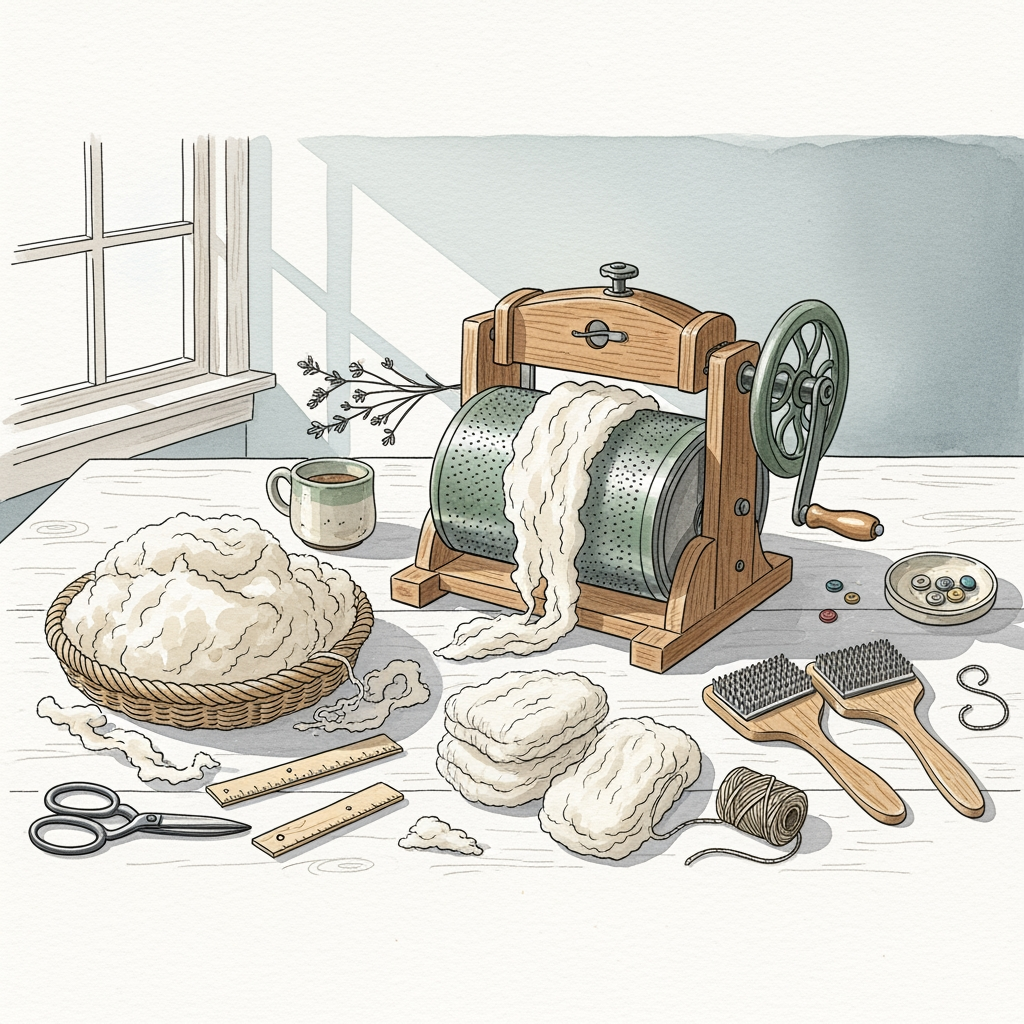
7 Best Carding Paddles For Blending Fibers To Own
Discover the 7 best carding paddles for fiber blending. Our guide compares top tools to help you achieve smooth, consistent results for your spinning projects.
Mastering the art of fiber preparation is the secret bridge between raw fleece and the perfect, lofty yarn. Whether you are blending silk into merino for a shimmering shawl or prepping rustic wool for a durable sweater, your choice of carding paddles dictates the outcome. Choosing the right tool isn’t just about brand loyalty; it’s about matching the density of your wire to the staple length of your fiber. Here is how to navigate the world of carding paddles to elevate your spinning game.
Strauch Finest Carding Paddles: Best Overall Choice
If you have ever struggled with "fuzz" buildup or uneven blending, the Strauch paddles are likely the solution you’ve been looking for. These are widely considered the gold standard for those who demand consistency in their rolags.
The secret lies in the quality of the carding cloth and the tension of the wire. They handle everything from fine angora to coarse Corriedale with equal grace, preventing the fiber from getting "lost" in the teeth.
While they represent a significant investment, the durability of the construction means they will likely be the last set you ever need to buy. For the serious spinner, the precision they offer is worth every penny.
Ashford Hand Carders: The Gold Standard for Wool
Ashford has been a household name in the fiber world for decades, and for good reason. Their hand carders are the quintessential tool for learning the mechanics of creating a smooth, airy batt.
These paddles are designed specifically with wool in mind. The wire gauge is tuned to grab fibers effectively without shredding them, making them ideal for beginners who are still learning how much "flick" to use.
They are lightweight and comfortable, which matters when you have a mountain of fleece to process before your next project. If you are starting your journey with standard sheep breeds, these are the most reliable entry point.
Clemes & Clemes Curved Paddles: Precision Blending
Curved paddles change the geometry of your carding motion. By allowing the paddles to rock against each other, you gain better control over the fiber transfer, which is essential for uniform blending.
These are particularly effective when you are trying to combine colors or textures, such as adding a touch of mohair to your wool. The curvature helps keep the fiber tips aligned, resulting in a smoother draft when you head to the spinning wheel.
Be aware that the curved design requires a slightly different wrist motion than flat carders. Once you master the rocking technique, however, you will find it much easier on your joints during long sessions.
Louet Cotton Carders: Best for Fine Plant Fibers


Cotton and other short-staple fibers require a much higher TPI (teeth per inch) than wool. If you try to card cotton with standard wool paddles, the fiber will simply fall through the teeth.
Louet’s cotton carders feature incredibly fine, dense wire designed to grab those tiny, delicate fibers. This allows you to align the fibers properly, which is the only way to achieve a smooth, consistent thread with plant-based materials.
Don’t be tempted to use these for coarse wool, as you will likely damage the fine wire. Keep these specialized tools for your cotton, bamboo, or silk blends to ensure they stay sharp and effective.
Brother Drum Carder Conversion: The Pro Option
Sometimes, you need to process large volumes of fiber in a fraction of the time. While technically a conversion or accessory approach, using high-end drum carding techniques is the natural evolution for the production-minded spinner.
This option is perfect for those who want to create large, uniform batts for color-work sweaters. It removes the physical strain of hand-carding, allowing you to focus on the artistic side of blending colors and textures.
However, this is not for the hobbyist who only spins a few ounces a month. The space requirement and the learning curve mean it’s best suited for those who are truly committed to high-volume spinning.
Majacraft Hand Carders: Ergonomic Fiber Control
Repetitive strain is a real concern for knitters and spinners who spend hours at their craft. Majacraft has prioritized ergonomics, creating a handle shape that feels natural and reduces wrist fatigue.
Beyond comfort, the alignment of the carding cloth is exceptionally precise. This allows for a lighter touch, meaning you don’t have to "muscle" the fiber through the teeth.
If you have existing wrist issues or simply want to ensure you can continue spinning well into your later years, these are an excellent choice. They prove that tool design can significantly impact your physical longevity in the craft.
Schacht Student Carders: Best Value for Beginners

Not everyone is ready to commit to professional-grade equipment on day one. Schacht’s student-line carders provide a sturdy, reliable experience that won’t break the bank while you learn the ropes.
These paddles are robust enough to handle most standard wools without bending or warping. They are the perfect "workhorse" tool for someone who is still experimenting with different fleece types.
As you gain experience, you might eventually upgrade, but these will always have a place in your kit for quick jobs. They represent a smart, practical investment for the cautious beginner.
How to Choose the Right TPI for Your Fiber Needs
The TPI (Teeth Per Inch) is the most critical technical specification of any carding paddle. A lower TPI is meant for long, coarse fibers, while a higher TPI is for short, fine fibers.
- 72 TPI: Ideal for medium to coarse wools and long-staple fibers.
- 110+ TPI: Necessary for fine wools, silks, and cotton blends.
Choosing the wrong TPI will result in either wasted fiber or a frustrating, tangled mess. Always match your tool to the fiber you intend to process most frequently.
Maintaining Your Carding Paddles for Longevity
Treat your carding paddles like the precision instruments they are. Never leave them exposed to humidity, as the wire can rust, which will snag your fiber and ruin your spinning experience.
Always use a cleaning brush to remove residual fiber after every session. If fiber is left in the teeth, it can attract dust and oils that degrade the wire over time.
Periodically check the wire for bent teeth. A single bent tooth can cause a "gully" in your batt, leading to uneven yarn that will show up as thin spots in your finished knitting.
Essential Techniques for Perfect Fiber Blending
The key to a perfect blend is "little and often." Do not overload your paddles; if you have to force them together, you are using too much fiber.
Focus on the transfer motion. You want to gently move the fiber from one paddle to the other, letting the wire do the work of aligning the staples.
- Layering: Alternate thin layers of different colors to create a subtle, heathered effect.
- Drafting: Use the carders to open up the locks before you begin the actual blending process.
- Consistency: Keep your wrist motion fluid to avoid creating hard, compacted areas in your batt.
The right carding paddles are an investment in the quality of every garment you will ever create. By selecting the correct TPI for your fiber and maintaining your tools with care, you transform raw, chaotic fleece into a dream to spin. Remember that the best tool is the one that fits your hands and your specific fiber goals. Happy spinning, and may your batts always be smooth and your yarn perfectly balanced.
