7 Best Pattern Reference Books For Stitch Libraries
Expand your needlework skills with these 7 essential pattern books. Discover curated stitch libraries that offer timeless techniques for every skill level.
Every knitter eventually hits a point where the standard stockinette stitch just doesn’t satisfy the creative itch. Building a personal library of stitch patterns transforms your practice from following rigid instructions to designing your own textures and motifs. These seven reference books serve as the foundational bedrock for any serious maker looking to master the craft. Whether you are chasing complex lace or structural cables, the right resource is the difference between a frustrating project and a masterpiece.
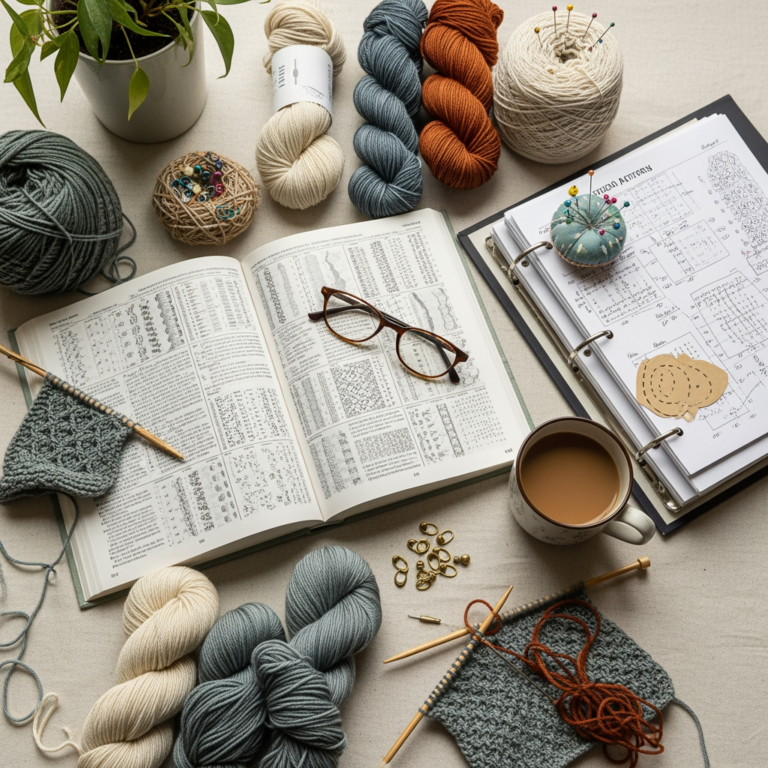
Barbara Walker’s A Treasury of Knitting Patterns


This is the absolute gold standard of the knitting world. If you only ever buy one stitch dictionary, make it this one.
Walker’s work is legendary because it focuses on the logic of knitting rather than just pretty pictures. She breaks down patterns by their structural components, which teaches you how to manipulate the fabric yourself.
The trade-off here is the vintage aesthetic of the photography. Don’t let the dated look fool you; the stitch instructions are timeless and mathematically sound.
The Japanese Knitting Stitch Bible by Hitomi Shida

Hitomi Shida’s designs are widely considered the pinnacle of intricate, delicate knitting. These patterns are perfect for when you want to create a garment that looks like a piece of wearable art.
The charts in this book are incredibly dense and require a high level of focus. If you are comfortable reading complex symbols and keeping track of multiple moving parts, this book will push your skills to new heights.
Be warned: the complexity of these stitches means they are often less forgiving of yarn choice. Stick to smooth, high-twist wools to ensure the intricate details actually pop against the background.
Vogue Knitting Stitchionary: The Ultimate Guide

Think of this as the "encyclopedia" of your knitting shelf. It covers everything from basic cables to complex colorwork in a very accessible, organized format.
This book is excellent for the knitter who wants a broad overview of techniques without getting bogged down in too much theory. It’s a great starting point for those who are transitioning from beginner patterns to intermediate design.
The downside is that it lacks the deep, granular structural analysis found in more specialized texts. It is a fantastic "all-rounder" but might not satisfy the advanced designer looking for niche techniques.
Nicky Epstein’s Knitting Stitch Collection Books

Nicky Epstein is the queen of embellishment and creative texture. Her books are less about standard stitch repeats and more about the "wow" factor of knitting.
If you are looking to add unique borders, three-dimensional flowers, or unconventional edgings to a plain sweater, this is your go-to source. She encourages a playful, experimental approach that is refreshing for knitters who feel stuck in a rut.
Use these patterns as accents rather than all-over fabric. Because these stitches often involve heavy increases or decreases, they can dramatically change the drape and weight of your garment if used improperly.
Harmony Guides: 450 Knitting Stitches Explained

This series is the reliable workhorse of the knitting library. It provides a massive volume of stitches in a clean, easy-to-read format that doesn’t overwhelm the user.
What makes this volume stand out is its clarity. The instructions are straightforward, making it an ideal companion for a quick reference when you’re mid-project and need a filler pattern.
It is perhaps the most "user-friendly" of the bunch for someone who just wants to find a pattern and get to work. It’s not necessarily a book for deep study, but it is a book for high productivity.
Norah Gaughan’s Knitted Cable Sourcebook Review

Norah Gaughan is a master of geometry, and this book is a masterclass in how to manipulate cables. She moves beyond the standard "twist" and teaches you how to create complex, interlocking structures.
This book is essential if you want to understand why a cable behaves the way it does. She explains the mechanics of crossing stitches in a way that allows you to eventually draft your own cable motifs.
If you struggle with cables, start here to understand the tension and flow of the fabric. The patterns look intimidating, but her explanations make the most complex designs feel logical and achievable.
250 Knitting Stitches by The Harmony Guides Team
This is a compact, no-nonsense collection that fits perfectly in a project bag. It’s the book you keep on your coffee table or tucked into your knitting tote for inspiration on the go.
While it doesn’t have the depth of the Walker series, it offers a fantastic variety of textures, lace, and cables. It is a great "starter" library for a newer knitter who isn’t ready to invest in a massive, expensive tome.
Don’t underestimate the utility of a smaller book. Sometimes, having a curated, manageable list of stitches is more helpful than having 1,000 choices that you’ll never look through.
How to Choose the Right Stitch Library for You
Start by identifying your "knitting personality." Are you a technical knitter who loves to understand the math behind the stitch, or a visual knitter who wants to see the end result immediately?
- For the technical knitter: Prioritize Barbara Walker or Norah Gaughan.
- For the decorative knitter: Look toward Nicky Epstein.
- For the project-oriented knitter: Choose the Harmony Guides or Vogue Stitchionary.
Always check the clarity of the charts versus the written instructions. If you struggle with visual mapping, ensure your chosen book provides clear, written row-by-row directions alongside the charts.
Why Every Knitter Needs a Physical Reference
In an age of digital patterns and online databases, a physical book offers a tactile experience that a screen cannot replicate. You can scribble notes in the margins, bookmark your favorite repeats, and see the texture of the stitches up close.
Digital screens often flatten the look of a stitch, hiding the depth and structural nuance that you need to see before committing to a yarn. A book allows you to flip back and forth, comparing two different stitch patterns side-by-side to see which looks better in your chosen gauge.
Furthermore, a library of books is a permanent investment. You won’t lose these patterns when a website goes down or a subscription service updates its interface.
Tips for Swatching Stitches from Printed Books
Always, always swatch. A stitch pattern that looks beautiful in a book can behave entirely differently depending on your yarn’s fiber content, twist, and ply.
When you find a pattern you love, knit a swatch that is at least 6 inches square. This gives you enough room to see how the stitch pattern "settles" after blocking, which is where the true character of the fabric emerges.
- Cotton: Will show stitch definition clearly but lacks elasticity; expect the stitch to look different than in wool.
- Wool: The gold standard for stitch definition and structure.
- Alpaca: Will drape and blur the stitch definition; avoid highly complex cables that need sharp lines.
Finally, remember that the needle material matters. If you are knitting a lace pattern from one of these books, use a sharper, grippier needle (like wood or bamboo) to keep the yarn secure while you maneuver the complex increases and decreases.
Building a library of stitch patterns is a journey that evolves alongside your own skills. Don’t feel pressured to master every technique at once; start with one or two books that speak to your current projects and grow from there. Your hands will eventually learn the rhythm of these stitches, and your books will become well-loved, dog-eared companions in your craft. Happy knitting, and may your swatches always be true.