7 Best Yarn Balls Winders For Large Stashes Rated
Taming a large yarn stash is easy with the right tool. We evaluate the 7 best yarn ball winders for efficiency, durability, and capacity to simplify storage.
Transforming a chaotic pile of tangled hanks into tidy, center-pull cakes is a rite of passage for every dedicated fiber artist. When your stash grows beyond a few stray skeins, the manual labor of winding by hand becomes a significant barrier to starting your next project. Investing in a quality winder allows you to focus on the rhythm of your stitches rather than fighting with a collapsing yarn mountain. These seven tools represent the best options for managing a substantial collection with precision and ease.
Stanwood Needlecraft Large Metal Yarn Ball Winder


This winder is the gold standard for many serious knitters who prioritize mechanical reliability over plastic components. Its all-metal gear construction provides a smooth, consistent rotation that prevents the jerky movements often found in cheaper models.
If you frequently wind bulky weight or heavy wool yarns, the metal gears are essential for handling the increased torque without stripping. The large capacity allows you to wind up to 10 ounces of yarn, which is perfect for those massive sweaters requiring multiple skeins of worsted weight.
The base is sturdy, though it does require a firm surface to clamp onto. If your table is too thick, you might find the clamp depth limiting, so measure your workspace before committing.
Knit Picks Yarn Ball Winder: Best Budget Choice
For the knitter who is just beginning to curate a stash, this winder offers the most accessible entry point. It is lightweight, portable, and gets the job done without requiring a significant financial investment.
While the plastic construction isn’t designed for heavy, industrial-scale winding, it excels at handling standard fingering and sport weight yarns. It’s an ideal choice if you only wind a few skeins a month and need something easy to store in a project bag.
Be mindful that the plastic gears can be sensitive to speed; winding too aggressively can cause the yarn to slip off the spindle. Take your time, maintain a steady pace, and you’ll produce perfectly functional cakes every time.
Lacis Jumbo Yarn Ball Winder: Heavy Duty Pick
When you are dealing with massive quantities of yarn, such as large cones or multiple skeins of lace weight, the Lacis Jumbo is a workhorse. It is specifically engineered to handle high-volume winding without overheating or stalling.
The standout feature here is the spindle size and stability, which accommodates much larger cakes than standard models. If you are a prolific sweater knitter who prefers to wind your entire project’s worth of yarn at once, this is your best bet.
Because of its size, it does take up a bit more footprint on your craft table. Ensure you have enough clearance for the yarn to feed smoothly from your swift, as this unit is meant for serious, uninterrupted sessions.
U-nitt Metal Yarn Winder: Best For Large Stashes
The U-nitt is a favorite among those who have outgrown entry-level plastic winders and want a permanent solution for their studio. The metal construction offers a satisfying weight that keeps the unit planted firmly during operation.
It excels at managing the tension differences between slick fibers like silk or bamboo and more grippy wools. The internal mechanics are robust enough to withstand daily use, making it a reliable companion for stash organization marathons.
Keep in mind that metal winders require occasional maintenance to keep the gears running silently. A tiny drop of machine oil on the moving parts every few months will ensure it remains smooth and quiet for years.
Nancy’s Knit Knacks Heavy Duty Yarn Ball Winder
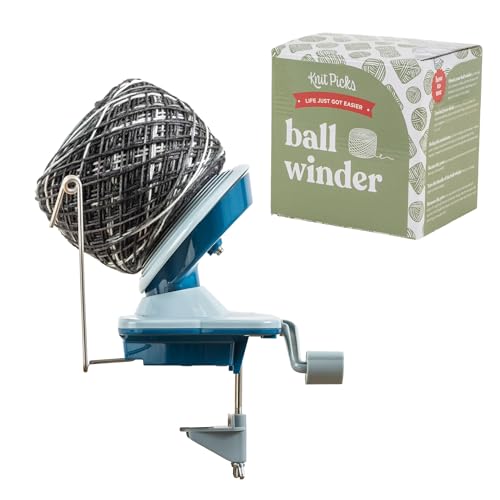
If you view your yarn stash as a long-term investment, this winder is built to match that level of commitment. It is widely considered one of the most durable options on the market, featuring high-quality materials that resist the wear and tear of thousands of yards of winding.
The design focuses on precision tension control, which is crucial when winding expensive hand-dyed yarns that you don’t want to stretch out. Maintaining the integrity of the fiber’s twist is paramount, and this winder handles that task with exceptional grace.
It is a premium tool with a price tag to match, but for the knitter who values longevity, it is an investment that pays for itself. You won’t find yourself replacing this unit in a few years, as it is engineered to be a lifetime tool.
ChiaoGoo Hand-Operated Yarn Winder For Travel
Portability is the primary advantage of this compact winder, making it perfect for knitting retreats or workshops. It is small enough to tuck away in a carry-on, yet it doesn’t sacrifice the essential functionality needed to turn a hank into a cake.
While it lacks the heavy-duty capacity of the larger metal models, it is surprisingly capable for its size. It is best suited for winding fingering or sock weight yarns rather than heavy, bulky weights that might overwhelm the smaller spindle.
It is a fantastic secondary tool to have on hand. Even if you have a large stationary winder at home, having this for on-the-go adjustments is a luxury that any frequent traveler will appreciate.
Royal Hand-Operated Yarn Winder: Classic Design

The Royal winder is a classic for a reason, offering a reliable, no-nonsense approach to yarn management. Many knitters have kept these in their craft rooms for decades, proving that simple, effective design stands the test of time.
It handles standard skeins with ease and provides a consistent cake shape that stacks neatly in storage bins. If you don’t need the massive capacity of a jumbo winder, the Royal offers a sweet spot of performance and price.
The clamp is generally very secure, but always check it periodically during long sessions. A loose clamp can lead to vibrations that make the winding process less efficient and more frustrating.
Why You Need A Yarn Winder For Your Large Stash
A large stash is a beautiful thing, but it is also a liability if your yarn remains in hanks. Winding your yarn immediately upon purchase prevents the dreaded "yarn barf" that happens when a center-pull ball collapses or tangles.
Beyond organization, winding allows you to inspect your yarn for knots, breaks, or dye lot inconsistencies that might be hidden inside a tightly twisted hank. It is much easier to address a manufacturing defect before you’ve cast on 300 stitches for a shawl.
Furthermore, center-pull cakes are simply more convenient for knitting. They stay put on your table or in your bowl, preventing the yarn from rolling across the floor and picking up unwanted dust or pet hair.
How To Properly Use A Yarn Winder For Best Results
The most common mistake knitters make is winding too fast, which can stretch the yarn and alter your gauge. Always use a swift to hold your hank; trying to wind from a pile or chair back is a recipe for tangles and uneven tension.
Ensure the yarn is feeding at a consistent, gentle tension from the swift to the winder. If the yarn is too tight, your finished cake will be hard and potentially damaged; if it is too loose, the cake will be spongy and prone to collapsing.
Start slowly to get a feel for the rhythm of the gears. Once you establish a steady pace, you can increase your speed slightly, but never so fast that the yarn jumps off the guide arm.
Maintaining Your Yarn Winder For Longevity And Use
Your winder is a mechanical device that relies on moving parts, so it requires a little TLC to keep it spinning smoothly. Dust and stray bits of fiber can accumulate in the gears, causing friction and noise over time.
Periodically use a soft brush or compressed air to clear out any debris from the gear teeth. If you notice the handle getting stiff, a light application of silicone-based lubricant can work wonders, but avoid using heavy oils that might attract more dust.
Finally, always store your winder in a clean, dry place when not in use. Treating your tools with the same care you give your hand-dyed wool will ensure they remain functional partners in your knitting journey for years to come.
Selecting the right yarn winder is about balancing your current stash size with your long-term fiber goals. Whether you choose a heavy-duty metal unit for professional-grade volume or a compact model for travel, the result is a more organized and enjoyable creative process. Once you stop fighting your yarn and start winding it properly, you will find more time to focus on the joy of the craft itself. Happy winding, and may your cakes always pull from the center without a hitch.