7 Best Utility Knives For Pattern Modification Tested
We tested seven top utility knives for pattern modification. Discover which blades offer the precision and ergonomic control needed for flawless garment work.
Pattern modification is the unsung hero of a perfectly fitting hand-knit garment, yet many makers struggle with the tools required to alter their templates accurately. Whether you are grading a pattern up for a different size or adjusting a neckline, the precision of your cut directly impacts the final fit. Using the right utility knife can turn a tedious drafting task into a seamless part of your design process. Here are the top tools that bridge the gap between technical drafting and fiber arts precision.
Olfa RTY-2/DX Rotary Cutter: Best For Pattern Pieces


When you are working with large-scale pattern drafting paper, a rotary cutter is often more efficient than a traditional blade. This specific model features a dual-action safety mechanism that prevents accidental engagement while you’re reaching for your yarn stash or stitch markers.
The ergonomic handle design is a lifesaver if you suffer from hand fatigue during long drafting sessions. If you have ever spent hours working on a complex grading project, you know that keeping your wrists neutral is just as important as maintaining your gauge.
Because this cutter uses a rolling blade, it glides through heavy-duty pattern paper without the snagging or tearing that can happen with a standard craft knife. It is the gold standard for long, straight lines when you need to cut out multiple pattern pieces at once.
Fiskars 45mm Comfort Loop: Best For Precision Cutting

The Comfort Loop design is particularly helpful for knitters who might have limited dexterity or arthritis in their hands. The handle allows your fingers to stay inside the loop, meaning you don’t have to exert as much grip strength to maintain a steady line.
Precision is the name of the game here, especially when you are adjusting armscye curves or shaping waistline darts. A shaky hand while cutting a template can lead to a wonky seam line later, which makes assembly a nightmare when you’re trying to mattress stitch two pieces together.
While it is excellent for curves, remember that rotary cutters require a specialized mat to protect your table surface. If you are drafting on your kitchen table, ensure you have a self-healing mat underneath to prevent deep scratches that could snag your delicate silk or mohair yarns later.
X-Acto Z Series No. 1 Knife: Best For Paper Templates

There is a reason the X-Acto No. 1 has been a staple in design studios for decades. The Z series features a sharper, more durable blade that resists the dulling effect often caused by cutting through thicker cardstock or heavy pattern paper.
If you are a knitter who enjoys drafting your own lace motifs or intarsia charts, this knife is perfect for cutting out intricate windows in your templates. It allows for the kind of surgical precision that a larger rotary cutter simply cannot achieve.
Keep in mind that these blades are incredibly sharp and prone to snapping if you apply too much lateral pressure. Always use a fresh blade when starting a new project; a dull knife is actually more dangerous because it requires you to press harder, increasing the chance of a slip.
NT Cutter A-300P Precision: Best For Fine Trimming

The A-300P is a favorite among those who value a slim, lightweight profile. Its metal body feels substantial in the hand, providing the kind of tactile feedback that helps you feel exactly where the blade is biting into the paper.
This tool excels when you need to trim away tiny slivers of paper to perfect a shoulder slope or a sleeve cap. If you are a perfectionist about your garment fit, you know that even a two-millimeter difference in a sleeve head can be the difference between a smooth set-in sleeve and one with unwanted puckering.
The auto-lock feature ensures the blade stays exactly where you set it, which is vital for consistency. You don’t want the blade retracting mid-cut while you are trying to navigate a complex curve on a custom-fit sweater pattern.
Slice 10515 Ceramic Blade: Best For Safety Conscious
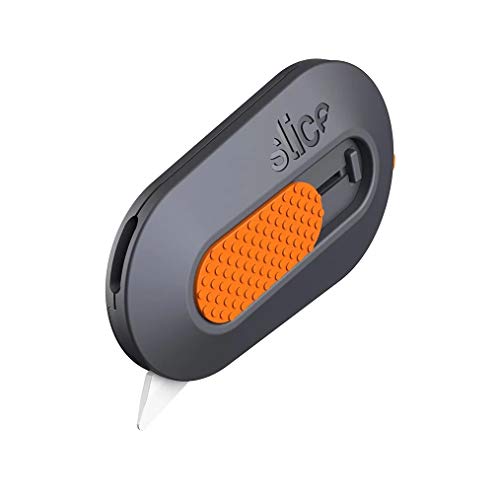
Ceramic blades are a game-changer for anyone worried about accidental nicks while working in a crowded craft space. Unlike steel, the Slice ceramic blade is designed to be finger-friendly, meaning it cuts paper effectively but is significantly less likely to slice through skin.
This is a fantastic option if you tend to keep your workspace scattered with yarn scraps, needles, and scissors. It provides peace of mind, especially if you have pets or children roaming nearby while you are focused on the geometry of your next project.
The tradeoff is that ceramic blades are not as flexible as steel and can be more brittle if dropped on a hard floor. Treat this tool with care, and it will last you through many seasons of sweater design without needing a blade change.
Westcott Titanium Utility: Best For Heavy Cardstock

When you are working with heavy-weight pattern board or thick cardstock to create reusable templates, you need a blade with some backbone. The Westcott Titanium coating keeps the blade edge sharper for longer, even when cutting through dense materials.
Knitting patterns often require multiple adjustments, and having a sturdy template is essential for repeatability. If you are grading a pattern for different sizes, you want a template that won’t curl or fray at the edges after a few uses.
This knife is a bit heavier than the others on this list, which provides excellent stability for long, straight cuts. It feels like a professional tool, and for the serious pattern modifier, that weight is an asset rather than a hindrance.
Excel Blades K1 Hobby Knife: Best For Intricate Cuts
The K1 is the classic hobbyist choice, offering a wide range of interchangeable blades that can handle everything from delicate paper-cutting to heavier trimming. It is an incredibly versatile tool for any maker who enjoys the technical side of fiber arts.
If you are cutting out complex geometric shapes for a colorwork template, the K1 allows you to swap in a smaller blade for tighter corners. This kind of modularity is perfect for the knitter who likes to experiment with different design elements and structural details.
Just remember that with great versatility comes the need for organization. Keep your spare blades in a secure case, as they are small and easily lost in a basket of yarn or under a pile of swatches.
How to Safely Cut Patterns Without Damaging Fabric
Always remember that your cutting surface is the most important factor in protecting your fabric. Never cut patterns directly on top of your finished knitwear or your expensive wool stashes.
Use a dedicated cutting mat that is larger than the pattern piece you are modifying. This prevents the "over-cut" where your blade travels past the edge of the paper and nicks the surface underneath.
If you are cutting paper templates, do it in a separate area from your knitting. Paper dust and small trimmings can easily get trapped in the fibers of your yarn, especially if you are working with sticky, high-twist wools that tend to attract debris.
Choosing the Right Blade for Your Drafting Material
The material you use for your patterns dictates the blade you should choose. For standard printer paper, a light-duty hobby knife is more than sufficient.
For heavy cardstock or tag board, you need a blade with a thicker spine to prevent snapping. If you are using plastic or Mylar templates, a rotary cutter is almost always the superior choice for smooth, continuous lines.
- Printer Paper: Use an X-Acto or NT Cutter for precision.
- Cardstock: Use a Westcott Titanium or heavy-duty hobby knife.
- Mylar/Plastic: Use a 45mm rotary cutter for long, clean edges.
Essential Safety Tips for Pattern Altering Tools
A sharp blade is always safer than a dull one because it requires less force to operate. When the knife does the work for you, your hand is less likely to slip and cause an injury.
Always cut away from your body and keep your non-cutting hand well away from the line of the blade. It is easy to get distracted when you are deep in a pattern modification, so take a break if you feel your concentration waning.
Finally, dispose of old blades properly. Wrap them in a bit of tape or place them in a dedicated sharps container to ensure they don’t poke through your trash bag and injure you or someone else later.
Investing in a quality utility knife is a small but impactful way to elevate your pattern modification process. By choosing the right tool for your specific drafting needs, you can ensure your templates are accurate, clean, and ready for your next big knitting adventure. Take your time with the drafting phase, and you will find that the assembly of your hand-knit garments becomes significantly more rewarding. Happy designing, and may your gauge always be spot on.