7 Best Natural Wool Yarns for Textural Wall Hangings
Discover the top 7 natural wool yarns for textural wall hangings. Learn which fibers offer the best durability and aesthetic appeal for your fiber art projects.
Creating a wall hanging is a tactile journey that transforms raw fiber into a sophisticated focal point for your home. Choosing the right wool is the most critical step, as the fiber’s weight and structure dictate how your design will drape or hold its shape. Whether you are a beginner experimenting with macra-weaving or a seasoned artist building complex layers, the yarn you select defines the final aesthetic. Here are seven exceptional wool yarns that offer the perfect balance of texture, durability, and visual impact for your next fiber art project.
Wool and the Gang Crazy Sexy Wool: Best Overall


This super-chunky yarn is the gold standard for wall hangings that need to make a bold, immediate statement. Its extreme thickness means you can cover a large surface area quickly, which is perfect if you’re prone to losing steam halfway through a massive weaving project.
Because it is a single-ply, unspun roving, it has a soft, cloud-like quality that catches the light beautifully. However, be aware that this lack of twist makes it prone to pilling if it’s handled too roughly during the installation process.
If you are looking for a yarn that provides instant gratification and a high-end, boutique look, this is your best bet. Just remember to handle it gently; it is designed for display rather than high-traffic utility.
We Are Knitters The Wool: Best Chunky Texture
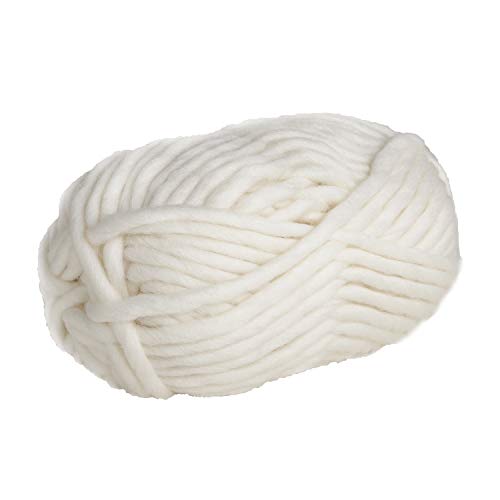
When you need your wall hanging to pop off the wall with three-dimensional depth, reach for this Peruvian highland wool. It possesses a distinct, rustic crimp that holds its shape remarkably well, even when worked into intricate knots or heavy fringe.
The fiber is slightly more robust than typical roving, offering a bit more resistance when you are pulling it through a warp. This makes it an excellent choice for beginners who might accidentally pull too hard and snap a more delicate, single-ply yarn.
While it is undeniably chunky, it maintains a sophisticated matte finish that works well in modern, minimalist interiors. It is the perfect middle ground between the extreme softness of roving and the durability of a tightly twisted yarn.
Cascade 128 Superwash: Best Versatile Merino

Sometimes you need a yarn that offers refined detail rather than oversized bulk. Cascade 128 is a workhorse merino that provides incredible stitch definition, making it ideal for incorporating braided elements or woven patterns into your wall hangings.
Because it is a superwash wool—meaning it has been treated to prevent the fibers from felting together—it is much smoother and more uniform than rustic wools. This makes it a dream to work with if you are planning on doing a lot of intricate manipulation or fine-tuning your tension.
The trade-off here is that it lacks the "fuzzy" halo of unspun wool, so your wall hanging will look cleaner and more structured. If you want a piece that looks polished and professional, this is the reliable choice.
Brown Sheep Lamb’s Pride Bulky: Best Rustic Feel

This classic blend of wool and mohair is a nostalgic favorite for a reason. The addition of mohair gives the yarn a slight "hairy" texture, which adds a wonderful, organic depth to any wall hanging that aims for a bohemian or farmhouse aesthetic.
The yarn has a unique, slightly wiry hand that grips onto itself, making it exceptionally easy to secure knots that won’t slide out of place. This is a massive advantage if you are creating long, dangling fringe that needs to stay perfectly aligned over time.
Because it is a bit more textured, it might feel slightly scratchy compared to merino, but that is exactly what gives it such a beautiful, authentic character. It is an honest, hardworking yarn that feels like a piece of history.
Malabrigo Rasta: Best Hand-Dyed Color Palette

If your wall hanging is meant to be a vibrant color study, nothing compares to the kettle-dyed richness of Malabrigo Rasta. Each skein is essentially a unique work of art, with subtle color shifts that prevent a large piece from looking flat or one-dimensional.
This is a single-ply, thick-and-thin yarn, which adds a natural, rhythmic texture to your work without you having to do any extra weaving tricks. The variation in thickness creates shadows and highlights, giving the finished piece a professional, artisan-crafted look.
Be mindful that because these are hand-dyed in small batches, color consistency between skeins can vary significantly. Always buy enough from the same dye lot to ensure your wall hanging has a cohesive flow.
Ístex Léttlopi: Best for Authentic Icelandic Art

For those who want a wall hanging with structural integrity and a distinctly Nordic feel, Léttlopi is unmatched. It is a traditional Icelandic wool that is incredibly lightweight yet warm and sturdy, perfect for pieces that need to hold a specific geometric shape.
The fiber has a unique two-part structure: a soft inner coat and a water-repellent outer coat. This results in a yarn that is airy and voluminous, allowing you to create large-scale pieces that aren’t weighed down by their own mass.
It is a bit stiffer than other wools, which makes it less than ideal for soft, flowing fringes, but it is unbeatable for structured woven panels. If you want a piece that looks like it belongs in a cozy cabin, this is the industry standard.
Patons Classic Wool Roving: Best Budget Choice
You don’t need to spend a fortune to create a beautiful wall hanging, and Patons Classic Wool Roving is proof of that. It offers a great, thick gauge that fills space quickly, making it a fantastic entry point for those just starting to explore fiber art.
It is a true roving, meaning it is unspun and very soft to the touch. This makes it wonderful for creating those trendy "cloud-like" textures, though it does require a delicate touch to ensure it doesn’t pull apart while you are working.
While it isn’t as luxurious as some of the high-end boutique brands, it is highly accessible and comes in a wide range of colors. It is the perfect yarn for practicing your techniques before investing in more expensive fibers.
Fiber Science: Why Wool Holds Texture So Well
Wool is essentially a protein fiber covered in microscopic, overlapping scales, similar to the shingles on a roof. These scales are what give wool its unique "crimp," or natural wave, which allows individual strands to interlock and hold their position once placed.
In wall hangings, this interlocking property is vital. Unlike synthetic yarns that are often slick and prone to slipping, wool "grabs" onto the warp or neighboring strands, keeping your knots and weaves in place without the need for excessive tension or adhesives.
Furthermore, wool’s natural elasticity means it can be stretched and shaped during the blocking process. This allows you to manipulate your finished piece to ensure it hangs perfectly straight or to add subtle curves to your design.
Essential Tools for Weaving Wool Wall Hangings
- Sturdy Weaving Loom or Dowel: Ensure your base is strong enough to support the weight of the wool you choose.
- Tapestry Needles: Look for needles with a blunt tip and a large eye, which will help you weave heavy yarn ends without splitting the fibers.
- Sharp Fabric Shears: A clean cut on your fringe is essential; dull scissors will fray the wool ends and make the piece look messy.
- Comb or Rake: Use this to gently separate or "fluff" the fibers of your fringe to create a fuller, more uniform look.
How to Properly Clean and Maintain Wool Art Pieces
Wool is naturally dirt-resistant, so your wall hanging will likely only need a light dusting from time to time. Use a soft-bristled brush or a handheld vacuum on a very low setting to gently remove surface debris without disturbing the structure of the weave.
If the piece becomes visibly soiled, avoid machine washing at all costs, as the agitation will cause the wool to felt and shrink. Instead, spot clean with a tiny amount of wool-specific detergent and cool water, dabbing gently rather than rubbing.
To keep the fringe looking fresh, you can lightly steam it from a distance to help the fibers relax and regain their original drape. Always ensure the piece is completely dry before re-hanging it to prevent any potential mildew or sagging.
Selecting the right wool is about balancing your creative vision with the physical properties of the fiber. By understanding how different weights and textures behave, you can move beyond simple patterns and start creating truly evocative wall art. Take the time to touch, test, and experiment with these yarns to see which ones speak to your personal style. Your next masterpiece is only a few knots away, so trust your hands and enjoy the process of making.