6 Best Needle Sizers For Precision Work You Need
Achieve perfect gauge with our top 6 needle sizers. This guide highlights precision tools essential for accurate knitting and consistent project results.
Every knitter has experienced the frustration of picking up a stray needle only to find the size markings have long since rubbed away. Without a reliable way to verify your tool diameter, your project’s gauge—and ultimately its fit—is left entirely to guesswork. Precision is not just about perfectionism; it is the difference between a sweater that fits perfectly and one that ends up as a costly, ill-fitting experiment. Investing in a high-quality needle sizer is one of the most practical steps you can take to elevate your craft.
ChiaoGoo 5-Inch Needle Gauge: Best For Precision


When you are working with fine lace or small-diameter socks, even a fraction of a millimeter can change your fabric’s drape. This gauge is crafted with extreme accuracy in mind, offering a rigid structure that doesn’t bend or flex under pressure.
Its compact size makes it an ideal companion for your notions bag, ensuring you can check your needle sizes anywhere. Because it is made of durable plastic, it won’t scratch your precious nickel-plated or bamboo needles.
The holes are drilled with high precision, leaving no room for the "wobble" that often plagues cheaper, mass-produced gauges. If you are a technical knitter who relies on exact sizing for complex patterns, this is the gold standard.
Susan Bates Knit-Chek: The Classic Choice
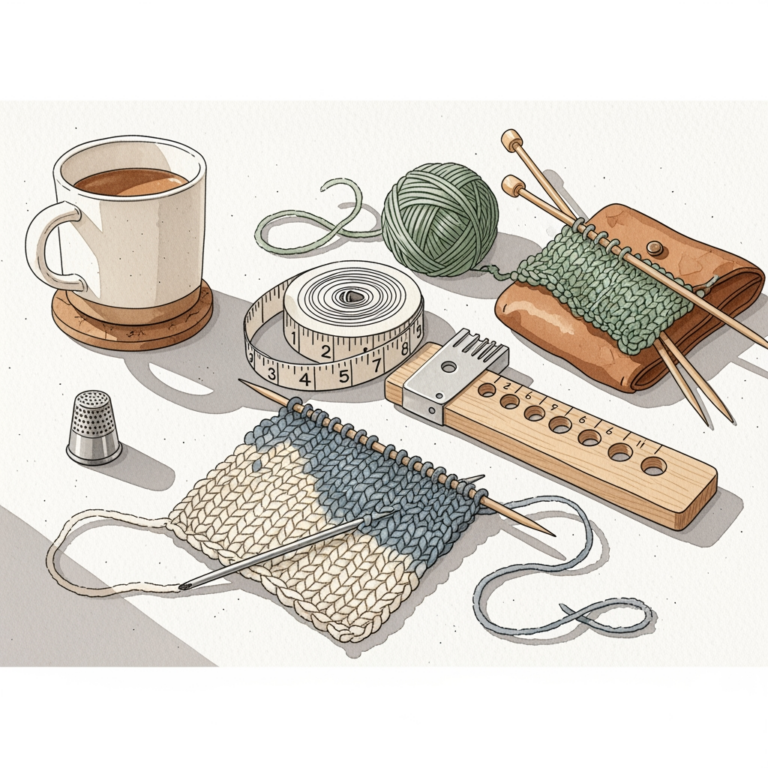
The Knit-Chek is a staple in almost every seasoned knitter’s notions tin for a reason. It is a multi-functional tool that combines a needle gauge, a ruler, and a built-in stitch counter into one incredibly thin piece of metal.
Because it is made of aluminum, it is virtually indestructible and won’t warp in your knitting bag. It also features a handy slot for checking yarn weight, which is useful when you are working from a stash of unlabeled mystery skeins.
However, the painted markings can eventually fade with heavy use over many years. It remains the most utilitarian choice for those who prefer to keep their tool kit minimal and lightweight.
Cocoknits Maker’s Keep Gauge: Best Modern Tool
This tool is designed for the knitter who constantly loses their needles or stitch markers. It features a magnetic base that keeps your metal tools firmly in place, acting as a "landing pad" for your notions while you work.
The gauge itself is made from a sturdy, eco-friendly plant-based plastic that feels substantial in the hand. It is particularly helpful when you are working on a large project with multiple needle sizes, as it keeps everything organized and accounted for.
While it is bulkier than a standard flat gauge, the convenience of having a magnetic tray far outweighs the extra weight. It is an excellent investment for those who tend to be disorganized at the end of a long knitting session.
Clover Knitting Needle Gauge: Best For Beginners
If you are just starting out, you need a tool that is easy to read and difficult to break. This Clover gauge provides clear, high-contrast labels that take the mystery out of identifying your needles.
It covers a wide range of sizes, making it versatile enough to handle everything from bulky wool hats to delicate fingering-weight socks. The plastic construction is lightweight and gentle on your hands, which is a nice touch if you are prone to dropping things.
While it lacks the "bells and whistles" of premium tools, its simplicity is its greatest strength. It is the perfect entry-level tool that won’t overwhelm a new knitter with unnecessary features.
Katrinkles Wooden Gauge: Best For Custom Style
Sometimes, the best tool is the one that brings you joy every time you reach for it. Katrinkles gauges are crafted from beautiful, sustainably sourced wood, offering a tactile experience that plastic or metal tools simply cannot match.
Beyond aesthetics, wood is surprisingly durable and won’t slip out of your hands while you are checking a needle size. They often come in whimsical shapes or include handy conversion charts, making them as decorative as they are functional.
Keep in mind that wood can be slightly more sensitive to moisture than metal. If you live in a very humid climate, ensure you store your gauge in a dry place to prevent the wood from warping over time.
Brittany Birch Needle Gauge: Best Natural Option
For those who prefer natural materials, the Brittany Birch gauge is a classic, elegant choice. It is crafted from high-quality birch wood, which is smooth to the touch and incredibly sturdy.
This gauge is particularly popular among knitters who use wooden needles, as it feels like a natural extension of the craft. It is precision-drilled to ensure that your needles fit snugly without any unnecessary friction.
Because it is a natural product, each gauge has a unique wood grain, making it a beautiful gift for a knitting friend. It is a functional, heirloom-quality piece that will last for decades if cared for properly.
Why Accurate Needle Sizing Matters For Your Gauge
Your gauge—the number of stitches and rows per inch—is the most critical factor in whether your project fits as intended. If you use a 3.5mm needle when the pattern calls for a 3.75mm, your fabric will be denser and smaller than the designer intended.
Many knitters assume they are "tight" or "loose" knitters, but often, the issue is simply using a needle that isn’t the size they think it is. A small discrepancy in needle diameter can lead to a sweater that is two sizes too small.
Always verify your needle size before starting a gauge swatch. If you find your swatch is off, checking your needle with a gauge is the first step in troubleshooting your tension issues.
Understanding Metric Versus US Needle Standards
The knitting world is split between the Metric (mm) system and the US numbering system, which can be a source of endless confusion. Metric is the most reliable standard because it measures the actual diameter of the needle in millimeters.
US sizes are arbitrary and can vary slightly between manufacturers, which is why a "US 6" from one brand might feel different than a "US 6" from another. Always look for the millimeter measurement on your needles and your pattern to ensure consistency.
If you are following a pattern from a different country, use your gauge to verify the millimeter size rather than relying on the US number. This cross-referencing habit will save you from many frustrating re-knits.
How To Check Worn Needle Markings With A Gauge
Over time, the friction of yarn sliding over your needles will wear away the size markings printed on the shaft. This is especially common with aluminum needles or those with laser-etched numbers.
To check a worn needle, simply test it in the holes of your gauge until you find the one that fits perfectly. It should slide through without force but shouldn’t have excessive room to wiggle.
If you find a needle with worn markings, use a permanent marker or a small piece of tape to label it immediately. Don’t let a mystery needle sit in your collection, or you will certainly forget its size by the time you pick it up again.
Tips For Maintaining Your Metal Needle Sizers
Metal needle sizers are generally low-maintenance, but they can accumulate oil and grime from your hands. A quick wipe with a soft cloth will keep the markings visible and the surface smooth.
Avoid using harsh chemicals or abrasive scrubbers, as these can strip the printed numbers off the surface. If your metal gauge starts to look dull, a drop of mineral oil can help restore its shine and protect it from oxidation.

Store your gauges in a dedicated notions pouch rather than loose in a bag. Keeping them flat prevents them from bending, which is crucial for maintaining the accuracy of the smaller, more delicate needle holes.

Choosing the right needle sizer is a simple yet vital investment in the longevity and accuracy of your knitting projects. Whether you prefer the sleek precision of metal or the warm, natural feel of wood, the best tool is the one that you actually use. By verifying your needle sizes before every cast-on, you remove the guesswork and ensure your stitches are exactly what you intended. Happy knitting, and may your gauge always be spot on.