
6 Best Yarn Tension Masts For Consistent Feeding
Achieve uniform stitch quality with our top 6 yarn tension masts. Explore durable options designed for smooth, consistent feeding in every knitting project.
Achieving perfectly uniform stitches begins long before your needle touches the yarn. A reliable yarn tension mast acts as the silent partner in your knitting process, preventing the dreaded "tension tug" that ruins complex patterns. By controlling the flow from your yarn cake or ball, these tools ensure your gauge remains stable from the first row to the last. Whether you are working on delicate lace or heavy wool sweaters, mastering your feed system is the secret to professional-looking fabric.
Stanwood Needlecraft Yarn Tension Mast Review


The Stanwood mast is widely considered the gold standard for those who use yarn ball winders extensively. Its sturdy, weighted base prevents the unit from tipping over, even when you are pulling yarn from a heavy, one-pound cone of worsted weight wool.
The primary benefit here is the smooth, snag-free eyelet at the top of the mast. It allows yarn to travel vertically without catching, which is essential when working with delicate fibers like mohair or alpaca that tend to grab onto themselves.
However, keep in mind that its size is substantial. If your crafting space is limited to a small side table, you may find the footprint slightly intrusive compared to lighter, clip-on alternatives.
KnitPro Yarn Tension Guide: Best for Beginners
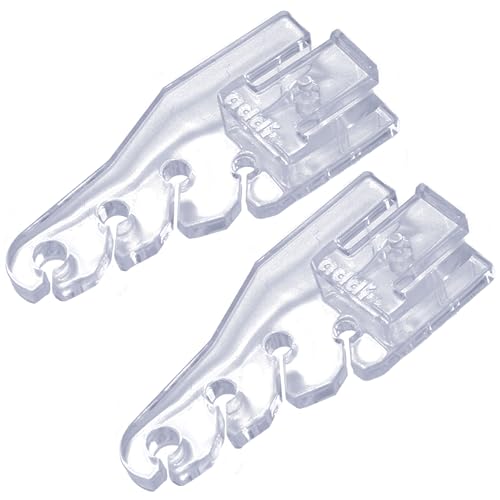
If you are just starting your journey into machine knitting or using a yarn winder, the KnitPro guide offers simplicity without sacrificing utility. It is designed to be intuitive, with a straightforward path that helps new knitters visualize how tension is applied.
The main advantage of this guide is its ease of assembly. You can set it up in seconds, making it an excellent choice for knitters who need to clear their workspace quickly after a session.
While it is perfect for standard acrylics and smooth wool blends, it may struggle slightly with highly textured novelty yarns. If you are working with bouclé or slub yarns, you might find that the guide’s tension discs are a bit too restrictive.
Addi Yarn Tension Mast: Precision Engineering
Addi is synonymous with quality in the knitting world, and their tension mast is no exception. This tool is engineered for the knitter who demands absolute consistency, particularly when working with luxury fibers that have zero tolerance for uneven tension.
The standout feature is the micro-adjustable tension dial. This allows you to fine-tune the resistance based on the specific elasticity of your yarn, whether you are using a bouncy superwash merino or a crisp, inelastic linen.
Because of the precision involved, this mast requires a bit of a learning curve to calibrate correctly. It is an investment piece, best suited for those who are committed to long-term projects where gauge consistency is non-negotiable.
Clover Yarn Guide: Compact and Portable Choice
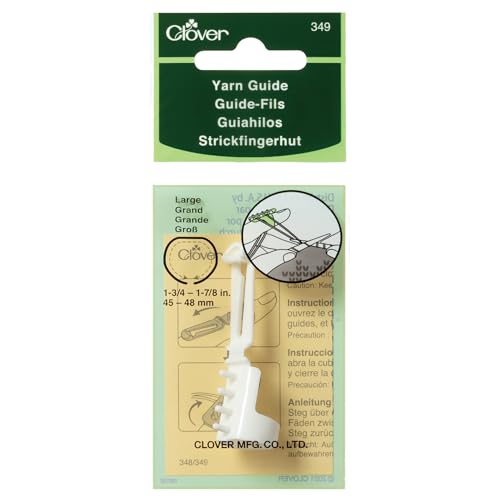
For the knitter who enjoys working on the go, the Clover yarn guide is a masterclass in portable design. It is small enough to tuck into a notions bag, yet it provides enough guidance to prevent your yarn from tangling while you knit in a chair or on a train.
Its clamp-on mechanism is versatile, allowing you to attach it to almost any table edge. This is a huge help if you don’t have a dedicated knitting desk and have to set up shop on your dining room table.
The tradeoff for this portability is that it lacks the height of a floor-standing mast. You will need to position your yarn source carefully to ensure the angle of the feed remains consistent, otherwise, you may still experience slight variations in your tension.
Brother Knitting Machine Tension Mast Upgrade

If you are a machine knitter, you know that the factory-provided mast is often the first thing to show wear. Upgrading to a high-quality aftermarket mast can significantly reduce dropped stitches and erratic feeding during complex colorwork.
These upgraded masts often feature dual-antenna systems, which allow you to feed two strands of yarn simultaneously without them twisting around each other. This is a game-changer for stranded knitting or holding two strands of lace-weight yarn to create a heavier gauge.
Before purchasing, ensure the mounting bracket is compatible with your specific machine model. A poorly fitted mast can vibrate during high-speed knitting, which is the last thing you want when working on a delicate garment.
Silver Reed Yarn Mast for Smooth Feeding
Silver Reed masts are known for their reliability and robust build. They provide a very steady feed, which is vital when you are working with large-scale projects like blankets or oversized sweaters where the weight of the yarn can fluctuate as the ball gets smaller.
The tension springs on these units are particularly responsive. They react quickly to your knitting speed, absorbing the sudden jerks that happen when you pull a bit too hard on a tangled section of yarn.
While they are excellent for machine knitting, many hand knitters have adapted them for their own use by mounting them to a heavy wooden base. It is a fantastic DIY solution if you want professional-grade feeding for your hand-knitting projects.
Why Consistent Yarn Tension Improves Stitch Quality
Consistent tension is the difference between a handmade garment that looks store-bought and one that looks "home-made." When your yarn feed is steady, your stitch loops are uniform in size, which creates a smooth, even fabric texture.
This is especially critical when working with stockinette stitch, where any variation in tension is immediately visible as "rowing out." By using a mast, you remove the human error of pulling the yarn tighter as your hands get tired during a long knitting session.
Furthermore, consistent tension ensures that your blocking process is more predictable. If your stitches are uniform, the garment will stretch and settle evenly when you soak and pin it, preventing lopsided hems or distorted necklines.
Essential Features to Look for in a Tension Mast
When shopping for a mast, don’t just look at the price tag; look at the mechanics. You want a system that offers adjustable tension discs so you can accommodate everything from fine lace threads to chunky, thick-and-thin yarns.
Consider the following features before you buy:
- Weighted Base: Essential for stability so the unit doesn’t tip.
- Vertical Height: Taller masts provide a better angle for yarn flow, reducing drag.
- Smooth Eyelets: Look for ceramic or polished metal to prevent fiber abrasion.
- Portability: Decide if you need a permanent setup or something you can stow away.
Remember that the goal is to reduce friction. If the yarn has to fight against the mast to get to your needles, you are defeating the purpose of the tool.
How to Properly Set Up Your Yarn Feeding System
The setup is just as important as the tool itself. Position your yarn source directly behind the mast, ensuring the yarn travels in a straight line up to the guide eyelet and then down to your needles.
Avoid sharp angles in the yarn path. If the yarn has to bend sharply around a corner, it will create resistance, which leads to tighter stitches and potential breakage, especially with delicate fibers like silk or bamboo.
Always perform a tension test swatch after setting up your mast. Knit a few inches, measure your gauge, and then adjust the tension dial on the mast until you achieve the desired drape and stitch density for your project.
Troubleshooting Common Yarn Snags and Feed Issues
If you find your yarn is snagging, the first place to check is the eyelet. Over time, friction can create tiny burrs in the metal; if you feel a snag, gently buff the eyelet with a fine-grit emery board or replace it entirely.
If the yarn is still catching, look at your yarn source. If you are pulling from a center-pull ball, ensure it hasn’t collapsed on itself, which is a common cause of sudden tension spikes that no mast can fully correct.
Finally, remember that humidity affects fiber. On very dry days, wool can become static-prone and cling to the mast; a light spritz of water in the room or using a static-guard spray on the mast can help your yarn glide smoothly again.
Investing in a quality yarn tension mast is one of the most effective ways to elevate your craft. By removing the physical burden of tension control from your hands, you allow yourself to focus on the rhythm and joy of the knitting process. Experiment with these tools to find the balance that suits your personal style and project needs. With a consistent feed, your stitches will reach a level of precision that makes every finished piece a true triumph.