7 Best Wool Shedding Brushes For Garment Care
Keep your knitwear pristine with our guide to the 7 best wool brushes. Learn how to remove pilling and maintain fabric quality for long-lasting garment care.
After spending hundreds of hours crafting a hand-knit sweater, seeing those first few pills appear can feel like a personal heartbreak. Pilling is a natural byproduct of friction, not necessarily a sign of poor yarn quality or bad technique. Knowing how to safely remove these fibers is the secret to making your garments last for decades. With the right tools, you can refresh your favorite pieces and keep your handmade wardrobe looking pristine.
The Gleener Ultimate Fuzz Remover: Best Overall


The Gleener stands out because it isn’t just one tool; it’s a system designed for different fiber weights. It comes with three interchangeable edges, each calibrated for specific levels of pilling intensity.
For a heavy, rustic wool sweater, the most aggressive edge clears large pills instantly. If you are maintaining a delicate merino base layer, the gentlest edge ensures you remove the fuzz without snagging the yarn’s twist.
This versatility is why I recommend it to knitters who maintain a diverse wardrobe. You don’t have to worry about a single blade setting being too harsh for your hand-dyed singles or too weak for your sturdy, multi-ply wools.
Conair Fabric Shaver and Lint Remover: Top Value

Sometimes you need a reliable, no-nonsense tool that gets the job done without a high price tag. The Conair electric shaver is a staple in many knitting kits for exactly this reason.
It features a large shaving head and a generous lint trap, which is helpful when you’re tackling a full-length cardigan. It’s effective on most standard wool blends, though I advise caution on very loose, airy mohair or brushed fibers.
The main trade-off here is the noise and the battery reliance. It’s not the most sophisticated tool, but for a quick refresh before a garment goes into storage, it is incredibly efficient.
Philips Fabric Shaver: Best for Delicate Knits
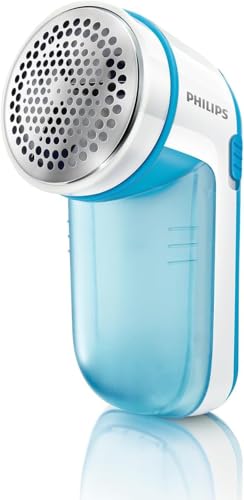
When you’ve spent weeks working with high-end cashmere or fine alpaca, you need a tool that operates with surgical precision. The Philips shaver is known for having a very consistent, gentle motor.
The mesh guard is designed to pull the fabric taut, ensuring that only the protruding pills are cut. This reduces the risk of accidentally slicing through a stitch, which is a knitter’s worst nightmare.
If you are working with luxury fibers that have a soft halo, use this tool with a light touch. It’s about gliding over the surface, not pressing down into the knit.
Steamery Pilo 2 Fabric Shaver: Best for Design

The Steamery Pilo 2 is a beautiful piece of equipment that feels as intentional as the knitting needles you choose for your projects. It is ergonomically shaped, making it comfortable to hold during long de-pilling sessions.
Beyond its aesthetics, it uses six precision blades that are surprisingly quiet. It handles everything from dense, felted wool to fine lace-weight knits with equal grace.
While it is an investment piece, the build quality is superior to most disposable options. If you appreciate tools that are both functional and elegant, this is the one to keep on your side table.
Evercare Magik Lint Brush: Best Manual Option
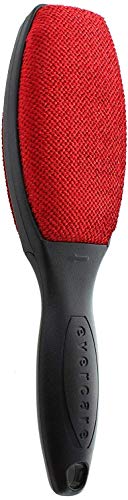
Not every pill needs to be cut, and sometimes a manual approach is the safest route for your yarn. The Evercare Magik brush uses a directional fabric surface to lift away surface fuzz and pet hair.
This is my go-to for garments that are only slightly fuzzy rather than heavily pilled. It’s completely silent, requires no electricity, and poses zero risk of cutting your precious hand-knit stitches.
It works exceptionally well on darker yarns where lint and dust show up most clearly. Just remember to use it in the direction indicated by the arrow to ensure you’re effectively lifting the fibers.
Fabric Comb by The Laundress: Best for Cashmere

Cashmere is a fiber that demands a delicate hand due to its short, soft staple length. The Fabric Comb is a small, simple tool that relies on manual tension to pull pills away from the surface.
Because you control the pressure, you can feel exactly when you’ve cleared the pill without stressing the surrounding yarn. It’s small enough to keep in your project bag for quick maintenance while traveling.
It is particularly effective on items that have been worn frequently, like scarves or cowls. It’s a low-tech solution that respects the integrity of the fiber.
Beautural Portable Fabric Shaver: Best for Travel
When you’re traveling with your hand-knits, you don’t want to worry about your sweater looking neglected after a long flight. The Beautural shaver is compact and features a protective cap that prevents damage in your luggage.
It has an adjustable height spacer, which is a brilliant feature for different types of knit structures. You can raise the guard for chunky, textured cables or lower it for smooth, stockinette fabric.
It’s a practical, mid-range option that balances power with portability. It gives you the confidence to wear your hand-knits anywhere without fearing the dreaded "sweater-seat" pilling.
Understanding Pilling: Why Wool Fibers Shed
Pilling occurs when short fibers within the yarn break or work their way to the surface due to friction. It is most common in areas like underarms, sleeves, and sides where the garment rubs against itself or other surfaces.
- Fiber Length: Shorter fibers are more prone to pilling than longer, high-quality wool staples.
- Twist: Loosely twisted yarns have more fiber ends exposed, increasing the likelihood of pilling.
- Ply: Single-ply yarns lack the structural integrity of multi-ply yarns, making them more susceptible to surface wear.
It is important to remember that pilling is not a defect. It is simply the nature of natural fibers reacting to the environment. Even the most expensive, hand-dyed wool will pill if it is worn frequently enough.
How to Properly De-pill Your Hand-Knit Garments
Always start by laying your garment on a flat, hard surface like a blocking mat or a clean tabletop. Never attempt to de-pill a sweater while you are wearing it, as you won’t have the necessary tension to do it safely.
- Prep: Smooth the fabric out to ensure there are no folds or wrinkles.
- Test: Always start on an inconspicuous area, like the inside of a hem, to see how the tool interacts with your specific yarn.
- Pressure: Use light, short strokes. Avoid pressing hard, as this can stretch the stitches or cause the tool to catch on a loose end.
- Finish: After de-pilling, give the garment a light steam or a gentle soak to help the fibers settle back into place.
If you find that you are pulling up "loops" of yarn rather than just the fuzzy pills, stop immediately. You may be using a tool that is too aggressive for your yarn’s twist, or you may be pulling too hard.
Essential Tips for Long-Term Wool Maintenance
The best way to manage pilling is to prevent it through proper garment care and rotation. Don’t wear the same hand-knit sweater three days in a row; give the fibers time to rest and recover their natural shape.
- Hand wash: Always use a gentle wool wash and avoid agitating the garment too much.
- Storage: Fold your sweaters rather than hanging them, as hanging can stretch the shoulders and distort the stitch pattern over time.
- Rotation: Give your woolens a "day off" between wears to let the fibers breathe.
Remember that a well-loved sweater is a sign of a successful project. Don’t be afraid to wear your hand-knits; just be prepared to give them the occasional spa day to keep them looking their best.
Maintaining your knitwear is an act of love that extends the life of your hard work. By choosing the right tool for your specific fiber, you ensure that your garments remain soft, beautiful, and wearable for years to come. Embrace the process of maintenance as part of the knitting journey itself. With these tools in your kit, you can wear your hand-knits with pride, knowing they look as good as the day you bound off.