6 Best Winding Stations For Delicate Skeins to Own
Transforming hanks into cakes is vital for yarn care. We review six top winding stations that ensure smooth, tangle-free results for your delicate skeins.
Nothing ruins the meditative rhythm of a knitting session quite like a collapsing, tangled skein that turns into a "yarn barf" nightmare mid-project. Investing in a reliable winding station is the single best way to protect your delicate fibers and ensure your yarn is ready to glide off the needles. Whether you are working with fragile hand-dyed lace or sturdy wool, the right winder acts as the foundation for your entire knitting process. Here are the six best winding stations to help you keep your stash organized and your sanity intact.
Stanwood Needlecraft Large Metal Yarn Ball Winder


If you have ever struggled with a plastic winder that skips gears or feels like it might snap under the weight of a heavy skein, the Stanwood Large Metal Winder is a revelation. Its heavy-duty construction provides the stability needed to wind large, 10-ounce cakes without the machine wobbling across your table.
The metal gears are the standout feature here, offering a smoothness that plastic alternatives simply cannot replicate. When you are winding a delicate single-ply yarn, that consistent, jerk-free rotation prevents the stretching that can ruin the yardage’s integrity.
Bottom line: It is an investment piece for the serious knitter who wants a machine that will last for decades. If you primarily work with large, bulky skeins, the weight and durability of this unit make it the clear winner.
Knit Picks Yarn Ball Winder: Best Budget Choice
For the knitter who is just starting to build their stash or only winds yarn occasionally, the Knit Picks winder is the gold standard of accessibility. It is lightweight, portable, and gets the job done without requiring a massive upfront investment.
While it is made of plastic and won’t handle massive, heavy-weight skeins with ease, it is perfect for standard 100-gram hanks of fingering or worsted weight yarn. It is the tool I recommend to students who want to transition from hand-winding to mechanical winding without breaking the bank.
Bottom line: It is honest, functional, and perfect for the occasional project. Just be mindful not to force it if you are winding a particularly dense or heavy skein, as the plastic components are designed for lighter loads.
Lacis Yarn Ball Winder: Best for Heavy Skeins
The Lacis winder is built like a tank, designed specifically for those who buy yarn in massive, oversized skeins. Its unique design allows it to handle significantly more volume than the standard hobbyist models found in local craft stores.
The tension control on this unit is remarkably precise, which is crucial when you are dealing with high-yardage hanks. If the tension is too loose, the ball will collapse; too tight, and you risk compromising the elasticity of the fiber.
Bottom line: If you are a fan of "sweater quantity" skeins or large, hand-dyed hanks that exceed the standard 100-gram size, this is the tool for you. It offers the structural integrity required to keep massive cakes from tangling.
Nancy’s Knit Knacks Heavy Duty Electric Winder

Electric winders remove the physical labor of turning a crank, which is a game-changer if you have arthritis or are winding multiple skeins for a large-scale colorwork project. Nancy’s Knit Knacks offers a robust electric solution that maintains a steady, controlled speed.
The advantage of an electric motor is the consistency of the wind. With manual winders, your speed naturally fluctuates, which can lead to uneven tension throughout the ball, but this unit keeps the RPMs steady from start to finish.
Bottom line: This is for the production knitter or the designer who spends more time prepping yarn than actually knitting. It is a professional-grade tool that rewards you with perfectly uniform cakes every single time.
Strauch Jumbo Ball Winder: Best Professional Tool
The Strauch Jumbo is widely considered the "holy grail" of yarn winders in the fiber arts community. Its ability to create massive, center-pull cakes that don’t collapse is unmatched by any other manual or semi-pro model.
This winder is engineered with a high-quality drive system that feels effortless to operate, even when winding a full pound of yarn. It is designed to sit securely on your workspace, ensuring that your yarn flows smoothly without any snagging or sudden stops.
Bottom line: If you are a professional or a dedicated enthusiast who wants the absolute best, look no further. It is expensive, but the precision and ease of use make it the final winder you will ever need to buy.
Ashford E-Winder: Best for High-Volume Projects

Ashford is a trusted name in the spinning world, and their E-Winder is designed for those who need to process large amounts of yarn quickly and reliably. It is a specialized tool that bridges the gap between home use and small-scale production.
The E-Winder is incredibly quiet, which is a major benefit if you like to listen to audiobooks or podcasts while you prep your yarn. It handles various yarn weights with ease, from cobweb-thin lace to heavy, rustic wools.
Bottom line: This is an excellent choice for knitters who also spin their own fiber or buy yarn in bulk. It is a high-volume workhorse that will save you hours of manual labor over the life of your stash.
Why Consistent Tension Matters When Winding Yarn
Consistent tension is the secret to a successful knitting project, starting from the moment you wind your yarn. If you wind too tightly, you are essentially "pre-stretching" the fiber, which can lead to gauge issues and distorted stitches once the garment is blocked.
Conversely, winding too loosely results in a "yarn barf" where the center of the cake collapses and tangles. You want the yarn to be snug enough to hold its shape, but loose enough to maintain the natural elasticity of the fiber.
- Elastic fibers (wool, alpaca): Require a moderate, steady tension to prevent over-stretching.
- Non-elastic fibers (silk, cotton, linen): Are more forgiving with tension but prone to slipping if wound too loosely.
How to Properly Use a Swift With Your New Winder
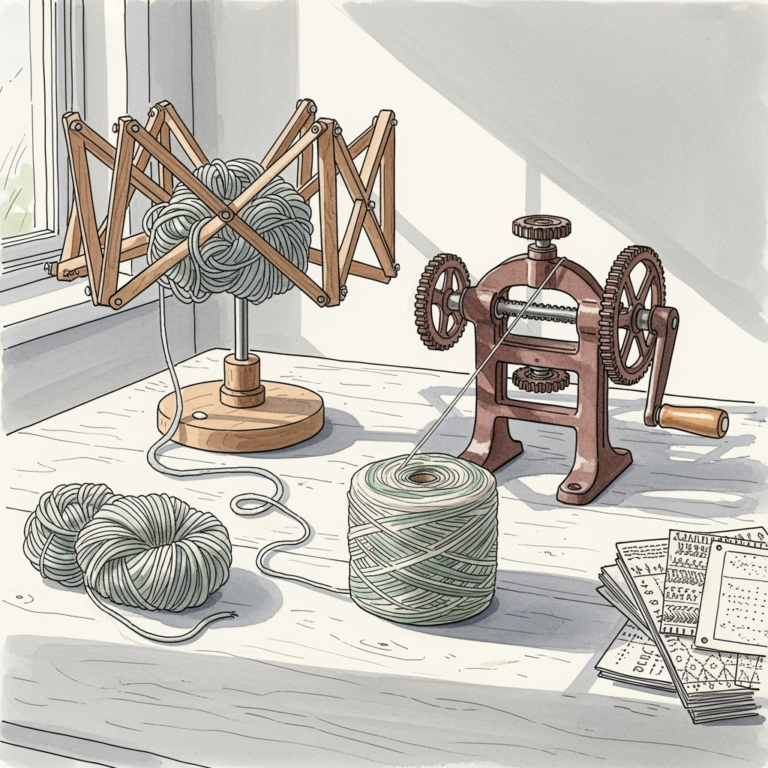
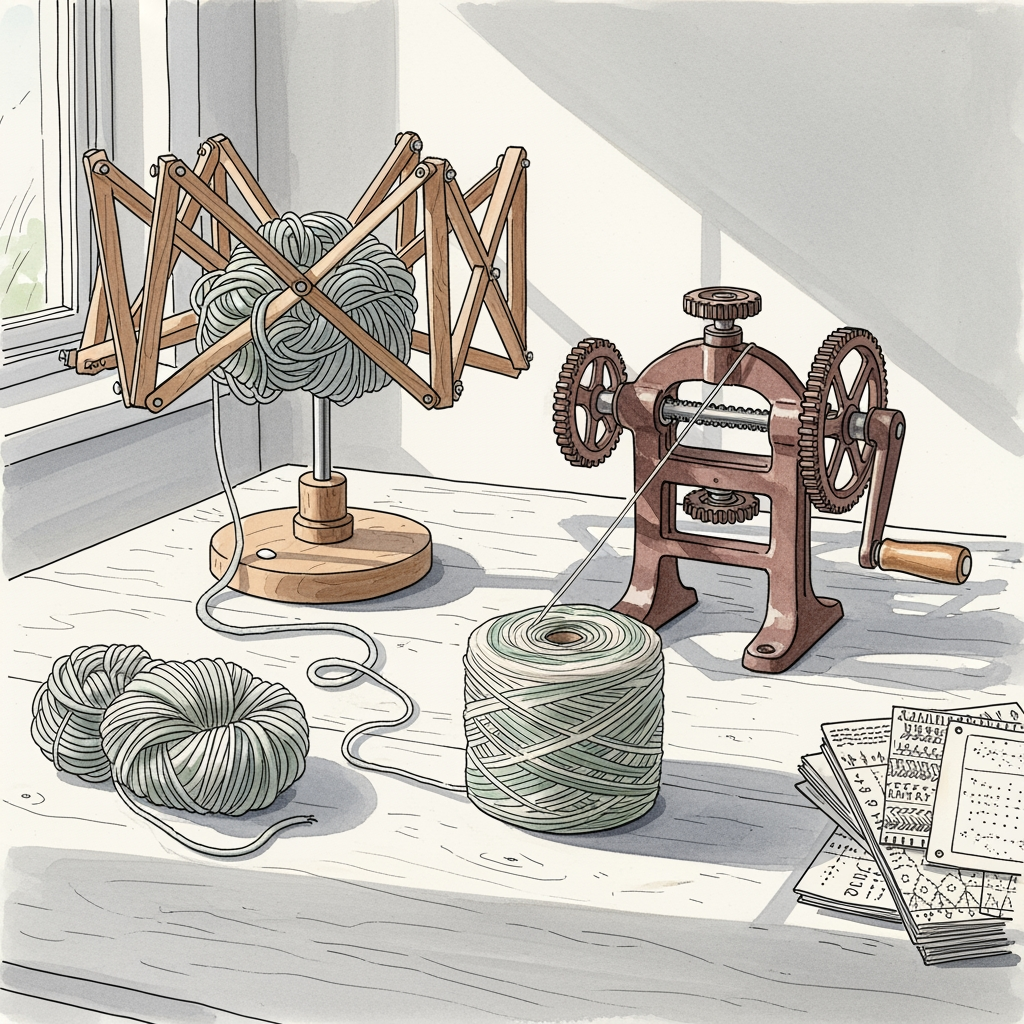
A winder is only half of the equation; you absolutely need a swift to hold your skein while you wind. Trying to wind from a chair back or your knees is a recipe for a tangled, frustrating mess.
Set your swift so the skein is taut but not stretched. As the winder pulls the yarn, the swift should rotate freely without any resistance, allowing the yarn to feed into the winder at a natural, unforced pace.
- Always remove any labels or tags before you begin.
- Check for any pre-existing tangles in the skein before you start the motor or crank.
- Keep the swift and winder aligned to prevent the yarn from jumping off the guide.
Avoiding Tangled Skeins With Delicate Fiber Types
Delicate fibers like mohair, angora, or high-twist silk require extra care during the winding process. These fibers are prone to "grabbing" onto themselves, which can cause them to knot up instantly if the tension changes abruptly.
When winding these materials, I always recommend slowing down your pace significantly. Use your fingers to gently guide the yarn as it moves from the swift to the winder, acting as a secondary tensioner to ensure a smooth, tangle-free flow.
- Mohair/Angora: Wind slowly to prevent the halo of the fiber from matting.
- High-twist yarns: Monitor carefully, as they tend to curl and kink if the tension is inconsistent.
- Hand-dyed hanks: Inspect for knots or joins before you begin, as these are common spots for potential tangles.
Maintenance Tips for Keeping Your Winder Smooth
Even the best winders will start to feel sluggish if they are not maintained. Dust and fiber bits can easily get trapped in the gears, causing friction that makes your winding less consistent over time.
Periodically clean your winder with a soft brush to remove any stray fibers or dust. If your winder uses a belt or gear system, check the manufacturer’s instructions for lubrication; a tiny drop of sewing machine oil can often restore a noisy, stiff winder to its original smooth operation.
Bottom line: Treat your winder like a sewing machine or a fine pair of knitting needles. A little bit of routine care will ensure that your equipment remains a reliable partner for all your future knitting projects.
Choosing the right winding station is about finding the balance between your project volume and your budget. By prioritizing consistent tension and pairing your winder with a quality swift, you protect your delicate fibers and set yourself up for a stress-free knitting experience. Remember that a well-maintained tool is the hallmark of a seasoned maker who values their time and their yarn. Happy winding, and may your yarn cakes always pull from the center without a single snag.