7 Best Tabletop Looms For Small Studio Spaces
Maximize your craft in tight quarters. We review the 7 best compact tabletop looms, focusing on portability, ease of use, and quality for small-studio weavers.
Transforming a small corner of your home into a dedicated weaving studio is a dream for many fiber artists looking to expand their craft beyond needles and hooks. While floor looms often dominate the imagination, tabletop models offer a sophisticated, space-efficient way to create intricate textiles without sacrificing your entire living room. Choosing the right tool requires balancing your project goals with the physical footprint of your workspace. This guide breaks down the best tabletop looms to help you find the perfect match for your creative journey.


Ashford SampleIt Loom: Best for New Weavers

The Ashford SampleIt is the quintessential "gateway" loom for those who want to dip their toes into weaving without the commitment of a massive piece of furniture. It is lightweight, portable, and incredibly intuitive to set up.
Think of this like your first set of bamboo needles—it’s forgiving, easy to handle, and perfect for learning the mechanics of the craft. Because it is a rigid heddle loom, the learning curve is gentle, allowing you to focus on color theory and warp tension rather than complex harness systems.
If you are just starting, don’t be tempted to buy a massive loom immediately. Start here to master basic plain weave and texture, then move up once you feel confident with your shuttle work.
Schacht Cricket Rigid Heddle: The Studio Favorite
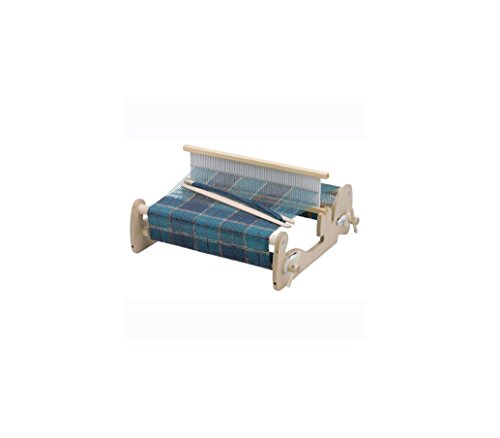
Schacht has earned its reputation for quality, and the Cricket is a workhorse that fits neatly on a bookshelf when not in use. It is widely considered the industry standard for rigid heddle weaving due to its sturdy construction and smooth operation.
The beauty of the Cricket lies in its reliability. When you are working on a long project, such as a scarf or a set of table runners, you need a loom that holds tension consistently, much like needing a reliable circular needle that won’t snag your yarn during a complex lace project.
Its compact design doesn’t mean it lacks features; the wide range of available reeds makes it versatile enough to handle everything from bulky wools to fine cottons. If you want a loom that will grow with you, this is the one.
Kromski Harp Forte: Best for Versatile Projects
The Kromski Harp Forte is a stunning piece of craftsmanship that feels more like furniture than a tool. Beyond its aesthetic appeal, it is a highly functional loom that offers a larger weaving width than many other tabletop options.
What I love about the Harp Forte is its built-in warping board functionality, which is a massive space-saver in a cramped studio. You can use the back of the loom to measure your warp, eliminating the need for a separate, bulky warping frame.

This loom is ideal for the weaver who wants to experiment with different weights of yarn. Just as you might switch from a DK weight for a sweater to a lace weight for a shawl, the Harp Forte handles these transitions with ease.
Leclerc Dorothy Table Loom: The Classic Choice
The Leclerc Dorothy is a true table loom, meaning it uses shafts rather than a rigid heddle. This opens up a world of pattern possibilities, allowing for twills, satins, and complex structures that rigid heddle looms simply cannot achieve.
If you are an advanced knitter who loves stranded colorwork or complex cables, you will appreciate the structural depth a shaft loom provides. It allows you to design your own drafts, giving you complete control over the cloth’s hand and drape.
While it requires more setup time than a rigid heddle loom, the payoff is a professional-grade textile. It is a classic for a reason: it is built to last a lifetime.
Louet Erica Table Loom: Best Compact Design
The Louet Erica is a marvel of engineering, specifically designed for those who have very little space but high ambitions. It is a two-shaft loom that can be expanded, making it a great entry point into shaft weaving.
The Erica folds up remarkably small, even with a project still on the loom. This is a game-changer for those of us who have to share our craft space with a dining room table or a home office.
The action is smooth and quiet, perfect for late-night weaving sessions. It’s a sophisticated tool for someone who values efficiency and clever design as much as the final woven result.
Ashford Katie Table Loom: Best Folding Model

The Ashford Katie is the ultimate "pack and go" table loom. It features a unique folding mechanism that keeps your warp perfectly tensioned while the loom is tucked away.
For the weaver who travels to workshops or guild meetings, the Katie is indispensable. It eliminates the tedious process of re-warping every time you want to move your workspace.
It is a multi-shaft loom, so it offers the same design versatility as the Dorothy or Erica. If you want a full-featured studio loom that disappears into a closet when guests arrive, look no further.
Beka 20-Inch Table Loom: Best Value for Money
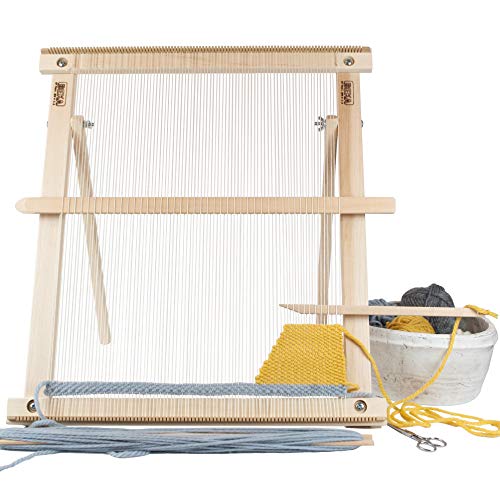
The Beka 20-inch loom is a sturdy, no-nonsense rigid heddle option that provides a wider weaving surface at an accessible price point. It is straightforward, durable, and lacks the bells and whistles that can sometimes drive up the cost of boutique looms.
If you are on a budget but don’t want to sacrifice width, this is your best bet. It is perfect for weaving standard-width scarves or placemats without feeling cramped.
Don’t let the lower price tag fool you; the wood is solid and the mechanics are sound. It is a fantastic choice for the weaver who wants to spend more of their budget on high-quality luxury yarns rather than hardware.
Essential Features for Small Studio Weaving
When looking for a loom for a small space, you must prioritize functionality over aesthetics. Consider these non-negotiable features:
- Foldability: Can it be stored while warped?
- Warping capacity: Does it include built-in warping tools?
- Width: Is it wide enough for your desired projects but narrow enough for your table?
- Expandability: Can you add more shafts or reeds later?
Remember, the best loom is the one that stays out of the way until you are ready to weave. If a loom is too heavy or difficult to set up, you will eventually stop using it.
Comparing Rigid Heddle vs. Shaft Table Looms
The rigid heddle loom is the "stockinette stitch" of the weaving world—simple, effective, and capable of beautiful results. It is perfect for textured yarns, hand-painted wools, and beginners who want immediate gratification.
Shaft looms, however, are the "cables and lace" of the weaving world. They allow you to manipulate individual warp threads to create intricate patterns that are woven into the very structure of the fabric.
Choose a rigid heddle if you love texture and color play. Choose a shaft loom if you are interested in drafting, structure, and complex weave patterns.
Maintenance Tips for Your Tabletop Loom
A loom is a precision instrument, much like a good pair of knitting needles or a spinning wheel. Keep the wooden parts conditioned with a light, food-safe oil to prevent drying and cracking.
Check your heddles and reeds regularly for burrs or rough spots that could snag your warp threads. Just as you would check your needles for nicks that might split your yarn, a smooth reed is essential for a clean shed.
Finally, keep your loom clean. Dust and fiber debris can settle in the joints and affect the tension. A quick wipe-down after every project will keep your loom running smoothly for years.
Selecting a tabletop loom is a significant step in your fiber arts journey, one that bridges the gap between simple construction and complex textile design. Whether you choose the simplicity of a rigid heddle or the intricate potential of a shaft loom, ensure the tool fits your physical space and your creative pace. By considering your storage needs and the types of fabrics you wish to create, you can find a reliable partner for your studio. May your warp stay strong and your shuttles fly true as you explore the wonderful world of weaving.