7 Best Skein Winders For Yarn Preparation Reviewed
Discover the 7 best skein winders for efficient yarn prep. We review top models to help you find the perfect tool for tangle-free, organized fiber storage.
Transforming a tangled, hand-dyed skein into a neat, center-pull cake is one of the most satisfying rituals in a knitter’s life. However, choosing the right tool to manage your stash can be the difference between a meditative winding session and a frustrating afternoon of yarn barf. Whether you are prepping delicate lace-weight mohair or sturdy worsted wool, the mechanics of your winder matter immensely. Here is a breakdown of the top contenders to help you streamline your fiber preparation.
Stanwood Needlecraft Large Metal Yarn Winder


This is the workhorse of the serious stash-builder. Its heavy-duty metal gears provide a level of torque that plastic models simply cannot replicate, making it ideal for those who frequently wind large, 400-gram cones of bulky yarn.
If you find yourself constantly battling the "wobble" of cheaper winders, the Stanwood’s solid construction is a revelation. It handles high-tension winding with ease, ensuring that your yarn cakes remain stable and don’t collapse mid-project.
The downside is the price point and the footprint. It is a significant investment and occupies a fair amount of desk space, but for the knitter who buys entire bags of yarn at a time, it is an essential piece of infrastructure.
Knit Picks Yarn Ball Winder: Best Value Pick
For the casual knitter or those just starting to build their collection, this model is a reliable entry point. It is lightweight, portable, and gets the job done for standard-sized skeins without breaking the bank.
I often recommend this to beginners who are just starting to move away from store-bought balls and into the world of artisan hanks. It is intuitive to set up and works perfectly for the typical 100-gram skeins found in most local yarn shops.
Do keep in mind that the plastic gears have a finite lifespan if pushed too hard. If you try to force a massive, heavy skein through this, you will likely strip the gears, so keep your projects modest in size.
Lacis Yarn Ball Winder: The Reliable Classic
The Lacis winder has been a staple in knitting circles for decades for a reason. It is a no-nonsense tool that prioritizes functional, consistent performance over flashy features or modern aesthetics.
What sets this model apart is its longevity; I have seen these units survive in active knitting guilds for years. It produces a very clean, uniform cake that feeds smoothly from the center, which is vital when working with slippery fibers like silk or bamboo blends.
It isn’t the fastest winder on the market, but it is incredibly steady. If you value consistency and a tool that won’t surprise you with a sudden mechanical failure, this is a classic choice.
ChiaoGoo Hand-Operated Yarn Ball Winder

ChiaoGoo is best known for their needles, and they have brought that same attention to detail to their winding equipment. This winder is remarkably smooth, offering a quiet, low-friction experience that feels professional.
The tension guide on this model is particularly well-designed, allowing for a tight, even wind that prevents the "yarn barf" often caused by loose, uneven tension. It’s a joy to use when you have a large batch of yarn to prep for a multi-color sweater project.
While it performs beautifully, the assembly can be a bit finicky for some. Once it is dialed in, however, it provides a level of precision that makes the winding process feel less like a chore and more like a craft.
Nancys Knit Knacks Heavy Duty Yarn Winder
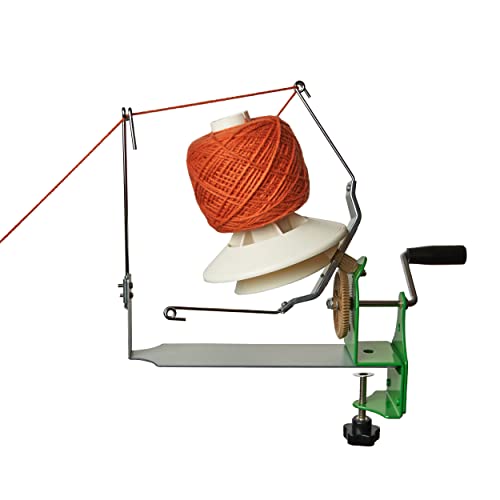
When you are dealing with luxury fibers like hand-dyed cashmere or delicate angora, you need a winder that treats the yarn with respect. This heavy-duty model is designed to handle high volumes without putting undue stress on the fiber.
The build quality is exceptional, featuring robust components that minimize vibration. This is critical because excessive vibration can actually stretch or damage delicate plies, which would negatively affect your gauge later on.
It is definitely a "pro" tool, suitable for those who maintain a significant, high-end stash. If you are serious about fiber preservation, this is the gold standard for long-term storage preparation.
Royal Hand-Operated Yarn Ball Winder Review

The Royal winder is a popular mid-range option that strikes a balance between portability and durability. It is sturdy enough for frequent use but compact enough to be tucked away in a project bag or drawer.
It is particularly effective for those who knit on the go. If you are preparing yarn for a retreat or a long travel project, this winder is reliable and unlikely to snag or tangle your yarn during the process.
The clamp is quite versatile, fitting onto a variety of table thicknesses, which is a common pain point with other brands. It’s a solid, middle-of-the-road choice that rarely disappoints.
U-nitt Large Capacity Yarn Ball Winder

If you regularly work with massive, jumbo-sized skeins, the U-nitt is designed specifically for your needs. It features a larger spool and a wider base, allowing you to wind substantial yardage into a single, manageable cake.
The advantage here is fewer ends to weave in later. When working on a large blanket or an oversized cardigan, being able to wind 500+ yards into one cake is a massive time-saver.
Be aware that the sheer size of the cakes can put extra weight on your swift. Ensure your swift is sturdy enough to handle the rotation of a large, heavy skein to avoid the whole setup tipping over.
How to Choose the Best Winder for Your Stash
Selecting a winder isn’t just about the machine; it’s about the yarn you use. If you primarily work with fingering-weight wool, almost any winder will suffice. However, if you work with heavy-weight, high-twist yarns, you need a unit with metal gears and a robust tension guide.

- Assess your volume: How many skeins are you winding per month?
- Check the fiber type: Slippery fibers (silk, alpaca) require more consistent tension than grippy wool.
- Consider space: Do you need a portable unit or a permanent fixture for your craft room?
Ultimately, the best winder is one that you will actually use. If the machine is too difficult to set up, your yarn will stay in messy hanks, leading to tangles and frustration when you finally sit down to knit.
Essential Tips for Winding Yarn Without Snags
Always use a swift to hold your skein before winding. Attempting to wind from a chair back or your knees is a recipe for a tangled disaster, especially with hand-dyed yarns that have been loosely twisted.
- Maintain a steady pace: Fast winding often leads to uneven tension.
- Watch the yarn path: Ensure the yarn isn’t catching on the swift or the winder’s guide.
- Don’t overfill: Stop before the cake becomes too large to feed properly.
If you are winding a delicate or "sticky" yarn like mohair, go slowly. If you wind too quickly, the friction can cause the fibers to felt slightly against each other, which will ruin the stitch definition of your final fabric.
Maintenance Guide for Your Yarn Winder Gears
Your winder is a mechanical device and requires occasional care. Periodically check the gears for lint or stray fibers, as these can build up and cause the mechanism to seize or grind.
A tiny drop of sewing machine oil on the main gear can keep the rotation smooth and quiet. Avoid using heavy household greases, as these will attract dust and create a gummy mess that is difficult to clean.
Finally, always store your winder in a clean, dry place. Humidity can affect the plastic components of cheaper models, while dust can accelerate the wear on the gears of even the most expensive units.
Investing in a quality yarn winder is an act of kindness toward your future knitting self. By choosing the right tool for your specific fiber needs and maintaining it with care, you ensure that every project begins with a smooth, stress-free experience. Happy winding, and may your yarn cakes always pull from the center without a hitch.