
7 Best Nylon Cords For Drawstring Projects Reviewed
Discover the 7 best nylon cords for your next drawstring project. We review durability, flexibility, and knot-holding power to help you choose the right fit.
Choosing the right drawstring for your hand-knit bags, hoodies, or joggers is just as critical as selecting the perfect yarn for the body of the garment. A poor-quality cord can fray, stretch out of shape, or snap, instantly undermining hours of meticulous knitting work. With decades at the loom and needle, I have learned that synthetic nylon offers the best balance of strength and longevity for these functional elements. This guide explores the top nylon cords on the market to ensure your finished projects remain as durable as they are beautiful.
Paracord Planet 550 Type III: The Overall Best Pick


If you have ever struggled with a drawstring that loses its structure after a single wash, the Paracord Planet 550 is your solution. It features a seven-strand core that provides a robust, round profile, ensuring it stays centered in your casings without twisting or flattening.
This cord is the industry standard for a reason. It offers the perfect "hand"—that elusive quality of being substantial enough to grip easily, yet flexible enough to cinch a drawstring bag without fighting the fabric.
Be aware that this is a thicker cord, best suited for heavy-weight projects like market bags or utility pouches. If you try to thread this through a delicate lace casing, you will likely find it too bulky to slide smoothly.
Atwood Rope MFG Micro Cord: Best for Delicate Knits
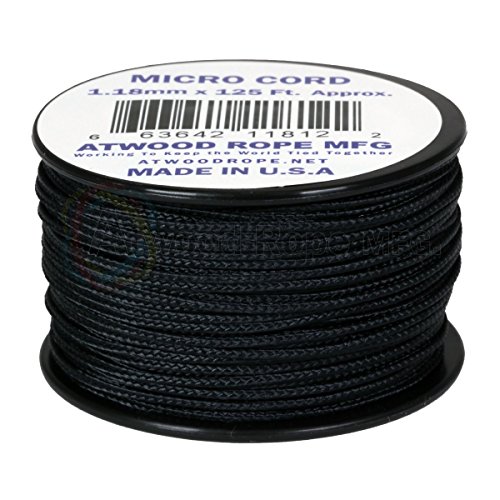
When working with fine-gauge yarn or intricate lace, standard paracord is simply too aggressive. The Atwood Micro Cord is incredibly thin and lightweight, making it the go-to for refined garments where you don’t want the drawstring to overwhelm the stitch pattern.
Because it is so slender, it doesn’t add unnecessary bulk to necklines or waistbands. You can easily pull it through narrow eyelets created by yarn-overs without distorting the surrounding fabric.
The tradeoff here is raw strength. While it is perfectly fine for light garments, I would not recommend this for a heavy-duty duffel bag that you plan to stuff with books or heavy supplies.
West Coast Paracord Nylon: Best for Heavy Projects
For those of you knitting rugged gear or heavy canvas-lined bags, West Coast Paracord offers a serious step up in tension tolerance. This cord is tightly woven, meaning it resists the "pilling" effect that can happen when synthetic fibers rub against rougher wool or cotton.
It handles high-friction areas exceptionally well. If you are designing a project where the drawstring will be pulled tight and knotted repeatedly, this cord will maintain its integrity far longer than a standard craft-store alternative.
The rigidity of this cord means it doesn’t drape as softly as some others. If you want a drawstring that hangs with a gentle, fluid motion, you might find this one a bit too stiff for your liking.
PPM Braided Cord: Best for Softness and Comfort
PPM, or Polypropylene Multifilament, is a dream for garments that sit directly against the skin, such as hoodies or sweatpants. Unlike some nylon cords that can feel "scratchy" or overly plastic, this cord has a soft, matte finish that feels almost like cotton.
The braided construction is inherently flexible, allowing it to move with the body. If you are knitting a garment for a child or someone with sensory sensitivities, this is the cord you want in your stash.
Because it is so soft, it can sometimes be prone to snagging if it catches on a sharp zipper or a rough surface. Treat it with a bit more care than you would a heavy-duty utility cord.
Tough-Grid 750lb Cord: Best for Durability Needs

Sometimes, a project calls for extreme measures, especially if you are knitting gear meant for outdoor use or heavy lifting. The Tough-Grid 750lb cord is essentially over-engineered for knitting, which is exactly why it works so well for high-stress applications.
It is virtually impossible to snap this cord by hand, and it maintains its shape under immense pressure. If you are making a project that needs to hold its own against the elements, this is the gold standard.
The primary drawback is its diameter and weight. It is thick and heavy, so ensure your casing is wide enough to accommodate it before you commit to using it in your pattern.
Pepperell Nylon Craft Cord: Best for Fine Detailing

Pepperell is a classic choice for makers who prioritize aesthetics and color variety. This cord is smooth, shiny, and holds a knot exceptionally well, which is vital for drawstrings that shouldn’t slide open on their own.
It is ideal for decorative projects or smaller accessories where the drawstring is meant to be a focal point. The sheen of the nylon adds a polished, professional look that contrasts beautifully against matte wool or acrylic yarns.
Avoid using this for heavy-duty cinching, as the smooth surface can sometimes be a bit slippery. If you find your knots are coming undone, a simple double-knot usually does the trick.
Ravenox Solid Braid Nylon: Best Utility Selection

Ravenox produces a solid-braid nylon that is incredibly consistent in diameter. In knitting, consistency is king; you don’t want a cord that is thick in one spot and thin in another, as that will cause your casing to bunch up unevenly.
This cord is a workhorse. It is easy to cut and the ends can be heat-sealed with a lighter to prevent fraying, which is a massive advantage for any knitter finishing a project quickly.
It is a fairly utilitarian-looking cord, so it may not be the best choice for high-fashion items where you want a specific texture. However, for functional items, it is reliable and predictable.
How to Select the Right Cord Diameter for Projects
Selecting the right diameter is all about the relationship between the cord and the eyelet. A good rule of thumb is that the cord should occupy no more than 60% of the eyelet’s diameter to allow for smooth movement.
- Fine/Lace Weight: Use 1mm to 1.5mm cords to avoid distorting the stitch gauge.
- Worsted/DK Weight: A 2mm to 3mm cord provides a balanced look that doesn’t overpower the yarn.
- Bulky/Chunky Weight: You can go up to 4mm or 5mm, but ensure your casing is knit with a slightly larger needle to maintain flexibility.
Always test your cord through a sample swatch of your casing before you finish the entire garment. If the cord feels like it’s dragging, it will eventually cause the fabric around your eyelets to stretch or tear.
Essential Tips for Finishing Nylon Cord Drawstrings
The biggest mistake knitters make is leaving the ends of nylon cord raw, which leads to inevitable unraveling. Always use a flame to gently melt the cut ends of your nylon cord, turning them into a hard, rounded plastic tip.
If you want a more polished look, consider using metal or plastic cord ends (aglets) that crimp onto the cord. This adds weight to the ends, which helps the drawstring hang straight and prevents it from disappearing back into the casing.
When threading the cord, use a large tapestry needle or a dedicated bodkin tool. Avoid using safety pins if possible, as they can snag the yarn of your garment and cause unsightly pulls.

Common Mistakes When Attaching Cords to Knitwear
The most common error is failing to reinforce the eyelets where the cord exits the fabric. Nylon cord is strong, but it can act like a saw against delicate yarn fibers over time.
Always reinforce your exit holes with a bit of duplicate stitch or a small embroidery detail using a matching yarn. This distributes the tension across more stitches, preventing the cord from creating a "run" in your knitting.
Finally, remember that nylon does not shrink, but your wool garment might. If your project is made of natural fibers, ensure your casing is slightly larger than necessary to account for the potential shrinkage of the knit fabric during the first wash.
Selecting the right nylon cord is an exercise in balancing utility with the delicate nature of your knit fabric. By matching the weight of the cord to your yarn gauge and properly reinforcing your exit points, you ensure your hard work stands the test of time. Take your time, test your materials, and let your functional choices be as intentional as your colorwork. Happy knitting, and may your drawstrings always slide smoothly.