6 Best Task Lights For Needlepoint Work For Precision
Struggling with detail? Discover the 6 best task lights for needlepoint work to improve your precision and reduce eye strain. Shop our top picks for crafters now.
Stitching in low light is the fastest route to eye strain and missed stitches, especially when working with fine-gauge needlepoint or dark-colored fibers. Consistent, high-quality illumination transforms a frustrating, squint-heavy session into a productive period of fluid creativity. Precision work requires more than just ambient room lighting; it demands a focused beam that mimics natural daylight to ensure color accuracy and stitch clarity. Selecting the right task light is an investment in the longevity of eyesight and the overall quality of finished textile work.
Brightech Litespan LED: Best Overall Floor Lamp
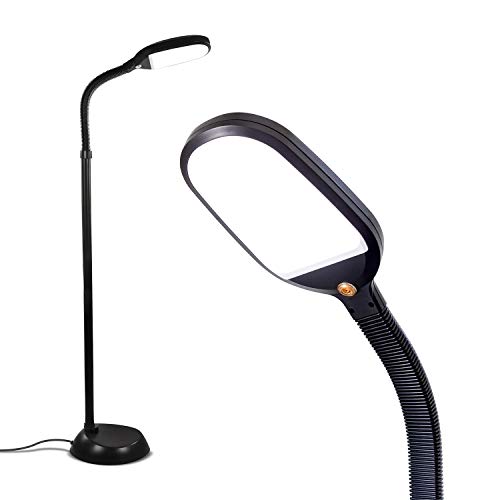

The Brightech Litespan stands out as a reliable workhorse for those who spend hours parked in a favorite armchair. Its greatest strength lies in the gooseneck design, which allows for precise angling over the lap or frame without casting long shadows.
When working with intricate patterns or blackwork where every intersection counts, this lamp provides a crisp, steady stream of light. The ability to dim the intensity is a crucial feature, as high-intensity glare can sometimes wash out the texture of softer, matte yarns or delicate silks.
It is a stationary solution, meaning it occupies a dedicated footprint next to the stitching station. For those who frequently switch between different seating areas, this may require some planning, but for consistent practice, the stability is unmatched.
Neatfi Bifocals Magnifier: Top Magnifying Pick

A magnifying lamp bridges the gap between frustration and clarity when working on high-count canvas or very fine needlepoint. The Neatfi Bifocals provide a clear, distortion-free view, which is essential when checking if a strand has split or if a needle has pierced the canvas thread incorrectly.
Having a built-in lens saves the constant motion of picking up and putting down a handheld magnifier. This rhythm interruption is often what leads to fatigue; keeping both hands free to manage the needle and tension is paramount for maintaining consistent gauge.
Be aware that these lamps require a sturdy table mount, as the heavy lens head can cause instability on flimsy surfaces. Ensure the clamping mechanism fits the thickness of the workstation to avoid vibration during delicate embroidery tasks.
Glocusent Neck Light: Best for Portability

For the traveling stitcher or the maker who likes to drift between the living room and the patio, the Glocusent neck light offers unparalleled freedom. It sits comfortably around the collarbone, directing light exactly where the eyes are focused without needing a floor stand or surface space.
While it lacks the sheer power of a large LED floor lamp, it is more than sufficient for evening projects on the go. The adjustable brightness settings prevent the light from being overwhelming, which is helpful when working with metallic threads that might otherwise create blinding reflections.
The trade-off is battery life, which necessitates occasional recharging compared to a corded wall unit. It is an excellent secondary light source to keep in a notions bag for travel or quick repair sessions.
BenQ e-Reading LED: Ultimate Desk & Table Lamp

The BenQ e-Reading lamp features an exceptionally wide light bar designed to illuminate the entire workspace evenly rather than just a single point. This is ideal for projects requiring multiple charts, thread organizers, and various notions spread across a large table.
The flicker-free technology reduces the subconscious strain caused by standard household bulbs. When performing repetitive, detailed work, this difference in light quality significantly reduces the likelihood of a midday headache.
It is a premium investment, but the durability and the advanced sensor-driven brightness adjustments justify the cost for dedicated, long-term hobbyists. It creates a professional, distraction-free environment that centers the work entirely.
OttLite 2-in-1 LED: A Truly Versatile Design

The OttLite 2-in-1 is designed for those who need their tools to adapt to changing project needs. It functions as both a tall floor lamp for chair-side stitching and a shorter desk lamp for intricate detail work at a table.
The clarity of the light is consistently rated for high color-rendering, which is vital when matching variegated thread colors. Nothing is more disappointing than discovering a color shift after hours of work because the room lighting was inaccurate.
While the modular parts are convenient, ensure all joints are tightened correctly during assembly to maintain balance. It offers the best of both worlds for those who don’t want to commit to a single, permanent setup.
LuminoLite Clip-On: Best Budget-Friendly Light

A simple clip-on light is often the perfect entry point for those just beginning to understand the impact of task lighting. It can be easily attached to a lap frame or a sturdy piece of embroidery furniture, providing a localized boost right at the point of the needle.
These are lightweight and compact, making them simple to move or store when the project is packed away. While they lack the complex adjustability of more expensive floor models, they effectively solve the problem of “shadow casting” caused by the body blocking overhead ceiling lights.
Use these with a bit of caution regarding the surface being clipped to; ensure the clamp is padded to prevent damage to expensive wooden hoops or frames. They are the perfect, no-fuss solution for focused, short-duration stitching.
How to Choose the Right Light for Your Space
Assess the physical constraints of the stitching environment before purchasing any equipment. A floor lamp is ideal for dedicated corners, but it becomes a tripping hazard in high-traffic rooms.
Consider the surface area available. If the workspace is limited, prioritize a clamp-on or a desk-mounted model that leaves the work surface free for thread cutters, charts, and scissors.
Always factor in the height of the chair versus the table. A light that is too short creates poor angles, while one that is too tall might shine directly into the eyes, which is counterproductive to comfort.
Lumens vs. Color Temperature: What Matters Most
Lumens measure the brightness of the bulb, while color temperature, measured in Kelvins (K), determines the “warmth” or “coolness” of the light. For fiber arts, aim for a Kelvin rating between 5000K and 6500K, which mimics bright, natural daylight.
Avoid warm, yellow-toned bulbs, as these can drastically alter the appearance of thread colors, leading to poor color choices during a project. A cool, white light ensures that the thread chosen is the thread intended, even when stitching at midnight.
High lumens are not always better; too much brightness on light-colored fabric can create a glare that is physically painful. Seek out dimmable options so the light intensity can be adjusted based on the contrast of the fabric and the thread.
Floor, Desk, or Neck Light: Which Style is Best?
Floor lamps are the standard for comfortable, long-form stitching sessions in an armchair, providing the most stable and adjustable coverage. They are best suited for those who maintain a permanent, dedicated “stitching station” in their home.
Desk lamps are superior for projects that require a flat, spread-out workspace, such as cross-stitching with complex charts or working on large-format canvases. They offer a fixed, consistent light source that does not shift as the body moves.
Neck lights are the niche specialists for travelers or those who find themselves stitching in unconventional spots. They provide a mobile, hands-free solution that is vastly superior to relying on a house lamp or a smartphone flashlight.
Do You Need a Magnifying Lamp for Needlepoint?
Magnification is a game-changer for those tackling high-count canvases or using multi-strand silks where thread separation is a risk. It allows the eyes to focus on the fine motor movements of the needle without the tension that comes from squinting.
However, relying on magnification too early can sometimes be a crutch; start with good lighting first. If the light is sufficient and the eyes still feel strained or the details remain blurry, then consider adding a magnifying element.
The quality of the lens matters more than the magnification power itself. A high-quality, clear lens that is easy to adjust is far better than a powerful, distorted lens that creates eye-watering visual artifacts.
Proper illumination is the most significant upgrade a fiber artist can make, often eclipsing the cost of the tools themselves in terms of long-term value. Whether opting for a professional-grade floor lamp or a flexible portable unit, the goal is always to see the stitch, not the struggle. By prioritizing consistent, color-accurate light, you ensure that every project is a pleasure to work on from the first needle entry to the final knot.