7 Best Inventory Journals For Tracking Yarn Purchases
Organize your fiber stash effortlessly with our top 7 inventory journals for tracking yarn purchases. Discover your perfect record-keeping tool and shop today.
Every dedicated knitter eventually reaches a tipping point where a “stash” transforms from a few spare skeins into a complex, unmanageable library of fibers. Managing this inventory is not merely about organization; it is a critical step in project planning, ensuring that the right yardage and fiber content are always available for that next sweater or shawl. Without a reliable system, the risk of purchasing duplicate colors or discovering a moth-ridden ball of wool at the bottom of a bin becomes a recurring frustration. The following inventory methods provide the necessary structure to turn a chaotic collection into a curated, accessible resource.
Ravelry Stash: The Gold Standard for Knitters


Ravelry remains the industry leader for a reason: it integrates directly with pattern databases to suggest projects based on existing yarn. Entering yarn details here allows for automatic linking to dye lots, colorways, and even the original purchase price.
For those who frequently browse the site for inspiration, keeping a stash online makes the transition from “what do I have?” to “what can I knit?” nearly instantaneous. It excels at tracking yardage, which is essential when checking if a random skein of fingering weight is sufficient for a pair of socks.
The primary trade-off involves the time investment required for data entry. Manually uploading photos and inputting gauge information for hundreds of skeins is a labor-intensive process that can feel like a chore rather than a hobby.
Laine’s My Knitting Notes: The Elegant Choice

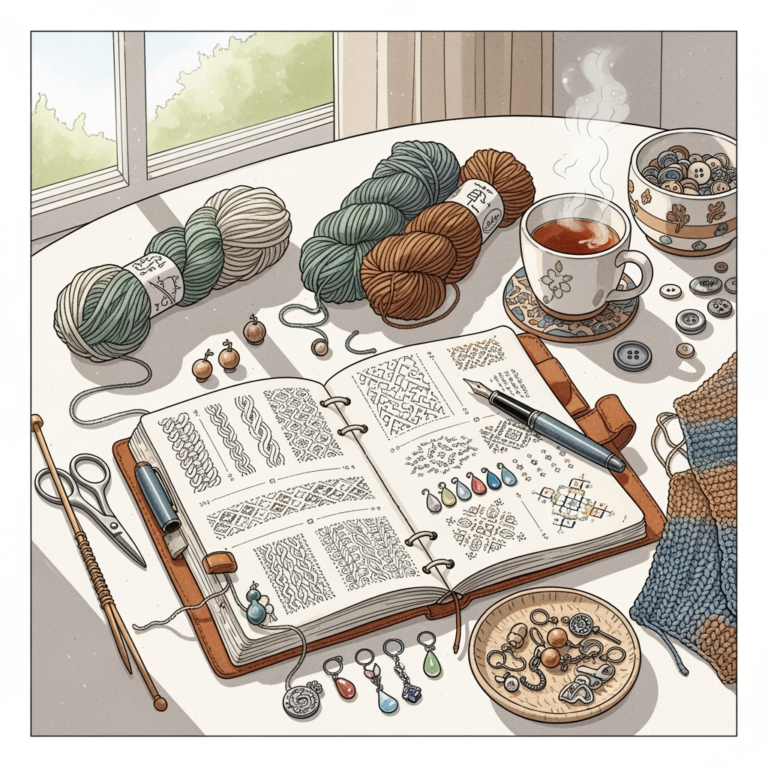
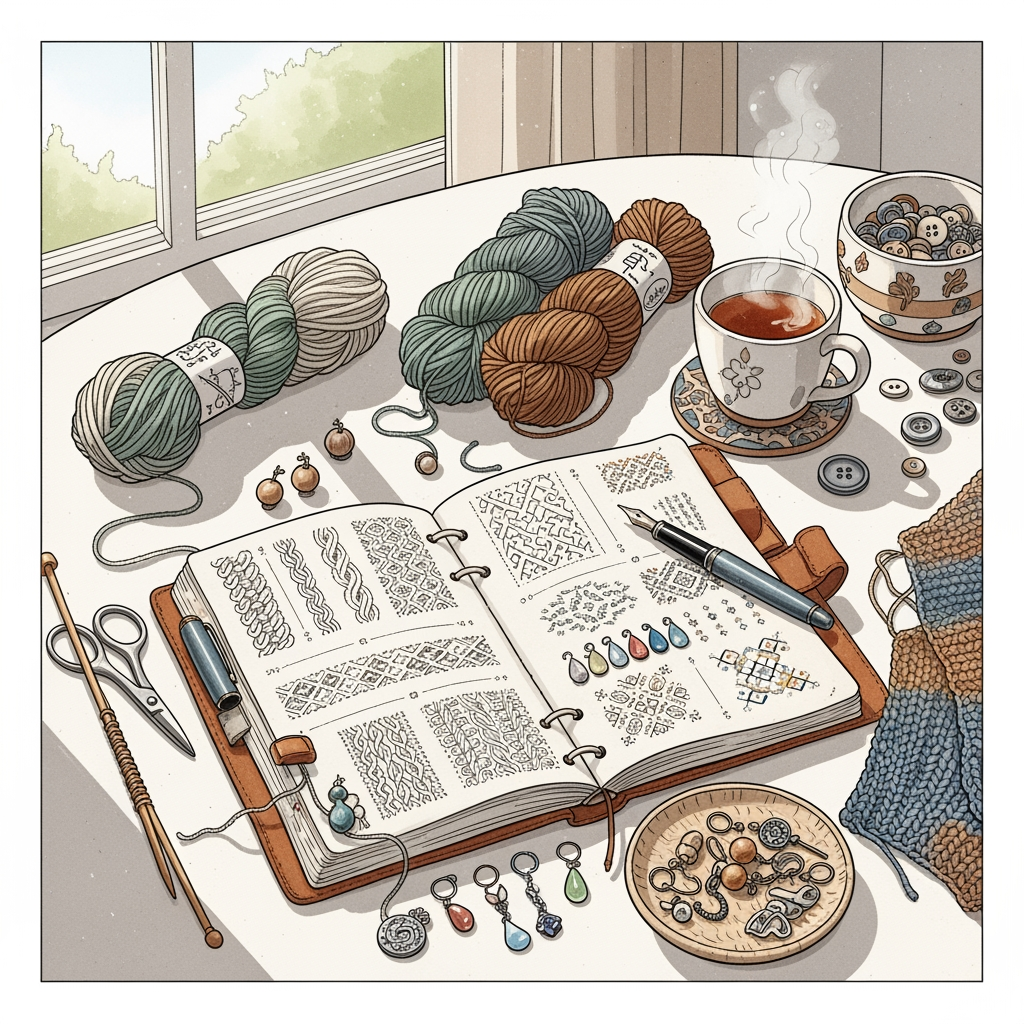
For the knitter who prefers tactile feedback, Laine’s My Knitting Notes offers a refined, structured approach to project and inventory tracking. It provides dedicated space for swatches, yarn labels, and detailed notes on fiber characteristics.
This journal is ideal for those who value the historical aspect of their craft. Beyond basic inventory, it encourages the documentation of how a specific yarn performed during blocking—the process of setting a finished garment in water to even out stitches—which is invaluable for future project planning.
While beautiful, this analog system does not offer the searchability of a digital database. If a stash spans several dozen bins, finding a specific colorway might require flipping through pages rather than using a quick keyword search.
Notion: The Best DIY Digital Yarn Journal
Notion serves as a powerhouse for knitters who want complete control over their database fields. By creating a custom dashboard, specific metrics like WPI (wraps per inch), fiber blend percentages, and storage locations can be tracked with precision.
This system is perfect for the hyper-organized maker who wants to correlate inventory with specific project goals. It allows for the attachment of photos and links to original store pages, keeping all relevant purchase information in one central location.
The learning curve is significantly steeper than pre-made apps or journals. Creating a functional, aesthetically pleasing Notion page requires an upfront investment of time to build templates and databases before any actual inventory logging can begin.
StashBot App: Your Yarn Inventory on the Go
StashBot simplifies the often overwhelming task of yarn inventory by focusing on weight and yardage. It is specifically designed to help makers understand how much yarn they truly need, preventing the common mistake of buying five skeins for a project that only requires three.
This app functions well as a shopping companion. When visiting a local yarn store, having an accurate, mobile-accessible list prevents the temptation of impulse buys that do not match current project needs.
The limitation lies in its simplicity; it may not satisfy those who want to track deep technical details like spinning method or micron count. It is a utility tool meant for functional project planning rather than an exhaustive archival record.
Leuchtturm1917: For the Classic Analog Knitter

A Leuchtturm1917 notebook offers the structure of a grid or dot-grid system, which is perfect for sketching, list-making, and recording stash growth. It provides the freedom to draw yarn layouts or create custom charts for color palettes without the constraints of rigid, pre-printed forms.
This is the preferred choice for knitters who view their inventory as a living document. It allows for the insertion of physical yarn scraps taped directly into the pages, which provides a true sense of the fiber’s texture and sheen that a digital photo cannot capture.
The lack of pre-defined categories means organization relies entirely on the user. Without a disciplined approach to indexing, this notebook can quickly become a disorganized collection of lists rather than a functional inventory system.
Etsy Printable Planners: Customize Your Stash Log
Printable planners found on Etsy offer a middle ground between pre-made journals and blank notebooks. Users can select specific layouts—such as dedicated pages for tracking yarn weight, fiber content, and wash instructions—and print as many as needed.
These are excellent for those who want a binder-style system where pages can be added, removed, or rearranged as a stash evolves. Being able to organize by weight, such as separating bulky wool from lace-weight mohair, makes browsing a collection far more efficient.
However, the cost of ink and paper can accumulate over time. There is also the maintenance required to keep physical binders up to date, which can become tedious for a rapidly growing stash.
The Tag System: Best Low-Tech Physical Method
The tag system involves attaching a small piece of cardstock to each skein of yarn, detailing the brand, colorway, and yardage. When a project is started, the tag remains with the yarn; when the yarn is used, the tag is moved to a “completed” file or discarded.
This method is highly effective for visual learners. Being able to see the vital statistics on a tag while winding yarn or checking gauge is infinitely faster than consulting a ledger or app.
The downside is the potential for tags to fall off during storage or transport. For this method to remain successful, a consistent labeling habit is required every time a new purchase enters the house.
What to Track in Your Yarn Inventory Journal
- Brand and Line: Essential for identifying identical dye lots if more yarn is required later.
- Fiber Content: Crucial for understanding wash care and potential allergic reactions.
- Yardage and Weight: The most important metrics for determining project feasibility.
- Colorway and Dye Lot: Prevents the common error of mismatched tones in a single garment.
- Needle Size/Gauge: Records which needle size achieved the ideal drape for that specific fiber.
- Purchase Date/Location: Helpful for warranty issues or returning defective skeins.
Digital vs. Analog: Which Journal Type is for You?
Digital systems are superior for searchability and remote access, especially for knitters who frequently shop in physical stores and need to check their inventory instantly. These systems thrive on volume, making them the best choice for large collections that are difficult to manage manually.
Analog systems offer a creative, meditative outlet that slows down the process of stash management. They are ideal for knitters who enjoy the physical act of writing, sketching, and attaching swatches, viewing their inventory as a craft-adjacent hobby rather than just data entry.
The best approach often involves a hybrid method: using a digital database for high-level inventory tracking and an analog journal for project-specific notes and swatch documentation. Evaluate how much time is available for maintenance; if the task becomes a chore, the inventory system will eventually be abandoned.
How to Take Great Photos of Your Yarn Stash
Consistent lighting is the single most important factor when photographing yarn. Avoid harsh, direct sunlight or yellow-toned indoor bulbs, which can drastically alter the appearance of colorways and make it difficult to match yarns later.
Use a neutral background to ensure the texture and color of the fiber remain the focus. For variegated or hand-dyed yarns, try to capture the yarn in a slightly loose tangle or a neat hank to show the distribution of color, rather than a tight, flat ball.
Finally, always photograph the yarn label next to the skein. This ensures that essential information like dye lot numbers is preserved, effectively creating a permanent, searchable record that can be retrieved even if the original label is lost.
Managing a yarn inventory is a personal process that should evolve alongside your knitting practice. Whether you choose the efficiency of a digital database or the tactile pleasure of a handwritten ledger, the key is consistency. A well-maintained stash is a powerful tool that transforms the way you approach new projects, ensuring your time is spent knitting with confidence rather than searching for missing yardage.