6 Best Adjustable Easels For Pattern Sewing
Discover the 6 best adjustable easels for pattern sewing to improve your workspace ergonomics. Read our expert guide and find your perfect sewing tool today.
Keeping track of a complex lace chart or a dense garment pattern while juggling needles and yarn is one of the most frustrating challenges a crafter faces. Craning the neck to look down at a flat pattern on a table inevitably leads to tension headaches and posture fatigue during long sessions. A well-chosen easel elevates the workspace, bringing essential instructions to eye level and allowing for seamless transitions between reading stitches and working them. Investing in the right tool transforms a cluttered workspace into an ergonomic station built for productivity.
Dritz Magnetic Pattern Easel: Best For Sewing
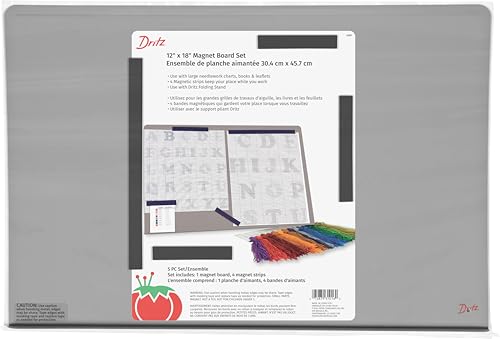

The Dritz Magnetic Pattern Easel is a classic for a reason, specifically designed to handle the weight and scale of large sewing patterns. Its sturdy build holds heavy paper sheets upright, allowing for quick reference without the paper flopping over or curling at the edges.
For the sewist, keeping a pattern upright means maintaining a consistent line of sight to seam allowances and notches. The magnetic strips serve as an excellent guide, effectively acting as a “place holder” for complex multi-page instructions.
This tool is particularly useful when working with large-scale garments that require constant referral to grainlines and cutting layouts. While it lacks the delicate folding mechanisms of smaller knitter-specific boards, its sheer utility in a cutting room makes it a reliable workhorse.
Cocoknits Maker’s Board: Best For Knit Charts
The Cocoknits Maker’s Board is arguably the most intentional tool for the modern knitter. It combines a magnetic surface with a foldable design, making it perfect for both complex stranded colorwork charts and simple lace patterns.
What sets this apart is the inclusion of specialized magnets that hold charts firmly in place while remaining thin enough to not interfere with the view of the stitches. It is a dual-purpose tool; the metal surface attracts magnets, and the felt backing prevents it from sliding around on smooth tables.
If you are working a high-complexity cable pattern with row-by-row instructions, this board ensures the pattern stays at the ideal angle for reading. The bottom line: it is a high-quality investment that prioritizes the specific needs of charted fiber arts.
US Art Supply Tabletop Easel: Best Budget Pick

The US Art Supply Tabletop Easel is a versatile choice for those who do not want to spend heavily on specialized craft equipment. Because it is essentially a lightweight wooden easel, it accommodates various sizes of pattern books and tablets with ease.
This option is highly adjustable, allowing for different tilt angles depending on the height of your chair and the distance of your workspace. It collapses down to almost nothing, making it ideal for crafters who have limited space and need to pack their tools away between projects.
While it lacks built-in magnetic features, it excels at holding heavy, spiral-bound stitch dictionaries or pattern binders. It is the perfect choice for the knitter who prefers to print their patterns and clip them to a lightweight clipboard.
Lamicall Gooseneck Stand: Best For Tablets
If you prefer digital patterns—utilizing apps to track rows and zoom in on intricate charts—the Lamicall Gooseneck Stand is a game-changer. The flexible arm allows for infinite positioning, letting you place the screen exactly where you need it regardless of your posture.

Fiber artists often find that traditional stands force them to work around the equipment. With a gooseneck, the stand attaches to the edge of the table, leaving the workspace completely free for your yarn bowl and notions bag.
This is particularly effective when you are knitting in a reclined position, as you can swing the screen to accommodate your line of sight without moving your arms. Note that the weight capacity is focused on tablets; do not expect it to support heavy, hardcover pattern books.
Fellowes Booklift Copyholder: Most Versatile

The Fellowes Booklift is designed for documents, but its functionality perfectly translates to the craft room. It features a line guide and adjustable clips that keep even the most unruly, loose-leaf pattern pages perfectly flat.
The versatility here lies in the multi-angle adjustments, which are more precise than standard wooden easels. It is an excellent choice for a dedicated craft desk where you need the stand to fold flat when not in use.
This is the preferred pick for those who rotate between different crafts, such as weaving, knitting, and sewing. It holds thick binders just as easily as it holds single pattern sheets, providing a consistent, stable reading surface.
The Uncaged Ergonomics WE-Stand: Best Floor Model
For those who stand while working—whether at a cutting table or a long-arm quilting station—a floor-model easel is a necessity. The Uncaged Ergonomics WE-Stand is robust and height-adjustable, ensuring you never have to hunch over to read a diagram.
Using a floor stand keeps your primary workspace clear of clutter. By lifting the pattern off the table surface, you gain valuable real estate for your tools, yarn, and fabric cuts.
While these stands take up more physical space in a room, the ergonomic benefits are unmatched. If you suffer from neck strain or back pain during long craft marathons, moving your reference materials to a standing, eye-level position is the single most effective change you can make.
How to Pick the Right Easel For Your Craft Room
Choosing the right easel starts with an honest assessment of your physical space and your preferred method of pattern consumption. If your patterns are primarily digital, prioritize gooseneck stands or tablet-specific holders. If you are a paper-loyalist who lives by printed charts and highlighters, magnetic boards or sturdy tabletop easels are far superior.
Consider how much space you have available to dedicate to your “station.” A floor model is wonderful, but it is an immovable object in a small bedroom or living room corner. Always measure your table height versus your seated eye level to ensure the easel you choose provides enough vertical reach.
Lastly, think about the weight of your materials. Hardcover reference books require the structural support of a tabletop easel, while single-page lace patterns require the magnetic stability of a dedicated craft board.
- Digital users: Gooseneck stands or specialized tablet mounts.
- Paper/Chart users: Magnetic boards or high-friction surface easels.
- Space-conscious: Collapsible tabletop easels that fold flat.
- Ergonomics-focused: Adjustable height stands that keep your neck neutral.
Floor vs. Tabletop Easels: Which Do You Need?
Tabletop easels are the standard choice for most home crafters because they integrate seamlessly into existing furniture. They are affordable, portable, and require zero floor space. However, they are restricted by the depth of your desk and the angle of the light.
Floor models, conversely, are best for those who have a dedicated craft area or studio. They provide total freedom in positioning, allowing you to move the pattern to whichever side of your project is most accessible.
If you rotate your projects frequently—shifting from knitting to sewing—a versatile tabletop easel usually outperforms a rigid floor model. If you work on large projects that consume your entire desk surface, a floor stand is the only way to keep your patterns visible.
Getting the Most From Your New Pattern Holder
Once you have your easel, make it a dedicated part of your craft environment rather than just another accessory. Use the extra space behind the board to store your most-used notions—scissors, stitch markers, and row counters—so everything is within reach.
If you are using a magnetic board, organize your magnets to hold not just the pattern, but also a small swatch or a note card with your current needle size and yarn dye lot. Keeping these details visible at the top of your easel prevents the common mistake of picking up the wrong needle size after a break.
Finally, clean the viewing surface regularly. Whether it is plastic or wood, a clean surface prevents distractions and ensures that your eye focuses immediately on the chart, not on dust or debris accumulated during your last project.
Setting Up Your Easel For Pain-Free Crafting
Ergonomics in the craft room is about minimizing repetitive strain on the neck, shoulders, and wrists. Place your easel directly in front of you, perpendicular to your primary light source, to minimize glare. The center of your pattern should be at eye level so that your head remains in a neutral, forward-facing position.
If you find yourself still leaning forward, the easel is likely too far away. Bring the stand as close to your working hands as possible without physically obstructing your range of motion. Small adjustments—moving the stand just two inches closer—can significantly reduce the tension in your upper traps during an hour-long knitting session.
Make it a habit to check your posture every time you finish a row or complete a seam. If you are slumped, move the easel, not your body, to bring the work back into your optimal range of sight.
Selecting the right easel is about more than just convenience; it is a commitment to the longevity of your craft. By removing the physical barriers that come with poor visibility and awkward postures, you make space for the joy of creating. Test your setup, adjust for your specific needs, and allow your new tool to support both your project and your body for years of making to come.