6 Best Knitting Needles For Baby Sweaters To Choose
Find the 6 best knitting needles for baby sweaters in our expert guide. Discover the perfect tools for your next project and start crafting cozy gifts today.
Knitting a sweater for a baby is a labor of love that requires precision, patience, and the right set of tools. Because baby garments often involve delicate, lightweight yarns and small circumferences, the choice of needle significantly impacts both the speed of the work and the comfort of the hands. Selecting needles that provide the perfect balance of glide and control ensures that every stitch is even and secure. This guide explores the best options available to help navigate the technical nuances of knitting for the smallest members of the family.
ChiaoGoo Red Lace: The Top Pick for Speed


ChiaoGoo Red Lace needles are defined by their surgical-grade stainless steel construction and remarkably flexible, multi-strand steel cables. For projects involving fine fingering weight or sport weight baby yarn, the smooth surface allows stitches to slide effortlessly, significantly increasing knitting velocity.
The tapered, precision-machined tips are ideal for picking up dropped stitches or executing complex lace patterns often found in baby heirloom garments. However, the sharpness of these points can occasionally pierce the skin during long knitting sessions or split loosely plied yarns if the tension is not consistent.
If speed is the priority and the yarn is a sturdy superwash wool or cotton blend, these needles are unmatched. They offer a reliable, professional feel that translates into clean, professional-looking baby clothes.
Addi Turbo Rockets: For Smooth, Fast Knitting

Addi Turbo Rockets provide a unique mid-point between ultra-sharp and blunt needles. They feature a nickel-plated finish that is exceptionally slick, making them a preferred choice for knitters who tend to work tightly or who struggle with hand fatigue.
The join where the needle meets the cord is famously seamless, preventing delicate baby-weight yarns from snagging mid-row. While the finish is very slippery, the slightly rounded points prevent the needle from piercing the fingers, which is a major benefit for marathon knitting sessions.
These needles are best suited for beginners or knitters who prefer a more relaxed stitch formation. When working with splitty fibers, the rounded tip offers a forgiving experience that compensates for minor errors in needle entry.
KnitPicks Options Shorts: Best Budget Set

For knitting tiny sleeves and baby sweater bodies in the round, full-length circular needles can often feel cumbersome and restrictive. The KnitPicks Options Shorts provide shorter needle tips that allow for the creation of smaller circular circumferences without the need for complex techniques like magic loop.
These tips are compatible with a wide range of cable lengths, offering high versatility at a lower price point than many premium sets. The nickel-plated surface provides a standard, reliable glide suitable for most wool and synthetic blends.
While the finish is not as durable as high-end stainless steel, these sets represent an excellent value for knitters who need a specific tool for miniature projects. They allow for the creation of an entire wardrobe of baby items without a significant upfront investment.
Lykke Driftwood Set: Best Wooden Needle Choice
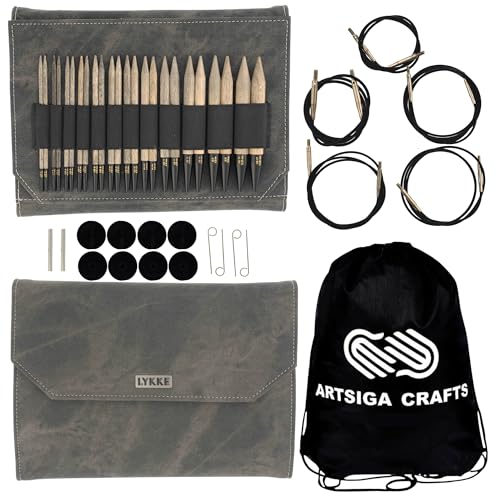
Lykke Driftwood needles are crafted from birch wood, providing a tactile, warm grip that is fundamentally different from metal. This slight resistance is a lifesaver when working with slippery fibers like bamboo, silk, or high-twist merino that might otherwise slide off a metal needle.
Wooden needles are lightweight and gentle on the wrists, which is advantageous for knitters who find cold metal needles physically irritating over time. The finish is polished to a high sheen, ensuring that the yarn moves easily without the snagging common in lower-quality wooden tools.
Because wood is a natural material, it is important to treat these needles with care to prevent the tips from snapping. They are an ideal choice for the knitter who wants an aesthetic, comfortable, and controlled experience.
Knitter’s Pride Zing DPNs: For Perfect Sleeves

Double-pointed needles (DPNs) remain the gold standard for small-circumference knitting like baby sweater sleeves or cuffs. Knitter’s Pride Zing DPNs are made from lightweight aluminum, each color-coded by size for easy identification in a busy project bag.
The surface is smooth but provides just enough grip to keep stitches from sliding off during a transition. The tips are moderately pointed, making them versatile enough for various yarn weights and stitch patterns.
Aluminum is sturdy, meaning these needles will not bend or warp even after years of use. For those who find the continuous loop of circular needles distracting for small sleeves, the classic simplicity of these DPNs offers a focused, rhythmic knitting experience.
HiyaHiya Sharps: For Intricate Stitchwork

HiyaHiya Sharps are engineered for the knitter who demands absolute precision. The tips are exceptionally tapered and sharp, making them the superior choice for cables, bobbles, or complex lace baby garments where stitch manipulation is frequent.
The stainless steel construction is polished to a glass-like finish, ensuring that even the thinnest lace-weight yarns move with minimal friction. The swivel cables are a notable design feature, effectively reducing the tendency for the cable to twist or coil during the knitting process.
Because these tips are so sharp, they can be unforgiving with soft, single-ply yarns. They are best reserved for multi-ply or tightly spun yarns that can withstand the piercing action of the needle tip.
Wood vs. Metal Needles: Which Is Right for You?
The choice between wood and metal usually comes down to the friction requirements of the fiber and the knitter’s personal tension. Metal needles are best for fast, smooth knitting and help speed up repetitive tasks like sweater bodies.
Wooden needles are generally preferred for slippery or metallic yarns that require more friction to stay in place. They also provide a warmer feel, which some knitters find more ergonomic for long-term comfort.
Ultimately, the best choice depends on the project’s yarn. Always perform a small swatch test to see how the fiber interacts with the needle surface before beginning a sweater.
Circulars vs. DPNs: Picking Your Needle Type
Circular needles are incredibly versatile, as they can be used for flat knitting or joined in the round using the magic loop method. They are ideal for the body of a baby sweater because they support the weight of the garment as it grows.
DPNs are traditionally used for small circumferences like sleeves, mitts, or hats. While they require more coordination than circulars, they provide a very consistent gauge for small-diameter tubes.
If a knitter struggles with ladders or uneven tension at the joins on DPNs, circular needles with a flexible cable are the superior alternative. Choosing the right type often involves balancing project size with personal comfort preferences.
Choosing the Right Needle Size for Baby Safety
When knitting for infants, the size of the needle and the resulting gauge are about more than just fit; they are about safety. Needles should be chosen to produce a tight, dense fabric that prevents small fingers or toes from getting caught in loops.
Always aim for a gauge that is slightly firmer than that used for adult clothing. If the fabric feels loose or “holey,” drop down at least one needle size to create a more secure structure.
Avoid overly large needles, which create big gaps in the fabric. A dense, high-quality knit ensures that buttons or decorative elements are securely held and that the garment remains durable through repeated washings.
Cable Lengths for Body, Sleeves, and Neckline
Managing cable length is a common hurdle for many knitters. For a baby sweater body, a 16-inch or 24-inch circular needle is usually sufficient to accommodate the width of the piece without crowding the stitches.
For sleeves and necklines, shorter cables (9-inch or 12-inch) or DPNs are necessary to maintain the circular shape without stretching the fabric. Using a cable that is too long for the project circumference will inevitably lead to distorted stitches and frustration.
Always remember that the cable length should be shorter than the final circumference of the project. If in doubt, a longer cable and the magic loop technique will always serve as a universal solution for any circumference.
Selecting the right needle is an essential step in ensuring a baby sweater is as comfortable as it is beautiful. By balancing fiber needs, knitting technique, and physical comfort, the perfect set of tools will make the process rewarding and efficient. Happy knitting.