7 Best Sewing Supplies For Handmade Card Holders
Elevate your craft with our list of the 7 best sewing supplies for handmade card holders. Discover the essential tools you need to create professional accessories.
Creating a handmade card holder is an ideal bridge for knitters looking to expand into mixed-media accessories. Much like selecting the right yarn weight for a gauge-critical sweater, choosing the correct sewing supplies determines whether the final piece feels professional or handmade-in-a-hurry. These seven essentials ensure that delicate fabric and stiff interfacing come together with the precision required for high-use items. Focus on these foundational tools to elevate the quality of every small-scale construction project.
Gutermann Sew-All Thread: The Strongest Choice


Card holders face constant tension as credit cards are inserted and removed, making thread strength non-negotiable. Gutermann Sew-All is a polyester-based thread that offers high tensile strength and minimal lint buildup, keeping the interior of the holder clean.
Using inferior thread is akin to knitting a heavy-duty cable sweater with fragile, single-ply silk; it will snap under the slightest pressure. This thread remains consistent in diameter, preventing the skipped stitches that plague sewing machines when moving over bulky seams.
It provides the necessary structural integrity for high-friction areas while remaining thin enough to hide within the weave of the fabric. Invest in quality thread to ensure the piece lasts as long as a well-cared-for wool garment.
Olfa Rotary Cutter: The Gold Standard for Precision

A rotary cutter transforms fabric preparation from a chore into a seamless extension of the creative process. It functions with the efficiency of a sharp pair of circular needles, ensuring straight, clean edges that scissors simply cannot replicate on tight-weave fabrics.
Precision is paramount when every millimeter counts toward the final symmetry of a card holder. If the initial cuts are off, the entire assembly will skew, leading to frustration during the final joining process.
Regular blade maintenance is essential to avoid “chewing” the fabric, which mimics the damage caused by blunt needle tips on delicate yarn. Always pair the cutter with a dedicated self-healing mat to protect the blade edge and the work surface.
Clover Wonder Clips: Ditch the Pins on Small Items
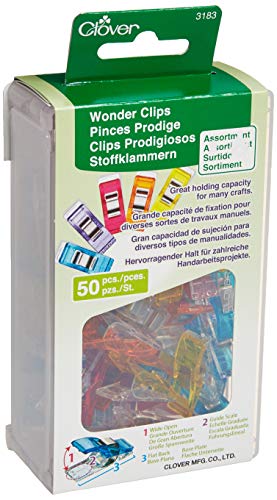
Wonder Clips are the superior alternative to traditional pins when working with thick layers or materials that show needle holes. In knitting, one would never pin a finished lace project during blocking if it risked damaging the fibers; the same logic applies here.
These clips hold multiple layers of fabric and interfacing firmly without the risk of accidental pricks. They are particularly useful when sewing narrow gussets or tight corners where maneuvering pins is cumbersome.
They provide a uniform grip that keeps fabric edges perfectly aligned while feeding through the machine. Use them to maintain structural alignment without compromising the surface integrity of the material.
Dritz Dual Purpose Marking Pen: Marks That Vanish
Precision marking prevents the “oops” moments that often require unravelling an entire row of knitting. This pen offers a temporary guide that disappears either with the touch of water or over a short period, leaving no residue behind.
It is indispensable for mapping out stitch lines or pocket placements on dark or patterned fabrics. The ink flows smoothly, similar to how a tapestry needle glides through a loose weave, without snagging or dragging on the surface.
Always test the marker on a scrap piece of your chosen fabric first, just as one would perform a gauge swatch before committing to a sweater. Verify the vanishing time to ensure the markings remain visible long enough to finish the project but not so long that they become permanent stains.
Pellon Décor-Bond: The Secret to a Sturdy Holder

Interfacing serves as the “bones” of a handmade accessory, giving it the structure required to protect cards. Without it, fabric holders collapse or stretch out, much like a loosely knitted garment lacking proper blocking.
Pellon Décor-Bond is a firm, fusible interfacing that adheres directly to the fabric, creating a professional, crisp finish. It provides enough rigidity to prevent the fabric from feeling flimsy while allowing it to maintain a tactile, fabric-like quality.
Apply it carefully using a pressing cloth to avoid overheating the base material. A well-bonded layer ensures the card holder feels substantial and retains its shape after months of daily use.
Fiskars Easy Action Scissors: For Precision Cuts
Sometimes a rotary cutter is too bulky for tight, intricate work, and that is where specialized scissors excel. Easy Action scissors utilize a spring-action mechanism that reduces hand fatigue, an essential feature for makers who already struggle with repetitive strain from long knitting sessions.
These scissors are ideal for trimming seam allowances or “clipping” curves, which allows the fabric to lay flat when turned right-side out. High-quality stainless steel blades ensure a clean cut from pivot point to tip.
Keep these strictly for fabric use to maintain the sharpness of the blades. Treat them with the same care as a prized pair of hand-turned wooden knitting needles to ensure a lifetime of service.
Omnigrid Ruler: Your Guide to Straight Lines
An Omnigrid ruler provides the high-contrast grid lines necessary for accurate, repeatable measurements. Much like reading a complex cable chart, having a clear visual aid prevents the drift that leads to uneven results.
The non-slip surface prevents the ruler from sliding on fabric, ensuring that the rotary cutter stays on the intended path. It is the architectural foundation of the project, allowing for the precise squaring of fabric rectangles.
Look for a ruler with clear markings that include both imperial and metric measurements. It is the single most effective tool for ensuring that every side of the card holder matches its partner exactly.
How to Choose the Right Interfacing for Your Fabric
The choice of interfacing is dictated by the weight and weave of the fabric being used. A heavy canvas requires lighter interfacing to avoid excessive bulk, while a thin cotton lawn needs something with more body.
- Fusible vs. Sew-in: Fusible options provide better adhesion for beginners but require careful heat management.
- Weight Matching: Always ensure the weight of the interfacing is lighter than or equal to the fabric weight.
- Stiffness: Use stiffer interfacing for outer shells and softer, woven interfacing for inner linings.
A rule of thumb is to seek balance; the finished holder should be firm enough to protect its contents but flexible enough to slide into a pocket easily. Over-interfacing creates a stiff, unnatural feel that diminishes the appeal of a handmade item.
Rotary Cutter vs. Scissors: Which Is Best for You?
The debate between cutters and scissors often comes down to the desired geometry of the project. Rotary cutters are superior for straight lines and long, continuous edges, making them the preferred choice for rectangular card holders.
Scissors offer better control for rounded corners and tight, irregular shapes where the cutter’s circular blade cannot reach. Many expert makers utilize both, switching between them to optimize for different phases of the project.
Beginners often find scissors more intuitive, while those seeking mass-production efficiency prefer the rotary cutter. Choose the tool that aligns with the level of accuracy and speed required for the specific design.
Fabric Guide: Best Weaves for a Durable Card Holder
A card holder is a high-stress item that requires a fabric capable of holding a seam under tension. Avoid loose weaves or fragile silks that might fray or tear at the stress points where the cards push against the fabric.
- Cotton Canvas: Highly durable and comes in an endless array of prints; the perfect starter fabric.
- Denim: Excellent for a rugged, long-lasting holder that ages well with consistent handling.
- Wool Felt: Provides natural structure and a sophisticated look, though it requires careful tension management.
Consider the “hand” of the fabric—the way it feels and drapes. A tighter weave provides a better foundation for machine stitching and ensures that the finished product remains resistant to the wear and tear of daily pocket friction.
Mastering the construction of a card holder requires as much attention to detail as reading a complicated knitting pattern. By selecting the right combination of tools and materials, the transition from fiber artist to textile maker becomes a rewarding and highly successful pursuit. Start with these essentials to ensure that your finished projects are as durable as they are beautiful.