6 Best Ergonomic Pliers For Long Crafting Sessions
Stop hand fatigue during long projects. Explore our top 6 ergonomic pliers designed for comfort and precision. Find your perfect crafting tool today.
Prolonged crafting sessions—whether wire wrapping for jewelry, manipulating metal stitch markers, or securing delicate hardware on bags—demand tools that respect the mechanics of the hand. Persistent repetition without ergonomic support often leads to tendonitis or localized cramping that cuts a project short. Investing in high-quality pliers isn’t merely about luxury; it is about preserving the longevity of the hands that create. Selecting the right implement can mean the difference between effortless manipulation and painful frustration at the workbench.
Wubbers Classic Chain Nose Pliers: Best Overall


These pliers are widely regarded as the gold standard for crafters who require a balance of power and finesse. The design features a wider handle that distributes pressure evenly across the palm, preventing the “pinching” sensation common with thinner, hardware-store alternatives.
For those working with heavy-gauge wire or stubborn metal findings, the Wubbers Classic offers enough leverage to maintain a firm grip without crushing the material. The jaw shape is perfectly tapered, allowing for precise loops without sacrificing the structural integrity of the tool.
They represent a versatile middle ground, making them suitable for both beginners and seasoned metalworkers. The bottom line: if you need one pair of pliers that can handle 90% of your crafting tasks while sparing your joints, this is the definitive choice.
Lindstrom RX 7890 Pliers: Top Precision Choice

When working on intricate details—such as repairing the delicate hinge of a project bag or bending tiny, micro-gauge wire—the Lindstrom RX 7890 offers unparalleled control. These pliers utilize a unique ergonomic handle shape that aligns with the natural curvature of the hand, reducing the force required for each movement.
The return spring is remarkably smooth, providing tactile feedback that helps prevent over-stressing delicate components. Because the jaws are exceptionally fine, they provide a level of visibility that bulkier pliers simply cannot match.
These are an investment piece designed for the serious crafter who values precision over raw force. For those who frequently work on projects where a single misplaced bend ruins the finish, the accuracy of these pliers is unmatched.
Xuron 450 TweezerNose Pliers: For Tight Spaces
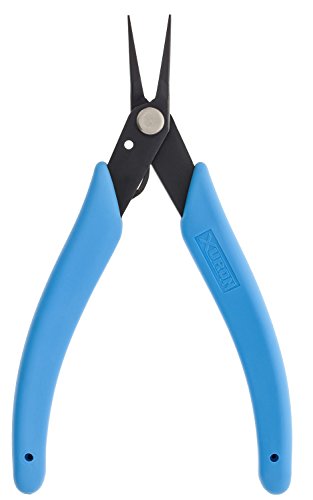
The Xuron 450 utilizes a unique “tweezer” design, meaning the jaws are held closed by a spring and open only when manual pressure is applied. This is a game-changer for those with limited grip strength, as it minimizes the need to constantly open the tool manually.
The fine, elongated tips are specifically engineered to reach into cramped areas where standard pliers would be too cumbersome. This is particularly useful when tightening jump rings in dense, complex weaves or securing hardware in recessed corners of a handmade bag.
Because the handles are soft and contoured, they remain comfortable even during hours of repetitive adjustment. If your projects involve fine-motor navigation within tight spaces, the Xuron 450 acts as a natural extension of the fingers.
Beadsmith Ergo-Line Pliers: Best for Beginners
Ergonomics often carry a high price tag, but the Beadsmith Ergo-Line series provides a functional, accessible entry point for those just starting to build their toolkit. These pliers feature thick, cushioned grips that help dampen the vibration of repeated metal-on-metal work.
The hinge is engineered to operate smoothly right out of the package, requiring very little break-in time. For the novice crafter who isn’t yet certain of the specific jaw shape they prefer, these provide a low-risk way to experience the benefits of a tool designed for human anatomy.
While they may lack the extreme precision of professional-grade Swedish steel, they offer consistent performance for standard tasks like opening rings and bending wire. They are the ideal starter tool for anyone transitioning from basic craft store supplies to dedicated ergonomic equipment.
Tronex 544 Round Nose Pliers: Durability Pick

Durability is the primary hallmark of the Tronex 544, a tool built to withstand the rigors of a professional workshop. These pliers are constructed from high-grade carbon steel, ensuring that the tips do not deform or lose their shape even after years of intensive use.
The handles feature a proprietary ergonomic grip that provides a secure, non-slip surface, which is vital when hands become sweaty during long, focused sessions. The joint is exceptionally stable, preventing any lateral wobble that could compromise the quality of a delicate bend.
While they are certainly a premium purchase, the longevity of these pliers makes them a cost-effective choice for those who craft daily. Expect them to hold their alignment through thousands of repetitive cycles, far outlasting budget alternatives.
The Beadsmith PL315 Pliers: Best Budget Option
For the crafter on a strict budget who still needs to prioritize hand health, the Beadsmith PL315 offers a commendable balance of features. They provide a soft, non-slip grip that is significantly more comfortable than the bare metal handles found on generic utility pliers.
The lightweight construction ensures that the hands don’t tire from the weight of the tool itself, which is a common but often overlooked cause of fatigue. While the internal spring may not have the same “snap” as top-tier models, it is more than sufficient for casual or occasional crafting.
These pliers are proof that ergonomic support does not always require a professional-level expenditure. They serve as an excellent backup pair or a reliable primary tool for those whose crafting frequency is sporadic but intense.
How to Choose Pliers for Your Hand Size & Grip
Tool selection is deeply personal and depends entirely on the physical proportions of the hand. Smaller hands often struggle with the wide handle span of industrial-grade tools, while those with larger hands may find dainty, thin-handled pliers difficult to grasp securely.
When evaluating a pair, look for the “neutral position” of your hand—it should be semi-closed rather than fully extended. If you find your knuckles turning white or your fingers vibrating after ten minutes, the grip diameter or handle length is likely incompatible with your hand size.
Always consider the weight distribution of the tool; a tool that feels “front-heavy” will cause the wrist to compensate, leading to long-term strain. If possible, mimic the motion of your specific craft in the air to see if the pliers naturally fall into your palm without requiring constant adjustment.
Key Ergonomic Features to Look For in Pliers
A truly ergonomic tool must address the physical stress points of the hand. Prioritize these features when shopping:
- Contoured Handles: Look for molded grips that follow the natural palm swell, which helps distribute pressure away from sensitive nerves.
- Smooth Return Springs: A reliable, tension-balanced spring reduces the amount of work the hand performs during the “opening” phase of a movement.
- Anti-Slip Surface: A rubberized or textured grip allows the user to maintain control without needing to squeeze the tool with excessive force.
- Hinge Quality: A high-quality box joint or lap joint ensures that the jaws operate smoothly without catching or binding.
Preventing Hand Fatigue During Craft Sessions
Even the most ergonomic pliers cannot replace the necessity of frequent breaks. Adopt the “one-hour rule,” where the hands are stretched and rested for five minutes for every hour spent at the workbench.
Focus on “dynamic gripping,” which involves changing the way the tool is held throughout the project to avoid taxing the same muscles continuously. If the project allows, alternate between tasks that require the pliers and those that do not, such as sorting beads or organizing yarn.
Hydration and temperature also play a role in hand flexibility, especially in colder environments where muscles become tighter and more prone to injury. Keep the workspace at a comfortable temperature to ensure that the tendons remain supple during long crafting stretches.
Round vs. Chain Nose: Which Pliers Do You Need?
The distinction between these two shapes is fundamental to successful metal manipulation. Round nose pliers are essential for creating consistent loops and curves, making them non-negotiable for earring hooks, jump rings, and decorative scrolls.
Chain nose pliers, by contrast, possess flat, tapered inner jaws that offer a superior grip for holding, bending, and flattening metal. They are the workhorses of the bench, used for tightening jump rings and manipulating heavy-gauge wire where a secure, non-slip hold is paramount.
Many crafters find that they need both to achieve a professional finish. If a project requires intricate wire-wrapping, utilize the round nose for shaping and the chain nose for securing the final wraps.
Choosing the right ergonomic pliers is an essential step in maintaining a lifelong passion for craft. By balancing the specific technical needs of your project with the physical realities of your hands, you can ensure that your creativity remains a joy rather than a source of discomfort. Evaluate your options carefully, prioritize comfort, and enjoy the ease that comes with having the right tool for the job.