6 Best Needlepoint Stands For Hands-Free Stitching
Find the perfect needlepoint stands for hands-free stitching with our expert guide. Compare the 6 best options to improve your comfort and enjoy your craft today.
Stitching for hours on end is a labor of love, but the physical toll on your neck, shoulders, and wrists can quickly turn a relaxing hobby into a source of chronic strain. Holding a heavy frame or a tight hoop requires constant isometric tension, which eventually restricts blood flow and leads to fatigue. Transitioning to a hands-free needlepoint stand fundamentally changes the mechanics of the craft, allowing for better posture and more consistent tension. Investing in the right support system is not merely about convenience; it is a critical step in preserving your physical longevity as a maker.
Lowery Workstand: The Ultimate Floor Stand
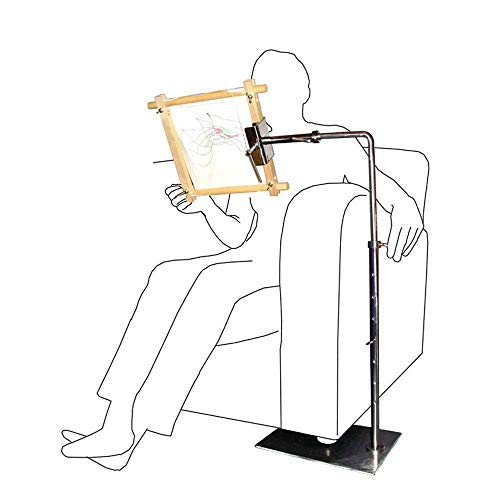

The Lowery Workstand is widely considered the gold standard for dedicated stitchers who prioritize structural integrity and reach. Its unique “C” shaped arm design allows the frame to swing effortlessly out of the way when it is time to tie off a thread or step away from a project.
This stand is particularly effective for those working on large-scale canvases that would otherwise be far too heavy to hold for long sessions. By offloading the weight of the frame entirely onto the floor base, it eliminates the muscle tension that often leads to hand cramping during intricate cross-stitching or needlepoint work.
The trade-off for this stability is the footprint of the base. It requires a dedicated spot in a craft room or near a favorite armchair, as it is not designed for frequent assembly and disassembly. For the serious stitcher, however, the ability to lock the frame at the perfect height and angle is worth the space it occupies.
K’s Creations Z-Frame: Best for Versatility

The K’s Creations Z-Frame is engineered for makers who need a stand that adapts to the environment rather than forcing the environment to adapt to the stand. The signature “Z” configuration allows for a wide range of height adjustments, making it equally comfortable to use on a couch, a recliner, or even a desk chair.
This versatility makes it a standout choice for those who do not have a dedicated studio space and must set up and break down their equipment regularly. The tension knobs provide a secure grip, ensuring that even heavy scroll frames stay exactly where they are positioned without slipping or sagging under pressure.
If you rotate between different types of projects—perhaps switching from a small hand-held hoop for travel to a large floor frame for wall hangings—this stand handles the transition seamlessly. It is a workhorse that rewards those who need their tools to be as mobile as their lifestyle.
Daylight StitchSmart Stand: Best with Lighting

Proper lighting is arguably the most overlooked factor in maintaining consistent gauge and preventing eye strain during long needlepoint sessions. The Daylight StitchSmart Stand integrates high-quality, flicker-free LED lighting directly into the frame support, ensuring the work area is perfectly illuminated without the need for additional desk lamps or floor lights.
Beyond the lighting, the stand is designed with a focus on adjustability, allowing the frame to rotate 360 degrees. This is essential for inspecting the back of the work or reaching tight corners of a complex design without having to detach the fabric from the frame.
While the lighting feature is a significant advantage, it does require a power source, which tethering the stand to a specific location. If your primary goal is to minimize eye fatigue and maintain perfect visibility, the added cost of the integrated light is a worthwhile investment in your visual health.
Edmunds Universal Craft Stand: Top Budget Pick
The Edmunds Universal Craft Stand is a classic choice for stitchers who want the benefits of a hands-free setup without the significant financial investment of high-end, specialized hardware. It provides a sturdy, reliable base that functions well with most standard hoops and small-to-medium stretcher bars.
This stand is remarkably simple to assemble, making it an excellent entry point for beginners who are just starting to realize that holding a hoop is unsustainable for larger projects. It provides exactly what is needed—stability and height—without adding unnecessary complexity or proprietary mounting systems.
While it lacks the sophisticated adjustments of premium models, it excels in its straightforward design. If your projects tend to be modest in size and you prefer a no-fuss tool that gets the job done, this stand is an incredibly practical and reliable companion.
System 4 Floor Stand: Most Customizable Option
The System 4 Floor Stand represents the pinnacle of modular design in the needlepoint world. Its base and arm components can be configured in a multitude of ways, allowing you to build the exact setup that matches your seating posture and project size.
The system is highly favored by those who use a variety of different frames throughout the year. With the right accessories, this stand can accommodate almost any hoop, stretcher bar, or scroll frame on the market, effectively making it the last stand you will ever need to buy.
Customizability comes with a learning curve, as the sheer number of knobs and adjustments means you will need to spend some time fine-tuning the setup to your specific needs. However, once calibrated, it offers a level of comfort and ergonomic precision that few other stands can match.
FA Edmunds Sit-On Frame: Best Portable Choice
The FA Edmunds Sit-On Frame is designed for the minimalist stitcher who values portability above all else. By using the weight of your own body to stabilize the base, it eliminates the need for heavy, cumbersome floor supports while still providing a secure, hands-free experience.
This is the ideal solution for those who love to stitch on the go, whether at a guild meeting, during travel, or simply moving between different rooms in the house. It is compact, lightweight, and easily tucked away into a project bag or drawer when not in use.
The primary limitation of a sit-on stand is the reliance on your seated position for stability; if you change chairs or shift your posture significantly, you may need to readjust the frame. It is a trade-off between absolute portability and the rock-solid stationary support of a floor stand.
Choosing Your Stand: Floor, Lap, or Sit-On?
Selecting the right stand depends entirely on where and how you stitch most often. A floor stand is essential if you have a dedicated chair and work on large, heavy projects that require a stable, unmoving base for hours on end.
Lap and sit-on stands are better suited for those who move around frequently or have limited storage space. If you find yourself hunching over your work, a floor stand is usually superior because it allows for height adjustments that bring the work to eye level, rather than forcing your head down.
Before buying, observe your own habits: do you sit on the floor, on a sofa with your feet up, or at a dining table? Your environment dictates the necessary reach, height, and stability of the equipment that will actually serve your needs.
How to Match Your Stand to Your Frame or Hoop
Not every stand works with every frame, and checking for compatibility is the most common mistake buyers make. Most high-end stands use a universal clamp system, but some require specific adapters for different styles of scroll frames or embroidery hoops.
If you primarily use traditional wooden embroidery hoops, look for a stand with a “cradle” or a “side-clamp” rather than a tension bar system. Conversely, if you prefer scroll frames for large canvases, ensure the stand has a robust enough arm to support the weight of the frame without pivoting or dropping.
Always measure the width of your largest project frame against the reach of the stand’s arm. There is nothing more frustrating than having a beautiful stand that cannot accommodate the physical width of your current canvas or quilt hoop.
Ergonomics: Stitching Comfortably for Hours
Ergonomics is not just a buzzword; it is the practice of aligning your tools to your anatomy to prevent long-term injury. A good stand should allow your spine to remain neutral, with your shoulders relaxed and your elbows hanging comfortably at your sides.
If you find that your wrists ache or your shoulders are pulled forward after an hour of stitching, your stand is likely set too low or positioned too far away. The goal is to bring the needlepoint to you, not to accommodate the needlepoint by contorting your body.
When adjusting your stand, prioritize a configuration that keeps your forearms supported or allows them to rest naturally. Taking short breaks to stretch your neck and hands is still necessary, even with the best equipment, to prevent repetitive strain injuries.
Metal vs. Wood Stands: Which Is Right for You?
Metal stands, typically made of powder-coated steel or aluminum, are generally superior for heavy-duty work and long-term durability. They provide the rigidity necessary to hold large, heavy frames without the slightest amount of “give” or vibration.
Wooden stands offer a classic aesthetic and are often preferred by those who want their crafting tools to blend into their living room decor. While well-made wooden stands are sturdy, they can sometimes be more prone to wear at the adjustment points over many years of heavy use.
Ultimately, the choice often comes down to personal preference and how much “bounce” you can tolerate while working. If you stitch with significant tension, a metal stand will provide the solid, immovable support required for consistent, high-quality results.
Choosing a needlepoint stand is a significant step toward transforming your stitching from an occasional hobby into a sustainable, lifelong practice. By prioritizing your physical comfort and matching the tool to your specific project needs, you ensure that every session is defined by creative flow rather than physical discomfort. Take the time to assess your workspace and your habits, and you will find that the right stand not only protects your body but also improves the quality of your finished work.