6 Closet Dehumidifiers For Storing Wool Garments
Protect your winter wardrobe from moisture and mold. Explore our top 6 closet dehumidifiers for storing wool garments and keep your clothes pristine. Buy today.
Protecting hand-knits from the elements is just as vital as selecting the perfect yarn for a project. Excess moisture in a closet environment creates a breeding ground for moths and mildew, which can destroy years of labor in a single season. Maintaining a stable, dry climate ensures that heirloom sweaters and delicate lace shawls remain in pristine condition for decades. The following options provide reliable humidity control tailored to different storage setups and collection sizes.
Eva-Dry E-333: Best Rechargeable for Small Spaces


The Eva-Dry E-333 is an ideal solution for enclosed spaces like cedar chests or small dresser drawers where your favorite hand-knit cardigans are tucked away. Its compact, non-spill design eliminates the need for messy chemical trays, which is critical when storing delicate fibers near other textiles.
This unit relies on silica gel beads that absorb moisture without requiring an electrical outlet during operation. Once the indicator window turns pink, the unit plugs directly into a wall socket to release the trapped moisture, effectively resetting itself for another cycle.
Because it does not require constant power or cords, it is a safe choice for tight quarters. The primary trade-off is its limited capacity; it works best in small, sealed boxes rather than open-air closet shelves.
Pro Breeze Mini: Top Electric for Walk-In Closets
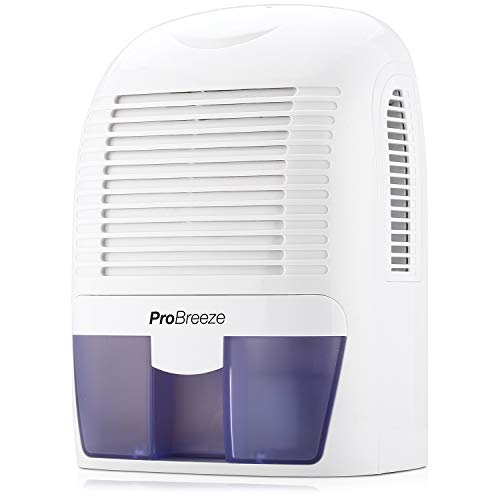
A walk-in closet housing an extensive yarn stash or a collection of heavy wool coats requires more active moisture management than a simple closet shelf. The Pro Breeze Mini utilizes thermoelectric Peltier technology, which is exceptionally quiet and efficient for medium-sized spaces.
This unit excels at pulling dampness from the air to prevent that distinct musty smell that often clings to natural fibers like alpaca or merino. Its small water reservoir is easy to empty, and the automatic shut-off feature ensures peace of mind when the tank reaches its limit.
The design is unobtrusive, blending easily among sweater stacks or yarn bins. While effective, it is important to remember that electric units require a proximity to an outlet and consistent air circulation to perform optimally.
DampRid Refillable: The Classic Budget-Friendly Option

DampRid is the gold standard for those who prefer a passive, low-tech approach to closet maintenance. These refillable canisters use calcium chloride crystals to attract and trap excess moisture, turning it into a brine that collects in the base of the container.
This system is particularly useful for those who store large volumes of wool in basement or garage closets where moisture levels fluctuate significantly. It requires no electricity, making it a reliable backup during power outages or in storage areas lacking accessible outlets.
One must be diligent about checking the liquid level, as the container can be prone to spilling if overfilled. Placing the unit inside a secondary plastic tray or bin provides an extra layer of protection for the surrounding textiles.
Arm & Hammer Hanging Bags: Easiest to Set and Forget
Hanging bags are perfect for knitters who want to protect their finished sweaters without losing valuable shelf space. These bags hook directly onto the garment rod, allowing the moisture-absorbing crystals to work right alongside the hanging wool.
The advantage here is simplicity; the clear bag allows for a visual check of when the crystals have dissolved and the bag requires replacement. This eliminates the need to measure or pour out collected liquid, reducing the risk of accidents inside the closet.
These are best suited for smaller closets where airflow is restricted. While convenient, the ongoing cost of replacing bags can add up over time compared to the one-time investment of a rechargeable or electric unit.
Eva-Dry E-500: Best High-Capacity Renewable Unit
The Eva-Dry E-500 operates on the same renewable silica gel principle as the smaller E-333 but offers a larger surface area for better performance. It is the logical step up for a dedicated closet space containing multiple wool blankets or a heavy collection of sweaters.
Because it is larger, it manages higher moisture levels more effectively, reducing the frequency with which it needs to be recharged. It remains a clean, silent, and wireless solution that is safe to place directly on shelves alongside delicate fiber projects.
For those who prioritize longevity and low maintenance, this unit is a superior choice. Simply keep an eye on the color-changing indicator and ensure the unit is placed in an area with some natural air movement for the best results.
hOmeLabs 1,500 Sq. Ft: For Serious Collection Storage
For the serious collector with a massive yarn stash or an entire room dedicated to textile storage, a high-capacity room dehumidifier is necessary. These units pull a significant volume of moisture from the air, maintaining a constant humidity level that keeps fibers from becoming damp or brittle.
Most models feature adjustable humidistats, allowing for precise control over the environment. Maintaining a steady humidity level between 40% and 50% is generally considered the sweet spot for preserving natural fibers without drying them out entirely.
While this represents a significant investment, it is a small price to pay for the preservation of rare or expensive wool fibers. Frequent maintenance of the filter and water tank is essential to keep the unit running at its peak efficiency.
Why Humidity Is Your Hand-Knit Wool’s Worst Enemy
Wool is a hygroscopic fiber, meaning it naturally absorbs and releases moisture from the air. When the humidity is too high, wool fibers absorb the excess, becoming heavy and creating a hospitable climate for mold, mildew, and clothes moths.
High humidity also interferes with the natural loft and crimp of wool, causing garments to lose their shape and bounce over time. A sweater that has been sitting in a damp closet often feels limp, dense, and “flat” compared to one stored in a stable, dry environment.
Furthermore, excessive moisture can lead to a musty odor that is difficult to remove without thorough washing and blocking. Controlling the closet environment is a critical component of the care routine for any hand-knit item.
Electric vs. Desiccant: Which Type Is Right for You?
Choosing between electric and desiccant (chemical) dehumidifiers depends entirely on the size of your space and the accessibility of power. Electric units are superior for continuous, high-volume moisture removal but are restricted by cord placement.
Desiccant or silica-based units are safer for small, confined spaces like trunks, chests, or closets without outlets. They offer a “set and forget” convenience that works silently, which is ideal for bedrooms or shared living spaces.
Assess the layout of your storage area before committing to a system. If your collection is housed in a walk-in closet, an electric unit will likely provide better peace of mind, whereas a storage bin or chest is best served by a small, self-contained desiccant unit.
Choosing the Right Dehumidifier Size for Your Closet
Capacity is the most important factor when selecting a unit for fiber storage. An undersized unit in a large space will struggle, leaving the humidity levels high enough to threaten your collection, while an oversized unit may dry out the air too much.
Measure the square footage of your closet and check the manufacturer’s coverage recommendations for each product. Always aim for a unit that is rated slightly higher than the space it will occupy to account for the density of items stored within.
Consider the airflow within the closet as well. If the closet is tightly packed, the unit will be less effective; ensure there is some space around the dehumidifier to allow for proper air circulation and moisture intake.
Beyond Dehumidifiers: A Complete Wool Storage Guide
Dehumidifiers are only one part of a comprehensive strategy to keep your woolens in excellent condition. First and foremost, always ensure that garments are freshly cleaned and thoroughly dried before storage, as residual sweat or skin oils attract pests.
Storage containers should be breathable yet protective; acid-free archival boxes or clean cotton canvas bins are ideal. Avoid storing wool in plastic bags, as these can trap moisture and prevent the fibers from breathing, leading to yellowing or damp spots.
Finally, introduce natural deterrents like cedar wood or sachets containing dried lavender or cloves. These do not kill larvae, but they help repel moths and keep your closet smelling fresh between seasons.
Investing time in proper storage techniques ensures that every stitch you have labored over retains its integrity. With the right humidity control and storage habits, your hand-knits will remain as soft and vibrant as the day you cast off.