
6 Document Scanners For Digital Archiving To Consider
Streamline your preservation project with these top 6 document scanners for digital archiving. Compare our expert picks and choose the best device for your needs.
Preserving heirloom patterns and handwritten notes is as vital to a fiber artist as maintaining a stash of fine wool. Just as a project requires the right needle for the yarn weight, digital archiving requires the right scanner for the document type. Selecting the proper equipment ensures that fragile vintage lace instructions or original dye formulas remain accessible for years to come. This guide evaluates six top-tier scanners to help build a reliable, organized digital library of your knitting life.
Fujitsu ScanSnap iX1600: The Archiving Workhorse


The ScanSnap iX1600 is designed for those who have accumulated stacks of vintage knitting magazines or loose-leaf pattern printouts that need rapid digitization. It processes pages at lightning speed, mirroring the efficiency of a high-speed ball winder when dealing with large volumes of yarn.
Reliability remains the primary draw here, as the hardware rarely jams even when handling mixed paper weights. This mimics the consistency of a high-quality stainless steel needle that glides through various fiber types without snagging.
The touch-screen interface simplifies the workflow, allowing for custom profiles for specific projects or pattern categories. While it lacks a flatbed for delicate items, it is the ultimate tool for converting paper-heavy archives into searchable PDF files.
Epson Perfection V600: For Photos and Delicates

Some projects involve preserving old photographs of family members knitting or fragile, yellowed pattern sheets from decades past. The Epson Perfection V600 utilizes a flatbed design, ensuring that delicate, brittle paper is never forced through a potentially damaging roller mechanism.
Much like handling an antique silk mohair lace, this scanner requires a gentle, careful touch to achieve high-resolution results. The high optical density allows for incredible clarity, which is essential when scanning vintage charts where symbols might be faded or small.
It may take longer to process a stack of documents than an automated feeder, but the preservation quality is unmatched. Choose this model when the integrity of the original source material is the priority over sheer speed.
Brother ADS-2700W: Best for Wireless Sharing
A cluttered workspace hinders the creative process, and the Brother ADS-2700W helps reclaim desk real estate by offering seamless wireless connectivity. Sending a scanned pattern directly to a tablet or smartphone is as straightforward as transferring a digital chart to a knitting app.
The scanner supports various cloud services, ensuring that your archived collection is backed up automatically. This is akin to using a secure project bag—it keeps your work safe and organized, preventing loss or accidental damage to vital information.
While the software setup might require a bit more patience than a plug-and-play device, the convenience of a cable-free workflow is significant. For the knitter who values a clean, minimalist design space, this unit integrates perfectly into a modern home office.
Raven Pro: The Best Cloud-Connected Scanner
The Raven Pro focuses on direct integration with cloud storage providers, stripping away the need for a host computer to manage files. This is a streamlined, all-in-one solution for those who want their pattern library accessible from any device, anywhere in the world.
The hardware is robust, handling long-term scanning projects with the same endurance as a sweater knit on long circular needles. Its built-in software handles the filing process efficiently, meaning less time spent renaming files and more time actually knitting.
Consider the ongoing subscription requirements for the full suite of cloud features before purchasing. If you prefer a “set it and forget it” system for digitizing your collection, the efficiency gains here are well worth the investment.
Doxie Go SE: Best for On-the-Go Archiving
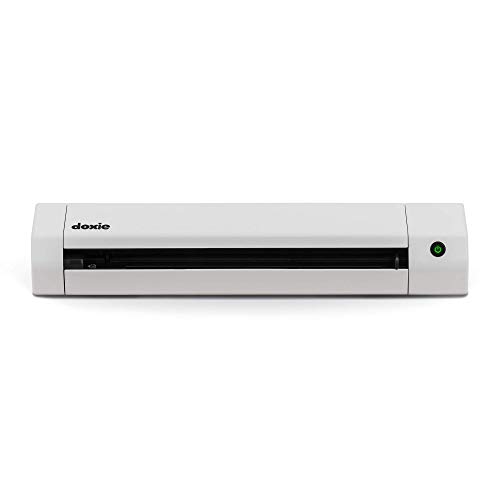
The Doxie Go SE is a portable, battery-powered scanner designed for the knitter who frequently visits estate sales or library archives. Its compact footprint is no larger than a set of double-pointed needles, making it easy to tuck into a project bag.
While it lacks the massive capacity of desktop units, it excels at capturing individual pages or small sets of notes on the fly. It is the perfect tool for when a rare, out-of-print pattern is found at a yarn shop and needs immediate digitization.
Be aware that portability involves a trade-off in processing speed and high-volume capability. This scanner is best suited for targeted tasks rather than bulk digitization of entire physical libraries.
Canon imageFORMULA R40: A Great Home Office Pick
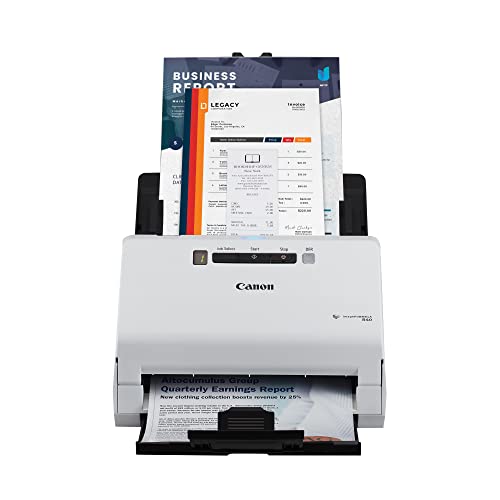
The Canon imageFORMULA R40 balances the need for speed with a user-friendly interface that feels approachable for any skill level. It handles double-sided documents with ease, making it perfect for thick, multi-page pattern booklets or complex instructional manuals.
It brings a level of consistency to archiving that feels as reliable as using a standard wool-blend yarn for a sweater. The software provided with the device is intuitive, allowing for easy file naming and destination mapping right out of the box.
For those who want a reliable, daily-use scanner that won’t require a steep learning curve, this model is a standout choice. It is a workhorse that respects the user’s time and provides high-quality images without unnecessary complexity.
Flatbed vs. ADF: Which Scanner Type Suits You?
An Automatic Document Feeder (ADF) scanner is built for speed and volume, much like a knitting machine compared to hand-knitting. If your archive consists of hundreds of modern, sturdy pages, an ADF scanner will save you hours of manual labor.
Flatbed scanners, by contrast, function like hand-knitting. They are slower but offer superior control and safety for delicate, rare, or oddly shaped items that would jam in an ADF.
Choose an ADF if your primary goal is to clear out boxes of paper quickly. Choose a flatbed if your archive contains fragile vintage patterns or unique media that requires physical support during the scan.
Why OCR Software Is a Must-Have Feature
Optical Character Recognition (OCR) is the process by which a scanner converts images of text into machine-readable characters. Without this feature, a scan is simply a photograph; with it, you can search for specific keywords like “cable,” “lace,” or “gauge” within your entire library.
Think of OCR as having a perfectly indexed stitch dictionary. It turns a massive, unorganized pile of files into a functional, searchable database where any pattern can be retrieved in seconds.
Most modern document scanners include basic OCR software, but the accuracy varies by model. Always prioritize a scanner that offers reliable text recognition to ensure your archived files remain truly useful.
Tips for Organizing Your New Digital Archive
Creating a digital archive is only useful if the files can be found again later. Develop a naming convention that includes the designer name, pattern type, and year, just as you would organize your yarn stash by fiber content and weight.
Use folders based on project types—such as “Socks,” “Sweaters,” and “Accessories”—to keep your digital space as tidy as your craft room. Cloud-based tags can further categorize your patterns, allowing you to filter by specific yarn weights or skill levels.
Remember to back up your digital archive in two separate locations, such as an external hard drive and a cloud service. Just as a project is never finished until the ends are woven in, a digital archive is only secure when redundant backups are in place.
How to Clean and Maintain Your Document Scanner
Dust and paper debris act like grit in a yarn path, potentially scratching documents or causing image streaks. Use a lint-free cloth, similar to those used to clean screens, to wipe the glass and rollers regularly.
Avoid using harsh chemicals that could damage the sensitive internal sensors. If your scanner starts showing lines on the output, the glass likely needs a gentle cleaning with an approved cleaning solution.
Routine maintenance keeps your hardware performing as well as it did on day one. A well-cared-for scanner will provide years of service, ensuring your fiber arts library grows steadily and remains in pristine condition.
Building a digital archive is a rewarding endeavor that protects your most cherished patterns and notes from the wear and tear of time. By selecting the right tool and maintaining a consistent organizational strategy, your physical collection will be perfectly preserved in a modern, accessible format. Happy scanning.