6 Bead Design Boards For Planning Complex Layouts
Struggling with intricate jewelry patterns? Discover 6 bead design boards perfect for planning complex layouts and streamline your creative process today.
Beadwork and knitting often collide when incorporating heavy embellishments into lace shawls, beaded cuffs, or intricate heirloom garments. While these tools were originally designed for jewelry makers, they provide essential structural support for organizing delicate beads before they are threaded onto yarn. Selecting the right board ensures that your color sequences remain intact and your workspace stays organized throughout long hours of assembly.
Beadalon Bead Design Board: The Classic Choice


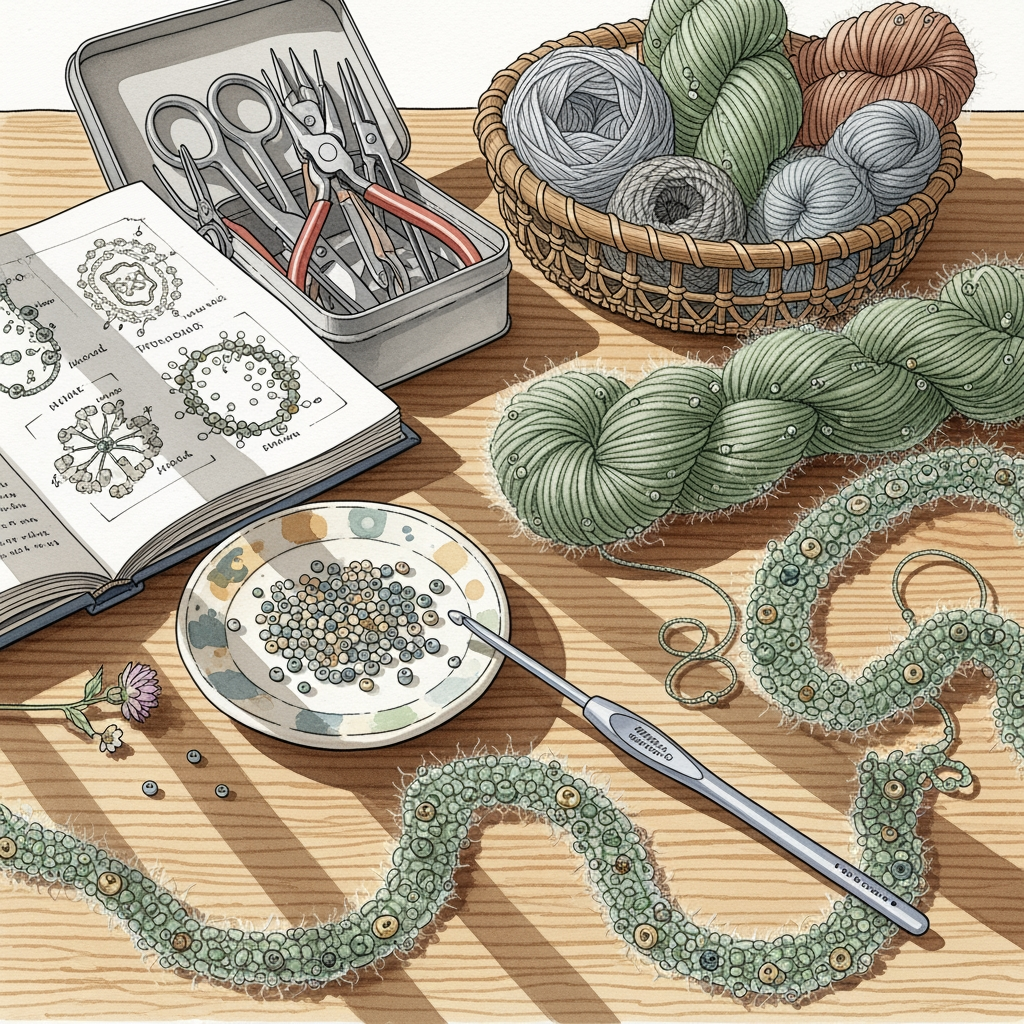
The classic gray flocked bead board is the industry standard for a reason. It provides a soft, friction-heavy surface that prevents small glass or seed beads from rolling away during the delicate process of picking them up with a crochet hook or threading them onto fine-gauge silk or wool.
The U-shaped channels allow for easy visualization of how a pattern will lay out over a longer stretch of yarn. For knitters working with heavy-weight beads on thicker yarn, the depth of these channels provides enough room to keep large quantities of beads sorted by color or size.
However, the flocked material can trap dust and small fibers from your yarn, which eventually degrades the surface. While it remains a reliable entry-level tool, it is best reserved for structured, repetitive bead-knitting patterns rather than high-precision custom design.
Beadsmith Tacky Bead Mat: For Intricate Colorwork

When the project involves microscopic Japanese seed beads or delicate pearls that tend to skitter across smooth surfaces, the tacky mat is a superior solution. These mats use a non-slip, adhesive-like silicone surface that holds beads in place even if the board is slightly tilted.
This is particularly useful for knitters working on stranded colorwork where the bead sequence is vital to the pattern’s success. The mat prevents the “spill catastrophe” that often occurs when a ball of yarn accidentally brushes against a traditional tray.
Keep in mind that these mats require regular maintenance. Dust and lint will diminish the tackiness over time, necessitating a quick rinse with warm water and mild soap to restore the grip needed for complex, color-dense projects.
Beadalon Big Bead Design Board: For Large Layouts
Complex projects like beaded vest borders or bridal veils require a significant amount of workspace to prevent tangling. The larger format of this board offers ample surface area to spread out long rows of beads, allowing for an entire repeat to be visualized at once.
If you are a knitter who likes to “audition” beads before committing to a final arrangement, the extra length of the Big Bead board is invaluable. It removes the need for multiple smaller trays, which significantly lowers the risk of knocking over half-filled containers while working at a crowded knitting table.
While the size is an advantage for planning, it lacks portability. Plan for a permanent station on your crafting desk rather than attempting to transport this board to a knitting group or on transit.
Beadsmith Travel Board: Best for Knitting On-the-Go

Portability is the greatest challenge for the traveling knitter who loves to incorporate beads into their work. This compact, lidded board solves the issue by locking the beads into designated compartments, ensuring that a custom mix of beads survives a commute without turning into a chaotic jumble.
The smaller surface area means you must work in shorter sections, which can be an advantage for focus. It forces the maker to stay organized, processing one motif or one pattern repeat at a time rather than becoming overwhelmed by the entire project.
It is best suited for small projects like beaded cuffs or sock heels. Do not expect to layout an entire scarf-length repeat on this board, as it is strictly designed for efficiency and containment rather than large-scale design.
Beadsmith Round Bead Board: For Circular Layouts
Circular knitting, such as for necklines or decorative motifs, requires a different spatial perspective. A round bead board allows you to see the radial progression of your design, which is essential when placing beads in a symmetrical, sunburst, or floral pattern.
This is the preferred tool for knitters working on mandalas, coasters, or complex shawl motifs that grow outward from a center point. It prevents the distortion that often occurs when trying to map a circular pattern onto a linear, straight-channel board.
Ensure that the board has a center well for your yarn or project core. Having the physical center of the project clearly defined helps maintain even gauge and precise bead placement as you work your way around the round.
Beadalon Bracelet Sizing Board: For Perfect Fits

Though marketed for jewelry, a sizing board is a highly effective way to measure the circumference of cowls, headbands, or mittens. The graduated markings help you understand exactly how many beads are needed per inch, which directly translates to how many stitches you should work between each bead.
For knitters who struggle with the math of bead placement, this board acts as a physical calculator. You can mock up the required bead density and count the repeats needed to match your project’s gauge.
Use this tool to avoid the common pitfall of “bead-crowding,” where too many beads are placed in a row and cause the fabric to stiffen or distort. It provides the visual proof needed to adjust your spacing before the beads are permanently knitted into the yarn.
How to Choose the Right Bead Board for Knitting
Choosing the right tool comes down to the frequency of your bead-knitting and the complexity of your patterns. Beginners should lean toward the classic flocked boards for their balance of utility and price, while advanced knitters tackling intricate colorwork will find the tacky mats essential.
Consider the following factors before purchasing: * Mobility: Do you work at home or in multiple locations? * Pattern Complexity: Are you doing simple repeats or unique, custom placements? * Bead Type: Are you using slippery glass beads or textured, irregular stone beads? * Project Scale: Is it a simple cuff or a full-length beaded garment?
Ultimately, the best board is the one that reduces the friction between the design phase and the knitting phase. If the setup process feels like a chore, you are less likely to incorporate beads into your future projects.
Flocked vs. Tacky Mats: Which Surface Is Best?
Flocked surfaces provide a soft, velvet-like grip that is gentle on beads and easy on the eyes. However, the fibers can catch on yarn, which is a significant drawback for delicate materials like mohair or lace-weight silk.
Tacky mats provide a stronger, more secure hold, which is ideal for the rapid-fire picking required in high-speed knitting. The trade-off is the surface’s tendency to attract pet hair and household dust, which can transfer to your yarn if you are not careful.
Choose flocked for long, stationary projects where you want a soft, non-reflective background. Choose tacky for detailed, multi-color projects where the security of the beads is the highest priority.
Using Your Board to Plan Complex Color Repeats
A bead board serves as a physical bridge between a paper pattern and your final fabric. Use the channels to lay out the exact order of your color repeats, and keep the board within reaching distance while you work.
By placing your beads in the exact sequence of your knitting rows, you eliminate the need to look back and forth between a chart and your yarn. This allows you to maintain a steady knitting rhythm, reducing the likelihood of dropping stitches or missing a bead entirely.
Treat the board as a secondary “chart” that keeps your momentum flowing. If you see an error in the color sequence on the board, you have caught a mistake before it ever made it onto your needles.
DIY Bead Board Ideas You Can Make in 5 Minutes
If you are looking for an immediate solution without an investment, you can create a functional board using household items. A small wooden tray lined with a piece of felt or a scrap of velvet works surprisingly well for preventing bead roll-away.
Another effective DIY approach involves using an empty mint tin or a small, shallow plastic container lined with a piece of non-slip shelf liner. The textured surface of the liner mimics the grip of a professional tacky mat and can be easily trimmed to fit any container.
While these DIY solutions lack the specialized channels of professional boards, they are perfect for testing whether bead-knitting is a technique you want to pursue further. They are also highly portable, making them excellent temporary solutions for knitting retreats or travel.
Investing in a dedicated bead board transforms the way you approach embellishments, turning a tedious task into an organized, creative process. By matching the board type to your specific project needs and fiber choices, you ensure that your beads are always exactly where they need to be. Whether you opt for a professional setup or a clever DIY solution, having a structured space will undoubtedly improve the quality and accuracy of your beaded knitwear.