
6 Best Notepad Holders For Jotting Down Notes
Keep your desk organized with our top 6 picks for the best notepad holders. Explore these stylish, functional options and find the perfect fit for your notes.
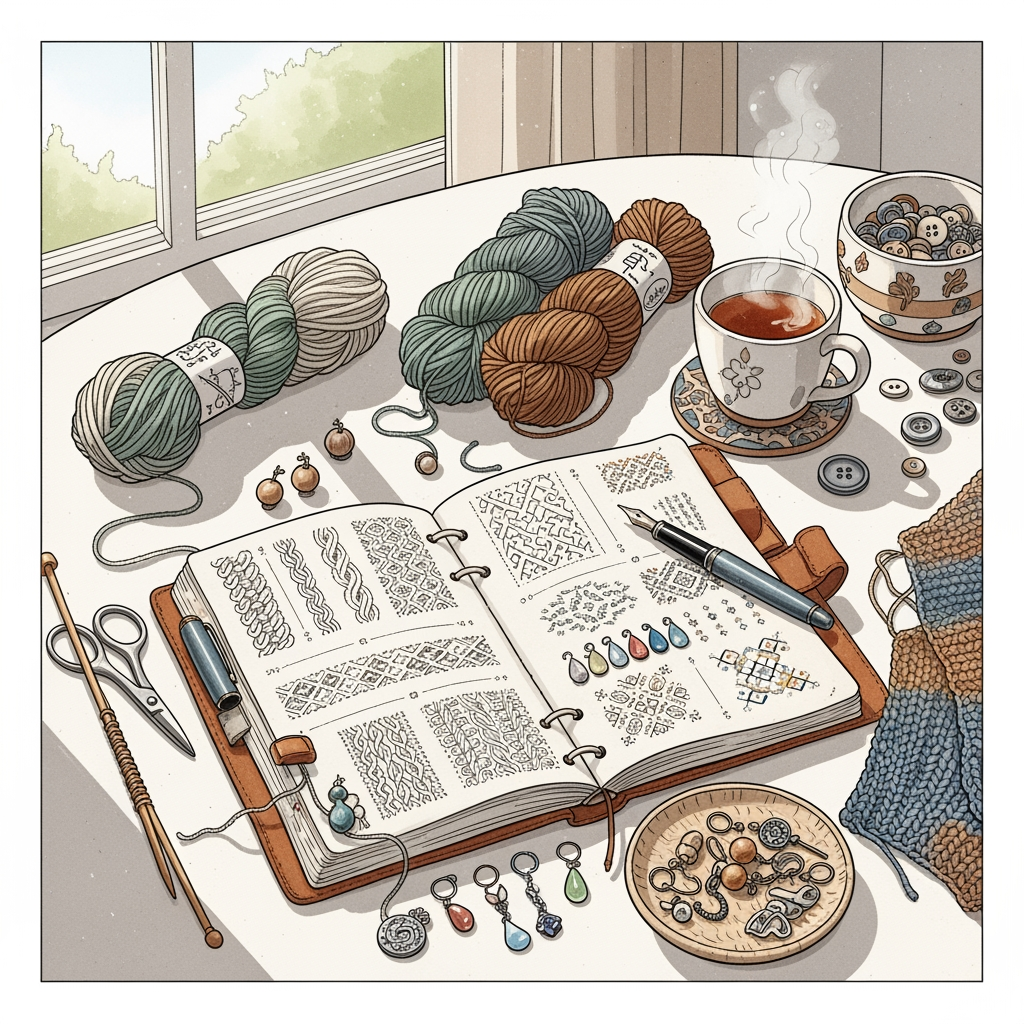
Keeping track of complex stitch patterns often feels like trying to memorize a symphony while simultaneously counting every beat. Without a reliable way to anchor a pattern, even experienced knitters find themselves lost in a sea of yarn-overs and decreases. A dedicated notepad or pattern holder transforms a chaotic workspace into a focused environment. These tools provide the necessary visual stability to keep the rhythm of a project consistent from cast-on to bind-off.
Cocoknits Maker’s Board: Best Magnetic System
The Cocoknits Maker’s Board utilizes a clever magnetic surface that keeps charts and row trackers firmly in place. It is a modular system that functions as both a pattern holder and an organizer for magnetic stitch markers.
For projects involving complex cable repeats or intricate lace, this board excels because it keeps the chart flat and stationary. The magnets are strong enough to hold heavy cardstock or laminated pages, which is essential when the pattern is being referenced repeatedly over several weeks of work.
One significant advantage is the ability to attach additional magnetic accessories directly to the board’s surface. This keeps essential tools like tapestry needles and stitch markers within arm’s reach. While the initial investment is higher than basic clips, the durability and multifunctional design offer long-term value for the dedicated maker.
ProCase Folio Stand: Best for Large Patterns


When working on a full-sized sweater or a complex colorwork blanket, standard-sized holders often fall short. The ProCase Folio Stand provides a wide, stable footprint that accommodates larger A4 or even letter-sized paper without folding or bending.
This stand is particularly useful for knitters who work with printed digital downloads that have small font sizes. Because the stand can be positioned at various angles, it reduces neck strain by keeping the pattern at eye level rather than flat on a table. It mimics the convenience of a document stand, which is a massive upgrade for those working on long-term projects.
The tradeoff here is the physical footprint on the workspace. If the knitting table is cluttered with yarn balls, circular needles, and notion tins, this stand requires a dedicated clearing to remain stable. It is the best choice for a home-based studio setup rather than compact travel knitting.
Generic Wooden Book Stand: A Budget-Friendly Pick
A simple wooden book stand is often overlooked in favor of specialized knitting gadgets, yet it remains one of the most effective tools for pattern management. These stands are inexpensive, sturdy, and usually adjustable to multiple tilt positions.
Using a generic stand allows for a “hands-free” knitting experience that is ideal when deciphering complicated charts. Because these stands are designed to hold heavy books, they are exceptionally stable. They handle heavy, high-page-count pattern books with ease, which a lightweight magnetic board might struggle to support.
The main limitation is the lack of magnetic capability. To keep track of progress, a separate magnetic row counter or a sticky note is required. However, for a knitter on a budget who values simplicity, this tool provides the most utility per dollar spent.
Thread and Maple Pattern Holder: The Luxury Choice

The Thread and Maple Pattern Holder is designed for the knitter who values aesthetics alongside high-end functionality. Crafted from high-quality leather, it offers a sophisticated way to display patterns while maintaining a professional organizational structure.

This holder acts as a complete portfolio, protecting paper patterns from wear, tear, or accidental spills. It features internal pockets for swatches, needles, or progress notes, ensuring that all components of a project stay unified. It is an investment piece that ages beautifully with time and use.
While the cost is significantly higher than other options, the luxury lies in the organization and the tactile experience. It eliminates the need for loose binders or scattered papers, which is a common source of frustration during the middle stages of a complex project.
The Knit & Note Travel Folio: Best for On-the-Go
Frequent travelers understand the difficulty of maintaining project continuity while in transit. The Knit & Note Travel Folio is designed specifically to fold down into a compact size, making it a perfect companion for knitting on trains, planes, or in public spaces.
The design emphasizes security and portability, often featuring zip closures to ensure that pattern pages do not fall out during movement. It protects paper from getting crumpled in a tote bag and provides a discreet way to manage charts in tight quarters.
It is important to note that the compact size limits the total page area. For projects requiring massive, multi-page charts, it may be necessary to fold the pattern sheets to fit the viewing window. If the priority is keeping an “in-progress” project mobile and organized, this folio is unmatched.
Katrinkles Pattern Keeper: For Simple Chart Work
Katrinkles creates specialized laser-cut tools that are both functional and delightful. Their pattern keeper is a lightweight, minimalist solution for knitters who prefer working from small, focused charts rather than full-page documents.
This tool is ideal for stranded colorwork or small motif knitting. It acts as a guide, helping the eye track row-by-row without the distraction of the entire page. Because it is small and usually made of wood, it feels natural in the hand and is easy to store in a small notions pouch.
The primary constraint is that it is not a full-page holder. If the pattern requires constant jumping between different sections of a large chart, this tool may feel too restrictive. It is best used as a surgical strike tool for specific, complex portions of a design.
How to Choose the Right Holder For Your Project
Selecting the right holder begins with identifying the physical requirements of the pattern itself. If the project is a simple scarf with a repeat that spans only a few lines, a small magnetic keeper is sufficient. If the project involves large-scale schematic diagrams and complex instructions, a full-folio or a stand is necessary to avoid missing critical details.
Consider the environment in which the knitting occurs. High-traffic areas with pets or small children might benefit from a sturdy, weighted stand that won’t easily tip. If knitting occurs in limited space, such as on a couch or a cramped desk, choose a device with a smaller vertical footprint.
Always consider the type of paper or device being held. Laminated charts require different clips than thin copy paper. If the pattern is printed on thin sheets, ensure the holder has a protective sleeve or strong magnets to prevent tearing or wrinkling over weeks of heavy use.
Magnetic vs. Stand Holders: Which Is for You?
Magnetic holders are generally superior for colorwork and complex lace because they allow for precise, line-by-line tracking with a metal magnet bar. These bars hold the pattern flat, which is crucial when reading charts where a shift of a single stitch can ruin the color sequence.
Stand holders, by contrast, excel at ergonomics and versatility. They place the pattern at an angle that minimizes the need to look down, which preserves posture during long knitting sessions. However, they lack the “tracking” utility of magnetic boards unless augmented with external clips or markers.
A hybrid approach is often the most successful. Use a stand for the overall pattern reference and a small magnetic strip or sticky note to mark the active row. This provides the best of both worlds: good posture and accurate stitch tracking.
Tips for Using Your Holder with Digital Patterns
Many modern knitters prefer digital patterns, but reading from a tablet while knitting can be cumbersome if the device is not properly supported. If using a tablet, ensure the pattern holder has a wide, non-slip base that can support the weight of an iPad or similar reader.
Avoid using standard metal clips on tablets, as they may scratch the screen. Instead, use soft-touch grips or dedicated tablet stands. If the digital pattern has a “highlight” feature, it can substitute for physical row trackers, but always keep a backup paper copy of the chart if the project is long-term to avoid battery reliance.
One often overlooked tip is the use of screen-magnification settings. Even on a high-quality tablet, knitting charts can be dense; utilize the zoom-and-lock feature to ensure the active chart section is large enough to see clearly without squinting.
What Size Pattern Holder Do You Really Need?
A common mistake is purchasing a holder that is exactly the size of a standard sheet of paper. Always account for the margins and the space required for clips or magnets. If the pattern is letter-sized, a slightly larger holder offers the “breathing room” needed to move trackers around without losing the edge of the pattern.
If working on complex garments, consider a folio that can accommodate legal-sized paper or wider landscape charts. Many lace patterns are formatted in landscape to show wider repeats, and standard holders will often leave the sides of the pattern dangling and vulnerable to wear.
When in doubt, err on the side of a larger holder. A larger surface area can always be used for smaller patterns, but a small holder cannot be expanded to accommodate a massive, multi-page chart. Your future self will appreciate the extra workspace when you tackle that next stranded-colorwork sweater.
Choosing the right pattern holder is a fundamental step in elevating the knitting experience from a series of scattered tasks to a cohesive creative process. By matching the tool to the scale of the pattern and the realities of the workspace, every maker can reduce frustration and maintain a steady, satisfying rhythm. Whether a simple wooden stand or a luxury leather folio, the right support system ensures that the focus remains exactly where it should be—on the stitches.
