6 Best Mini Irons For Small Scale Projects To Own
Discover the 6 best mini irons for small-scale projects. Perfect for quilting and crafting, these compact tools deliver precise heat. Shop our top picks today.
Achieving a crisp, professional finish on small-scale knit projects often comes down to the quality of the finishing tools. A standard household iron is frequently too cumbersome for delicate blocking or touching up intricate lace seams. Investing in a mini iron provides the precision needed to coax stubborn fibers into place without distorting the surrounding fabric. These compact tools are essential for makers who demand polished results from every stitch.
Oliso M2 Pro Mini Iron: The Premium All-Rounder


The Oliso M2 Pro stands out for its innovative iTouch technology, which lifts the iron when the handle is released. This feature is a game-changer for knitters working on a crowded table, as it eliminates the constant need to set the iron upright or risk scorching the surface of a finished garment.
Beyond its safety features, the consistent heat distribution makes it ideal for delicate fibers like alpaca or merino that require gentle steam. While the price point is higher, the build quality justifies the cost for those who block items frequently.
The primary tradeoff is its weight; it feels substantial compared to cheaper travel options. If stability and safety are the top priorities, this is the gold standard for your workspace.
Clover Mini Iron II: Best for Precision Appliqué
The Clover Mini Iron II is essentially a heated wand, making it the perfect tool for manipulating small areas like collar points or narrow edges on a knitted placket. Because it features interchangeable tips, it allows for surgical precision that a flat-bottomed iron simply cannot replicate.
This tool is not intended for blocking entire garments, as the surface area is far too small. However, when working with intricate details or setting seams on small-scale projects, its maneuverability is unmatched.
Be aware that this tool does not provide steam, making it a dry-heat-only solution. It is a specialized addition to the toolkit rather than a primary iron for general blocking.
Steamfast SF-717: Most Powerful Steam on a Budget
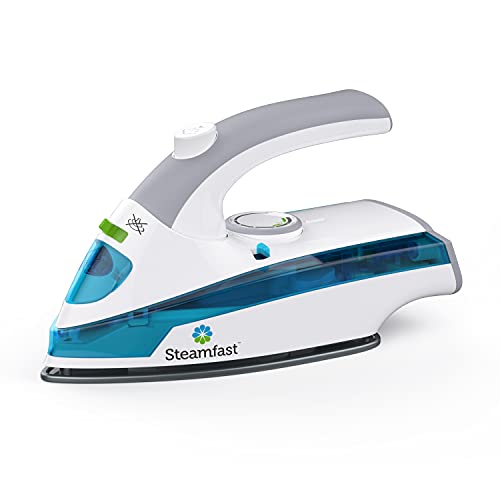
The Steamfast SF-717 offers impressive steam output for its size, which is critical for relaxing fibers after casting off. When dealing with dense, felted, or heavy wool projects, a quick burst of steam from this unit can help even out stitches and improve the overall drape of the fabric.
It is surprisingly powerful for its compact footprint, making it a reliable workhorse for makers on a budget. The water reservoir is small, requiring frequent refills, but the recovery time is quick enough to keep the workflow moving.
The potential downside is the lack of a temperature dial, as it relies on a simple switch system. For synthetic yarns that melt easily, keep the iron moving constantly to avoid accidental damage to the fiber.
Dritz Petite Press: Your Best No-Frills Option
The Dritz Petite Press is a straightforward, reliable tool that prioritizes simplicity and ease of use. It features a comfort-grip handle and a pointed tip that is particularly useful for pressing seams flat on structured knitwear or decorative borders.
This model is ideal for beginners who do not want to navigate complicated settings or specialized features. It gets the job done without any unnecessary fluff, providing consistent heat that is reliable for basic garment maintenance.
It does not offer the advanced steam capabilities of more expensive models, making it better suited for dry pressing. If the goal is a basic tool for quick touch-ups, this is an excellent, cost-effective choice.
Sunbeam Hot-2-Trot: Best Dual-Purpose Travel Iron
The Sunbeam Hot-2-Trot functions as a capable travel iron that holds its own in a craft room. Its compact, folding handle design makes it easy to store in a small knitting kit, yet it is large enough to handle moderate blocking tasks.
Because it includes a water reservoir and adjustable steam settings, it offers more versatility than many strictly craft-focused mini irons. It is a smart purchase for the knitter who travels to retreats or workshops and needs a reliable tool on the go.
The dual voltage switch is a helpful inclusion, but it must be set correctly before use. Always double-check the voltage to avoid damaging the heating element.
Rowenta DA1560 First Class: Compact Powerhouse
The Rowenta DA1560 is engineered for those who want professional results in a smaller, travel-friendly package. Its stainless-steel soleplate glides effortlessly over both natural and synthetic fibers, minimizing the risk of snagging delicate lace or pulling at loose stitches.
This iron produces a surprisingly strong steam output, making it effective for blocking larger surface areas like shawls or cowls. It balances the features of a full-sized iron with the portability required for a smaller workspace.
Because it is more powerful than standard mini irons, it is easy to accidentally overheat delicate materials. Always use a pressing cloth between the iron and your knitwear to protect the fiber’s natural luster.
How to Choose the Right Mini Iron for Your Craft
Selecting the right iron requires assessing the primary material and project type. If you work primarily with delicate, heat-sensitive fibers like silk or mohair, prioritize irons with precise temperature control and a non-stick coating.
For those focusing on heavy-duty projects like felted bags or structured garments, steam capability becomes the most important metric. You need a device that can push moisture deep into the fiber to set the shape.
Consider the surface area of your typical project as well. A wand-style iron is perfect for details, but a wider soleplate is essential for blocking gauge swatches and large panels.
Steam vs. Dry Ironing: What Your Project Needs
Steam is generally the preferred method for blocking because it hydrates the fiber, allowing it to relax into its final, blocked shape. It is particularly effective for resetting memory in wool fibers after they have been stretched during the knitting process.
Dry ironing is better suited for projects with decorative elements that might be damaged by moisture, or when working with certain synthetic blends that do not respond well to steam. It is also the safer option when ironing directly onto finished seams where you want a crisp, sharp line without adding bulk.
Always test your iron on a gauge swatch before touching the final project. Fiber response varies wildly; a wool/nylon blend will behave very differently under heat than pure, untreated alpaca.
Safety First: Using Your Mini Craft Iron Safely
Mini irons reach high temperatures just as quickly as their full-sized counterparts, making them a significant burn risk. Always treat these tools with the same respect you would give a standard household iron, ensuring it is placed on a heat-safe surface when not in use.
Keep cords clear of the working area to prevent snagging on yarn or knocking the iron over. Many mini irons have small bases, which makes them prone to tipping if the cord is pulled.
Always unplug the iron immediately after the task is finished. Never leave a hot iron unattended in a room where children or pets may be present.
Blocking Knits with a Mini Iron: A Quick Guide
Blocking is the final, vital step that transforms a piece of knitting from a collection of stitches into a professional garment. Start by pinning your piece to the correct dimensions on a blocking mat or towel.
Hover your mini iron just above the fabric, allowing the steam to do the work rather than pressing the soleplate directly into the yarn. Direct contact can “kill” the stitch definition, especially in high-loft yarns where you want to maintain the airiness of the fiber.
If the fabric requires direct contact, always use a thin cotton pressing cloth or a clean linen towel as a barrier. Move the iron in light, tapping motions rather than sliding it across the surface to prevent stretching out your hard-earned gauge.
Whether you are finishing a delicate lace scarf or ensuring a sweater’s seams lie perfectly flat, the right mini iron is an indispensable ally in your knitting kit. Choose based on your specific material needs and the scale of your projects, and you will find that these small tools yield significantly professional results.