
6 Best Waterproof Mats For Protecting Work Surfaces
Keep your workspace clean and damage-free with our top 6 picks for the best waterproof mats. Shop our expert-tested recommendations to protect your surfaces today.
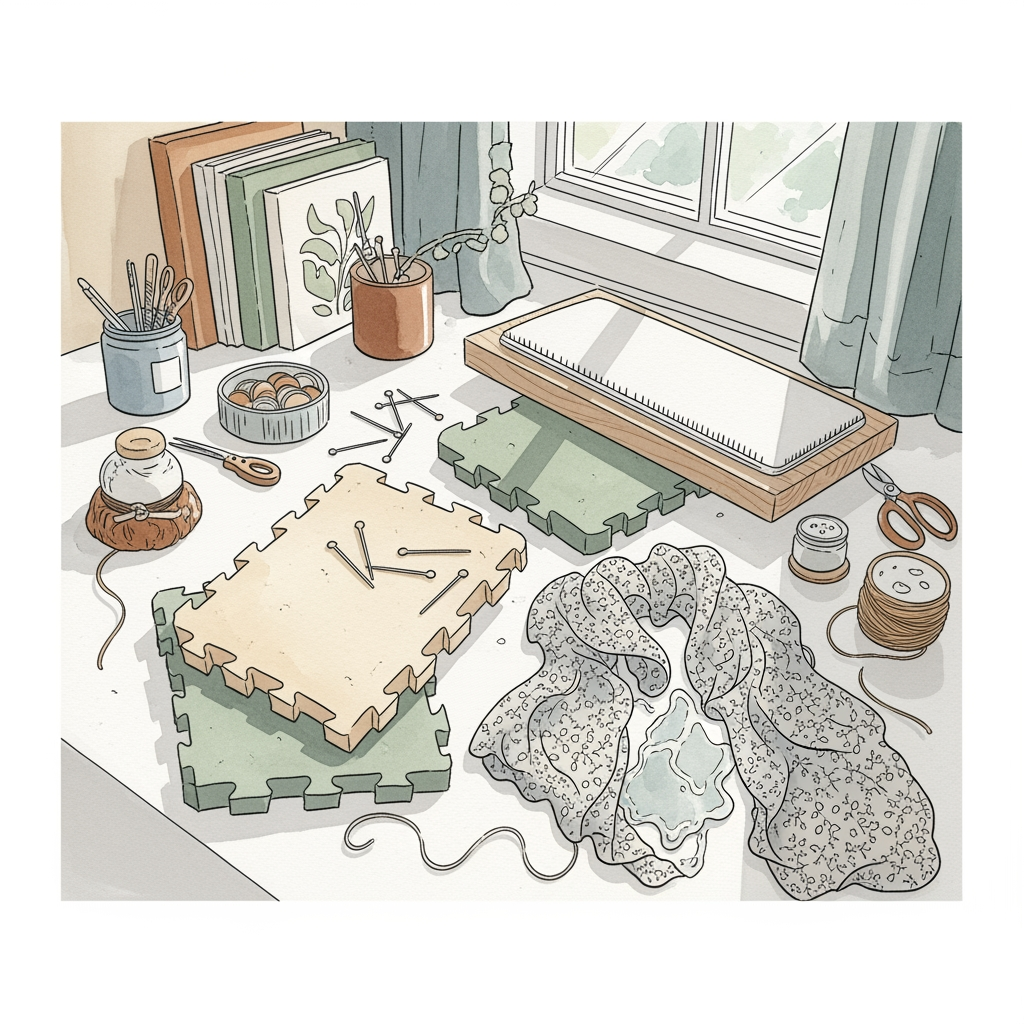
Protecting your workspace is a critical, often overlooked step in the professional finishing of any handmade garment. Whether you are dealing with delicate lace mohair that requires precise pinning or a heavy wool sweater needing aggressive steam blocking, the surface underneath dictates your final result. A dedicated waterproof mat ensures that moisture stays away from tables while providing the structure needed to shape your stitches. Choosing the right surface transforms blocking from a dreaded chore into an essential, meditative final stage of your creative process.
Knitters Pride Knit Blockers & Mat Kit: Best Overall


This system stands out because it combines structural support with specialized hardware. It includes a series of interlocking foam tiles that offer a firm yet pin-friendly surface, which is essential for ensuring your blocking pins do not wobble or fall out during the drying process.
The inclusion of “knit blockers”—small plastic bars with multiple pins—radically speeds up the blocking of straight edges. Instead of placing fifty individual T-pins along a hem, these tools allow for rapid, even tensioning. It is an excellent choice for those who frequently block shawls, scarves, or rectangular sweater components.
Be mindful that these mats are foam-based and can eventually show wear if punctured repeatedly in the exact same spots. However, the modular nature of the kit makes it the most reliable all-in-one solution for the majority of knitting projects.
Cocoknits Knitter’s Block: Most Versatile System
The Cocoknits system is designed with a focus on precision and grid-based geometry. The tiles feature a printed grid, which is indispensable when you need to match the dimensions of two different sweater sleeves or ensure a lace shawl is perfectly symmetrical.
The surface is heat-resistant, meaning you can safely use steam blocking techniques without damaging the material. This is a significant advantage when working with animal fibers like wool or alpaca that benefit from steam to “bloom” or fluff up the yarn.
The trade-off here is the initial investment and the space required for storage. However, for those who view blocking as an essential part of the design process, the accuracy offered by this grid system is unmatched.
Arteza Self Healing Cutting Mat: Best for Precision

While often relegated to quilters, a high-quality, self-healing mat is a secret weapon for knitters who need absolute accuracy. The non-slip surface prevents your knitted fabric from sliding while you are arranging it, making it much easier to achieve clean, sharp lines.
These mats are incredibly durable and resist moisture, making them ideal for light wet-blocking or dampening pieces. Because the surface is dense and durable, it provides a very stable platform for blocking small items like socks or gloves.
Keep in mind that these mats are not designed for pinning. You will need to use weighted blocking wires or heavy-duty magnets if you prefer not to pierce the fabric or the mat surface itself.
Let’s Resin Silicone Craft Mat: Ideal for Dyeing

For knitters who experiment with hand-dyeing or painting yarn, a silicone mat is essential. The non-porous surface ensures that even the most concentrated acid dyes will not stain your work surface, and the heat-resistant properties allow for heat-setting techniques.
The grip inherent in silicone helps hold damp fabric in place without the need for excessive pinning. It is also exceptionally easy to clean; a quick wipe with a damp cloth or a soak in the sink removes any leftover dye or fiber residue.
Do not expect this mat to hold pins. It functions better as a protective barrier or a workspace for messy tasks rather than a structural blocking board.
Anezus Large Silicone Sheet: Top Budget-Friendly Pick
This sheet provides a vast, waterproof workspace at a fraction of the cost of specialized blocking boards. It is perfect for those who work on large projects, like heavy blankets or oversized sweaters, where covering a standard dining table is necessary.
Its primary benefit is portability and flexibility. You can drape it over virtually any surface, roll it up for storage, and toss it in the laundry if it gets dusty. It is the ultimate “utility” mat for the utilitarian knitter.
Because it is thin, it offers no structural density. If you require a surface that will hold pins vertically to maintain a specific tension on a delicate lace edge, you will need to place this sheet over a firmer surface like a yoga mat or thick cardboard.
Knitter’s Doodles Blocking Mats: Largest Surface Area

When blocking massive projects like a king-sized afghan or multiple garment pieces simultaneously, you need surface area above all else. These mats are designed to be expanded infinitely, allowing you to create a customized blocking floor that fits your specific project needs.
The material is thick and forgiving, allowing for deep pin penetration. This is crucial when you are trying to stretch a project significantly to open up the stitch definition of a complex cable pattern or a wide lace repeat.
The sheer size can be a storage challenge in smaller apartments. However, if your knitting output leans toward blankets and large-scale home textiles, the convenience of having a massive, dedicated floor space is worth the extra storage effort.
Blocking Mat vs. Silicone Mat: Which Do You Need?
The choice between a blocking mat and a silicone mat depends entirely on your project’s physical requirements. If your goal is to stretch, shape, and hold a piece to specific dimensions, a firm, pin-friendly foam blocking mat is mandatory.
Silicone mats are the better choice for surface protection, dyeing, or messy tasks. They prevent liquids from reaching your furniture, but they do not provide the structural support needed to “train” the stitches into their final shape.
Consider the “shape memory” of your project. Woolen fibers usually require being held in a stretched state while they dry, which mandates the use of pins and a dense mat. Synthetic fibers may require less aggressive shaping, making a simpler silicone barrier sufficient.
What to Look for in a Waterproof Crafting Mat
- Thickness: At least 0.5 inches is ideal for holding long T-pins securely without them hitting the table beneath.
- Grid Markings: Essential for ensuring symmetry in lace and matching garment panels.
- Heat Resistance: Non-negotiable if you use steam as a primary finishing technique.
- Surface Texture: A slightly “tacky” or grippy texture helps prevent fabric from sliding while you are pinning.
- Modular Design: Allows you to expand your workspace to fit different projects, from tiny baby hats to large sweaters.
How to Clean and Store Your Waterproof Mats
Foam mats should be kept out of direct sunlight to prevent the material from becoming brittle or warping over time. Wipe them down with a damp cloth and mild soap after use, and ensure they are completely dry before stacking them to prevent mold growth.
Silicone mats are generally dishwasher-safe or can be washed in the sink with dish soap. Always allow them to air dry fully, as trapped moisture between layers of stored silicone can lead to unwanted odors.
Store your mats flat whenever possible. If space is limited, rolling them is an option, but be aware that constant rolling can eventually lead to permanent curling, which makes them difficult to use for flat blocking later.
Tips for Wet Blocking on Your New Crafting Mat
Always ensure your knitted piece is thoroughly soaked but not dripping before transferring it to the mat. Lay the garment flat on the mat and gently pat it into shape, moving from the center outward to avoid distorting the stitches.
Use a rust-proof pin to avoid staining your fibers, especially when working with lighter-colored yarns. If you are using steam, hold your iron or steamer several inches above the piece; direct contact with the iron can “kill” the yarn, causing it to lose its bounce and elasticity permanently.
Finally, allow the piece to dry completely in a well-ventilated area. Do not rush this process with a hair dryer or direct heat, as the slow, natural evaporation of water is what allows the fiber to relax and “settle” into its final, professional shape.
Investing in a quality blocking surface is the final step in elevating your knitting from homemade to truly professional. By matching your mat to the specific needs of your project—whether that is the structural rigidity of a foam block or the protective convenience of silicone—you ensure that every hour spent knitting is preserved in the final result. Select the tool that fits your most common project type, and you will find that the finishing process becomes a satisfying conclusion to your hard work.

