
6 Best Split Ring Openers For Charm Bracelets
Struggling to attach charms? Discover the 6 best split ring openers for charm bracelets to make jewelry assembly easy and precise. Shop our top picks today.
Adding charms to a project bag or customizing stitch markers is a delicate task that requires the right leverage. Whether working with intricate metal jump rings or tiny, temperamental split rings, the difference between a seamless finish and a mangled piece of hardware lies in the tool. Precision is essential, especially when your materials include hand-dyed silk or fragile lace-weight yarn that can snag on even the smallest gap. This guide breaks down the best split ring openers to ensure your notions remain secure and your knitting stays protected.
Beadsmith Pliers: The Best All-Around Opener


Beadsmith pliers are a staple in many notions kits because they balance precision with accessibility. The jaw design is specifically engineered to wedge between the coils of a split ring without marring the metal finish.
For those who frequently swap out progress keepers or organize stitch markers by pattern section, these pliers offer consistent performance. They provide enough leverage to open stubborn rings without requiring excessive hand strength, which is vital when working on long, multi-day knitting sessions.
The bottom line: Reliability is the hallmark of this tool. It is a workhorse that fits into any standard notions pouch without taking up excessive space.
Xuron 496 Pliers: A Durable, Pro-Level Choice
The Xuron 496 is widely considered the gold standard for those who demand a professional finish on their hardware. The tempered steel construction resists the bending and warping common with cheaper, mass-produced alternatives.
If you are a frequent traveler or a high-volume crafter who builds custom stitch markers, these pliers justify the higher investment. The precision tips are ground to a specific profile that grips even the smallest split rings, preventing the dreaded “sprung” metal that no longer closes flush.
These tools are built to last a lifetime, assuming they are used solely for their intended purpose. Avoid using them to snip heavy wires, as that will compromise the integrity of the specialized tip.
Artbeads Designer Pliers: Most Ergonomic Grip
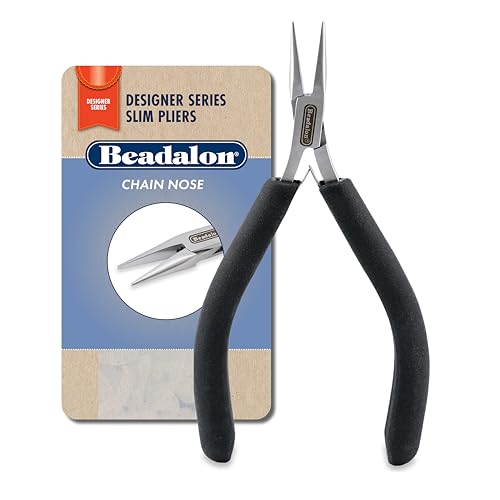
Knitting for hours, especially with repetitive motions like working intricate cables, can lead to hand fatigue that extends to other craft-related tasks. The Artbeads Designer series focuses on handle geometry to minimize pressure points.
The grip is slightly wider and softer than traditional steel-handled pliers, providing a natural cushion. For crafters who have developed arthritis or simply prefer tools that don’t dig into the palm, this model is a significant upgrade in comfort.
While the ergonomic handles are a major benefit, they can make the tool slightly bulkier in a small notions tin. Balance the need for comfort against the space constraints of your preferred project bag.
Cousin DIY Tool: The Best Budget-Friendly Pick
Not every knitting accessory needs to be a professional-grade investment. The Cousin DIY tool is a functional, no-frills option that serves the purpose of opening split rings for occasional use.
This tool is ideal for the beginner who is just starting to collect custom stitch markers and needs a way to secure them to their knitting. It handles standard sizes easily, though it lacks the refined finish of higher-end steel models.
If the tool is only used once every few months to change a progress keeper, this budget pick is perfectly adequate. It performs the mechanical task without unnecessary overhead.
The Bead-Thingy: Ideal for Travel and On-the-Go
The Bead-Thingy is a specialized, compact tool that looks quite different from traditional pliers. Its unique design uses a small, wedge-like extension to pry the ring open rather than squeezing it.
This is the ultimate choice for the “knitter on the move.” It is lightweight, slim, and can easily slide into a sleeve of an interchangeable needle case, ensuring you always have the ability to attach a charm or marker while commuting or waiting in a knitting circle.
Be aware that it requires a slightly different technique than standard pliers. Practice with a spare ring or two before attempting to manipulate a ring already attached to a delicate fiber project.
Eurotool Pliers: Great for Tiny Stitch Markers
Tiny split rings—often used for sock gauge stitch markers—require a very specific, slender jaw profile. Eurotool pliers excel here because their tips are refined enough to fit into the smallest gaps without catching on the surrounding ring coils.
When working with fine-gauge yarn like cobweb or heavy laceweight, you cannot afford to have a tool that is too blunt. A dull tool will stretch the ring, leaving a gap that can catch on the fine fibers of your project, leading to frustrating snags.
Choose these when precision is the priority over raw strength. They are surgical in their application, making them perfect for delicate hardware work.
How to Choose the Right Split Ring Opener Tool
Selecting the right tool depends on your specific crafting habits and the types of hardware you favor. First, consider the frequency of use; if you attach charms to every project, prioritize ergonomics.
- Frequency: High-volume use demands better steel quality and handle comfort.
- Hardware Size: Ensure the jaw tip is thin enough for your smallest split rings.
- Portability: If you knit away from home, choose a tool that fits your existing notions kit.
Avoid the temptation to use standard household pliers, as the teeth on those tools are designed for grip, not separation. They will almost always mar the plating on your rings.
Split Rings vs. Jump Rings: What’s the Difference?
Understanding the hardware is as important as the tool used to open it. A split ring functions like a miniature key ring, featuring two overlapping coils that keep the charm secure.
A jump ring, conversely, is a single circle of wire that must be pried open laterally—never pulled apart—to keep its shape. You cannot open a split ring with the same technique used for a jump ring, as this will permanently deform the wire.
Always verify the hardware type before reaching for your pliers. Using the wrong tool on a split ring can leave a sharp edge that will slice through your yarn fibers.
A Quick Guide to Using Your Split Ring Pliers
The goal when using these tools is to separate the two coils just enough to slide the ring onto your knitting needle or project. Place the jaw of the pliers between the coils of the split ring.
Apply gentle, steady pressure to force the two ends apart horizontally. Do not pull the coils outward, as this stresses the metal and prevents it from snapping back into a closed, flush position.
Once the charm or marker is in place, remove the tool. If the ring does not close perfectly, use the flat part of the plier jaw to gently squeeze the coils back together until they align.
What to Look For: Jaw Type and Handle Comfort
The jaw type is the most critical technical specification to check before purchasing. Look for smooth, tapered jaws that do not feature serrated teeth, as serrations are intended for gripping, not delicate manipulation.
Handle comfort is the secondary, yet equally important, consideration. If you suffer from hand strain after long hours of plying yarn or knitting at a tight gauge, look for rubberized grips or spring-loaded handles that return the tool to an open position automatically.
Weight and balance also matter; a tool that feels balanced in your hand will provide better control. Investing in a tool that matches your physical needs ensures that your notions organization remains a pleasure rather than a chore.
Finding the right split ring opener is about matching your specific hardware needs with the ergonomics that keep your hands happy. By choosing a tool that respects the integrity of your rings and the safety of your delicate fibers, you ensure that your markers and charms remain assets to your knitting rather than hazards. Invest in a quality tool that feels comfortable in your grip, and your notions management will become a seamless part of your creative process.