7 Best Precision Scalpels For Fondant Trimming
Achieve flawless cake designs with our top 7 precision scalpels for fondant trimming. Read our expert guide to find the perfect tool for your next creation today.
Achieving clean, crisp edges on fondant is much like maintaining consistent tension while working a complex lace pattern; precision is everything. A dull blade or an awkward grip can lead to ragged edges that ruin the aesthetic of a carefully constructed cake. Just as one would not use blunt, bent tapestry needles for fine finishing work, selecting the right trimming tool is essential for professional-grade results. This guide evaluates the top precision scalpels, ensuring every cut is as clean as a perfectly blocked swatch.
X-Acto #1 Precision Knife: The All-Around Classic


The X-Acto #1 is the industry standard for a reason, much like the classic nickel-plated circular needle. Its slim, cylindrical body allows for the kind of fluid, rotational movement needed to carve intricate fondant appliqués.
This tool excels during long sessions where manual dexterity is paramount. Its lightweight aluminum handle prevents the hand fatigue often associated with heavier, decorative tools.
The trade-off is that the collet—the part that grips the blade—can occasionally loosen over time. Always verify that the blade is tightened securely before starting a delicate cut, just as one checks the cable joins on an interchangeable needle set.
Excel Blades K1 Knife: Best for Intricate Detail
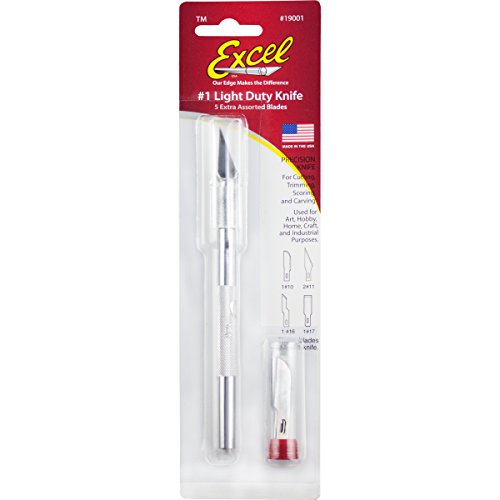
For those focused on miniature fondant work, the Excel Blades K1 offers superior balance and a refined tip. Its construction is slightly more robust than standard entry-level knives, providing better stability when trimming thick or cold-hardened fondant.
The knurled grip prevents the tool from slipping in the hand, which is vital when performing repetitive, precise scoring. If you are trimming fondant to mimic the texture of a knitted cable or a braided fringe, the stability of this handle is unmatched.
While excellent for control, the finer points of the blades are brittle. Avoid using them to pry or lift heavy chunks of sugar paste, as you would avoid using a thin lace needle to pick up heavy worsted-weight stitches.
Swann-Morton No. 3 Handle: A Surgeon’s Precision

Professional cake decorators often gravitate toward the Swann-Morton No. 3 because it offers a surgical level of sharpness. This handle requires a specific style of replaceable blade, offering a rigidity that craft knives cannot match.
The weight distribution is concentrated near the index finger, allowing for effortless pressure control. This is the ideal tool for trimming fondant flush against a cake board or creating sharp, geometric angles that must look seamless.
Note that changing these blades requires a specific, slightly more involved technique than standard screw-top handles. Treat these with the same respect as a set of ultra-sharp steel DPNs; they are professional instruments designed for high-stakes finishing work.
Fiskars Softgrip Craft Knife: Best Ergonomic Grip

Long-duration projects, such as covering a tiered cake with individual fondant petals, require tools that mitigate strain. The Fiskars Softgrip features a contoured shape that rests naturally in the palm, reducing the “death grip” that leads to cramping.
The blade change mechanism is integrated and user-friendly, allowing for quick swaps without fumbling. If you are prone to wrist fatigue while knitting, this ergonomic approach provides a welcome reprieve during detail-heavy decorating sessions.
The primary limitation is the thickness of the handle, which may feel slightly bulky for those with smaller hands or those performing exceptionally fine, micro-detailed cuts. Balance the comfort of the grip against the need for surgical maneuverability.
Cricut TrueControl Knife: Top for Blade Control
The Cricut TrueControl knife features a locking blade system that virtually eliminates the “blade wiggle” often found in cheaper alternatives. For clean cuts on fondant, preventing lateral movement is the difference between a jagged edge and a smooth, professional finish.
The blade release mechanism is button-operated, keeping fingers away from the sharp edge during removal. This is a significant safety upgrade for anyone who values efficiency without sacrificing security.
While the design is modern and effective, the replacement blades are proprietary and specific to the brand. Keep this in mind if you prefer the versatility of universal blades found in most craft stores.
PME Sugarcraft Knife & Scriber: Best Dual-Purpose
The PME tool is a hybrid, featuring a cutting blade on one end and a needle-like scriber on the other. In knitting terms, this is the equivalent of a double-ended hook; it is a versatile workhorse for multiple tasks.
Use the blade for trimming and the scriber for positioning tiny fondant elements or adding texture to stitches in a modeled sugar figure. This minimizes the number of tools cluttering the workspace, helping keep the area clean and organized.
This tool is optimized for sugar work rather than general crafts, meaning the blade is specifically shaped for the unique consistency of fondant. While not a heavy-duty cutting tool, it is essential for the delicate assembly of sugar art.
Arteza Hobby Knife Kit: Best Value Starter Set
The Arteza kit is an excellent entry point, providing a variety of handle weights and blade shapes in a single organized case. It is comparable to a starter set of various needle sizes and materials, allowing you to discover your personal preferences without a large investment.
Having different blade profiles available means you can select the right tool for different tasks—like using a wide blade for straight edges and a fine point for intricate detailing. This versatility allows you to test what works best for your specific style.
Be aware that these value sets are often mass-produced; inspect the blades upon arrival to ensure quality. It is a cost-effective way to stock the “tool kit” for a growing hobby, provided you eventually upgrade the specific handles you find yourself using most.
How to Safely Change and Dispose of Your Blades
Safety is the highest priority when working with sharp instruments. Always use a pair of needle-nose pliers to remove a dull blade rather than relying on your fingers.
Dispose of used blades in a puncture-proof container—a heavy plastic detergent bottle or a specialized sharps bin works well. Never throw loose blades into a kitchen trash bag, where they pose a risk to anyone handling the waste.
Label your container clearly. If a blade feels dull, replace it immediately; trying to force a blunt edge through fondant creates more resistance and increases the likelihood of a slip-related injury.
Choosing the Right Blade Shape for Your Project
- Fine Point (No. 11 shape): Perfect for delicate, intricate cutting and tight corners.
- Chisel Blade: Best for straight lines and cleaning up base edges against a cake board.
- Curved Blade: Ideal for rounded edges, such as cutting petals or scalloped fondant borders.
- Heavy Duty: Reserved for cutting thicker gumpaste or dry sugar structural elements.
Match the blade profile to the texture of the material. Just as you choose a blunt needle for weaving in ends on chunky wool, choose the blade shape that offers the least resistance for the density of the fondant.
Scalpel vs. Craft Knife: What’s the Difference?
A craft knife is designed for versatile hobby use, often featuring a textured handle and a wide range of blade shapes. A scalpel, by contrast, is built for extreme, singular precision, prioritizing a razor-sharp edge over long-term durability.
Scalpels are generally lighter and offer a tactile connection that is superior for fine detail work. Craft knives are more durable and suited for varied materials, from paper to foam board.
For cake decorating, a scalpel is often superior for the final, visible edges on a client piece. Keep a mix of both in your kit to handle different stages of the project, from structural prep to the final, delicate details.
Mastering the use of these tools is a journey similar to refining your craft in the fiber arts. With practice and the right equipment, you will find your own rhythm and achieve a level of finish that elevates your creations to a professional standard.