7 Notebook Sleeves For Travel Protection To Consider
Keep your laptop safe on the move with our top 7 notebook sleeves for travel protection. Read our expert guide now to find the perfect fit for your device.
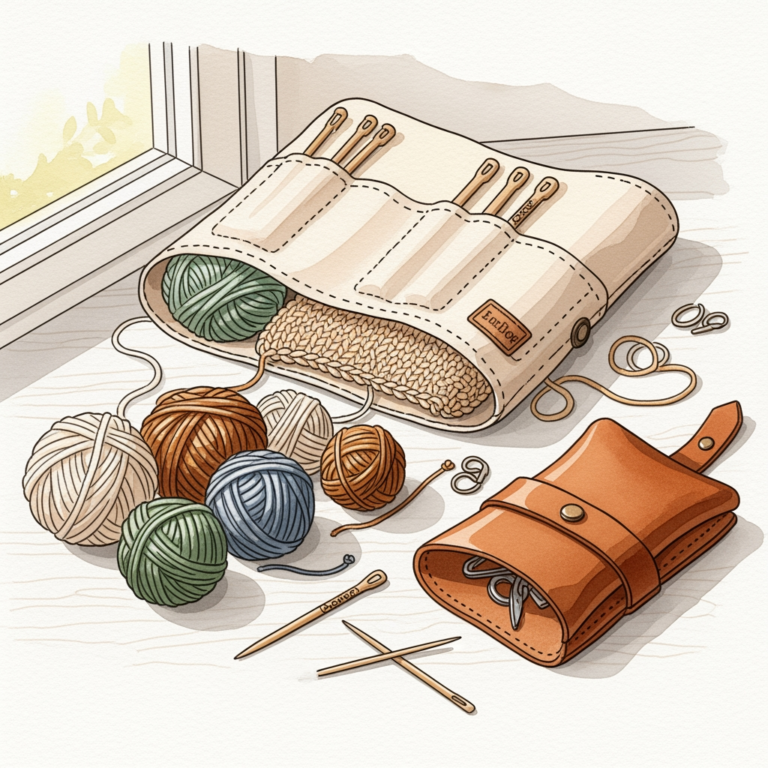
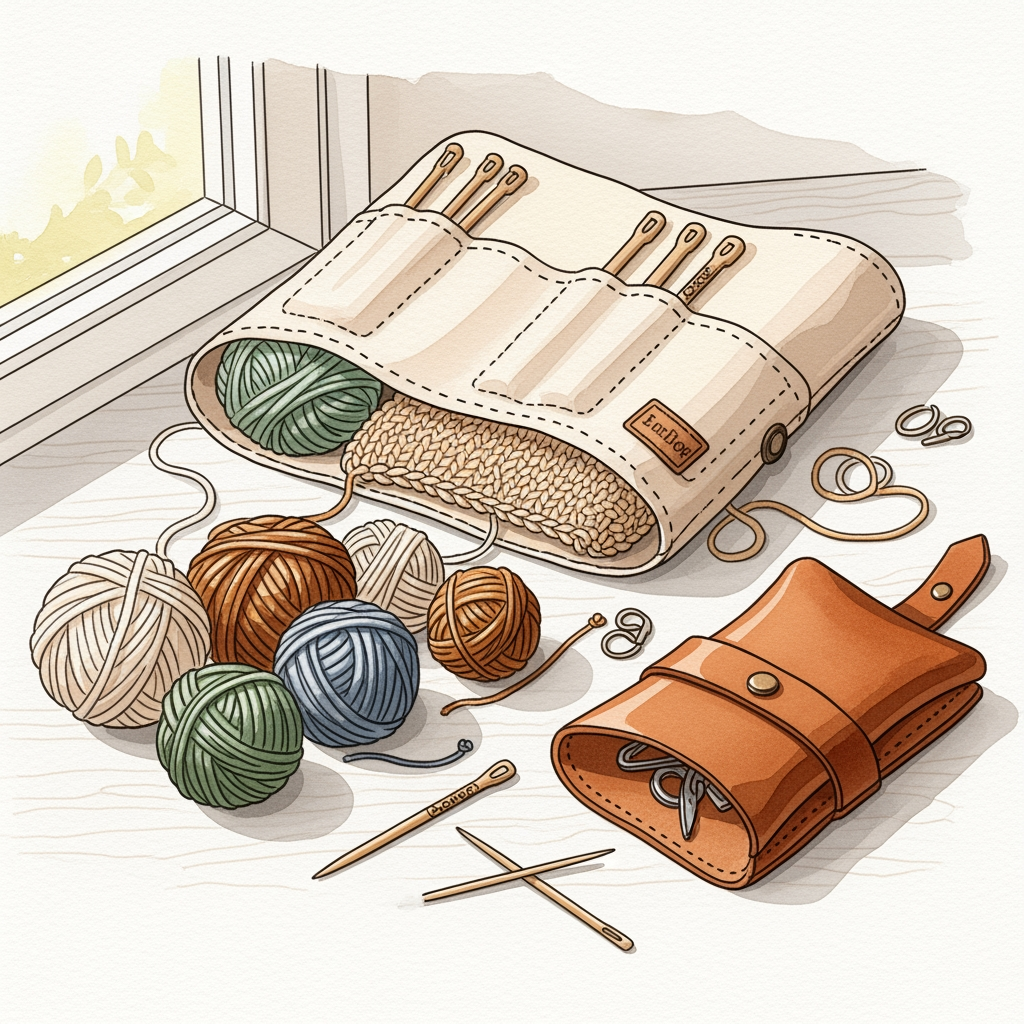
Knitting projects often suffer during transit, leaving delicate hand-dyed yarns susceptible to snagging on zippers or getting crushed in packed carry-on bags. A proper sleeve acts as a dedicated sanctuary for a work-in-progress, protecting both the needle tips and the integrity of the stitch work. Choosing the right vessel ensures that a complex lace shawl or a pair of intricate socks arrives at the destination in exactly the same state it left. This guide explores the most reliable options for keeping knitting projects safe, organized, and ready to pick up at a moment’s notice.
Della Q Maker’s Canvas Sleeve: Best for Style
Della Q leans into the aesthetic needs of the modern maker by blending rugged durability with a refined, artisanal appearance. The canvas construction offers a sturdy barrier against external pressure, preventing sharp needle tips from piercing through the bag material.
It functions best for those who prefer an organized craft bag that doesn’t look like standard technical gear. The heavy-duty fabric holds its shape well, which is vital when tucking a project into an overstuffed travel bag.
Expect a structured profile that keeps flat items—like printed patterns or circular needle packets—safe from folding or creasing. If the goal is a balance between a professional look and reliable craft protection, this remains a top-tier choice.
Cocoknits Project Portfolio: Best for Patterns


The Cocoknits Project Portfolio recognizes that a knitter’s pattern is just as important as the yarn itself. With its dedicated interior pockets, this sleeve prevents chart printouts from becoming mangled during long-haul flights or commutes.
Design-wise, it mimics the layout of a stationery folder but reinforces the spine and edges for fiber-specific needs. It keeps tension-heavy projects flat, which is particularly helpful for those working on intricate cable charts that require constant reference.
This is not the choice for bulky sweaters, but it is peerless for flat-knit pieces, swatches, or delicate lace work. For knitters who find themselves losing track of rows because a pattern was crushed in a backpack, this provides essential structural stability.
Tom Bihn Cache: The Ultimate Tech Protector
While originally designed for laptops, the Tom Bihn Cache is an accidental hero for knitters who carry expensive needle sets and complex multi-skein projects. Its high-density foam padding provides a level of impact resistance that standard fabric pouches simply cannot match.
The precision fit ensures that items do not shift during transit. This reduces the risk of yarn abrasion, which can occur when delicate fibers like mohair or single-ply wool rub against rough surfaces inside a bag.
Do not overlook the utility of its slim profile. It occupies minimal space while offering maximum security for fragile tools. If traveling with rare vintage needles or a project that is already halfway through a complex assembly, prioritize this level of protection.
Erin Lane Bags Zip-N-Go: For Fun & Function
Erin Lane Bags focuses on the practical reality of quick, on-the-go knitting sessions. The Zip-N-Go style offers an easy-access layout that allows a knitter to grab a project, knit for twenty minutes in a waiting area, and secure it just as fast.
These bags excel because they prioritize the transition between “active knitting” and “stowed away.” The fabric choices are often playful, but the internal construction is remarkably thoughtful regarding yarn feed and snag prevention.
Consider this if the primary goal is convenience during travel. It minimizes the time spent fussing with closures, ensuring that the focus remains entirely on the stitch count rather than the storage mechanism.
muud Oslo Leather Case: The Luxury Investment

The muud Oslo leather case is for the knitter who demands elegance without sacrificing long-term utility. Leather provides a natural, flexible armor that softens with age, creating a personalized patina over years of use.
Unlike synthetic alternatives, leather is less prone to static buildup, which can be an annoyance when working with certain acrylics or superwash wools. The structural integrity of high-quality leather also ensures that delicate wooden or carbon fiber needles are cushioned against knocks.
This is a significant investment piece meant to last decades. If the intent is to protect precious equipment while maintaining a sophisticated travel ensemble, the Oslo is difficult to surpass.
Atenti Tall Caddy: For All-in-One Storage
The Atenti Tall Caddy serves the knitter who cannot bear to travel with only one project. Its upright orientation makes it an excellent choice for holding multiple circular needles and full skeins of yarn without tangling.
Because of its depth, it prevents the common issue of yarn balls rolling to the bottom of a dark bag. This storage solution keeps everything vertical and visible, making it much easier to manage color-work projects that require several active yarns at once.
If the travel plans include long-duration knitting sessions where multiple color changes are expected, the vertical access of this caddy is a major advantage. It turns a chaotic travel bag into a mini-studio on the move.
Book Beau Book Sleeve: Best for Simple Protection
Originally intended for books, the Book Beau sleeve is surprisingly effective for flat, small-scale knitting projects. Its soft, padded interior protects against light impact and prevents yarn from snagging on external bag zippers.
The simplicity of the design is its greatest asset. There are no complex internal dividers or specialized compartments, which makes it ideal for those who simply want a secure, padded envelope for a pair of socks or a small baby bonnet.
Do not expect heavy-duty organizational features here. However, for a minimalist traveler who prefers an uncomplicated storage solution, it provides reliable protection at a lower price point than specialized craft bags.
How to Choose the Right Sleeve for Your Project
Selecting a sleeve requires an honest assessment of the project size and the nature of the travel. A lightweight lace project requires less structural support than a heavy-gauge wool sweater, but it is more prone to snagging.
Consider the needle type as well. Metal needles can be sharp and may eventually poke through thin fabric, necessitating a thicker, puncture-resistant liner. Wooden needles, while less sharp, are vulnerable to snapping if crushed under the weight of luggage.
Match the sleeve to the intensity of the travel. Short commutes allow for lighter, more portable options, while long-haul international travel demands reinforced, padded, and secure compartments to prevent project disaster.
Sleeve Materials: Canvas, Leather, and Padded
- Canvas: Provides excellent structural shape and durability. It is often water-resistant and easy to clean, making it a reliable choice for everyday commuting.
- Leather: Offers superior protection and develops a personal aesthetic over time. It is naturally robust but requires more care to keep clean and supple.
- Padded Synthetic: The gold standard for impact resistance. These are essential for protecting high-end needle sets and delicate yarn fibers from heavy travel environments.
Each material impacts how a project sits inside the bag. A rigid canvas case will protect the shape of a knitted garment, while a soft padded sleeve will absorb the shock of a dropped bag.
Pockets & Zippers: Features That Matter Most
Always prioritize smooth-operating, high-quality zippers. A snagging zipper is more than a nuisance; it is a direct threat to the yarn fibers themselves, as the teeth can easily pull at a loose strand.
Internal pockets should be designed with the knitter in mind, specifically for storing measuring tapes, stitch markers, and tapestry needles. Look for pockets that snap or zip shut, as loose accessories have a habit of migrating to the bottom of the bag.
Test the ease of access before committing to a bag. If it takes more than a few seconds to extract the project or the necessary tools, the bag may end up being an obstacle rather than a helper.
Choosing the right sleeve is as much about the knitter’s lifestyle as it is about the project itself. By matching the structural needs of the needles and fibers to the durability of the storage, every maker can ensure their work survives the journey intact. Whether opting for a sleek leather case or a robust padded sleeve, prioritizing protection means more time spent knitting and less time repairing snagged stitches.