
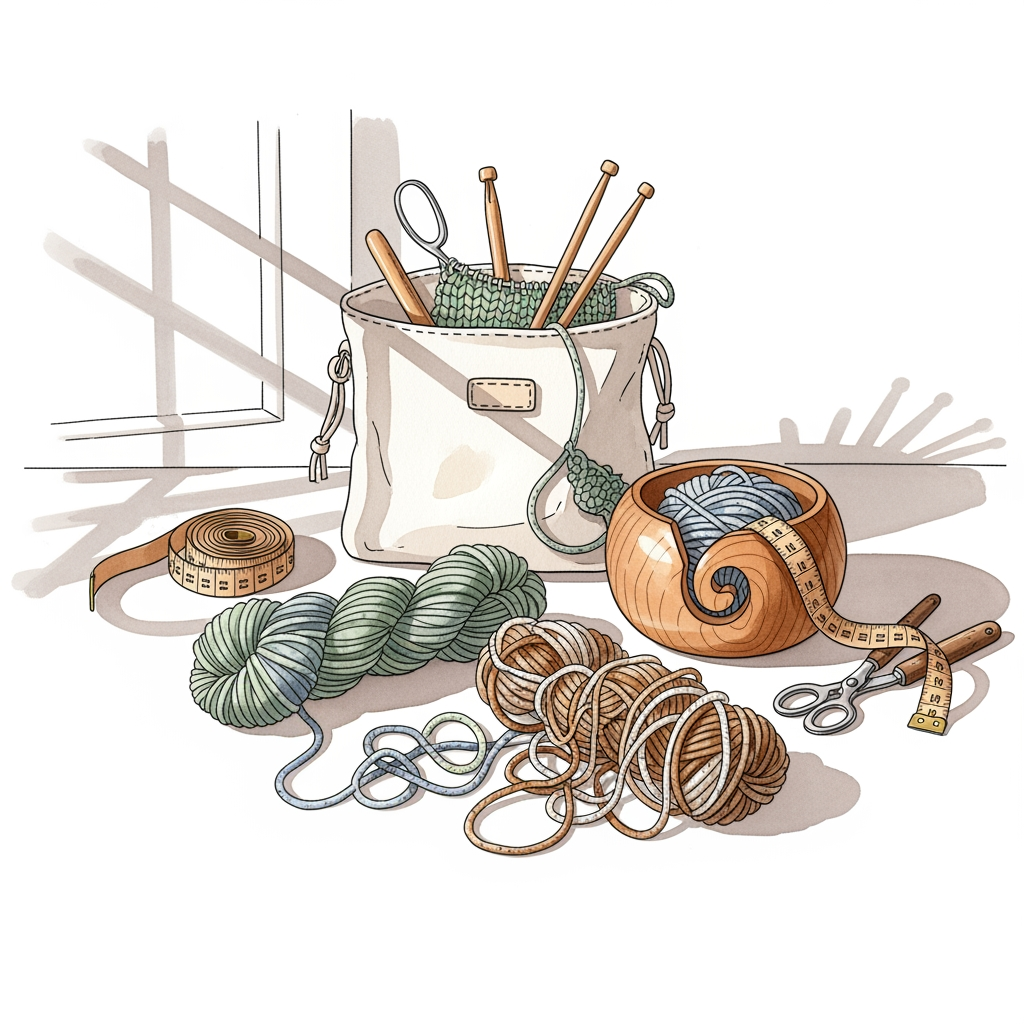
6 Best Stackable Organizers For Small Craft Accessories
Tired of messy supplies? Discover the 6 best stackable organizers for small craft accessories to declutter your workspace today. Shop our top picks and get tidy.
Every knitter eventually reaches the point where their collection of stitch markers, cable needles, and tapestry needles outgrows the bottom of a project bag. A chaotic stash of notions is more than a nuisance; it is a hurdle that turns a simple technique like picking up a dropped stitch into an exercise in frustration. Proper organization transforms a craft room from a cluttered workspace into an efficient studio. Choosing the right stackable system ensures that the tools needed for complex lacework or delicate finishing are always within reach.
ArtBin Super Satchel Double Deep: Best for Bulky Items


The ArtBin Super Satchel Double Deep is the heavy lifter for knitters who collect more than just small notions. Its extra-wide, deep interior accommodates bulky items like spinning spindles, wool carders, or even multiple large cakes of bulky-weight yarn.
For those who use physical pattern books or large, rigid blocking mats, this bin offers a secure, flat storage solution. The latches are reinforced to handle the weight of dense fiber tools, preventing the dreaded “spill” that happens with flimsier storage containers.
Be mindful that its size makes it less portable than smaller organizers. It excels as a foundational base for a stack but can become cumbersome if it needs to be moved frequently between different knitting stations.
Akro-Mils 24 Drawer Cabinet: Ultimate Small Parts Hub

This industrial-style cabinet is the industry standard for organizing the granular details of a knitter’s kit. With 24 individual drawers, it perfectly sorts stitch markers, point protectors, needle gauges, and progress keepers by type or material.
The transparent drawer fronts allow for quick visual identification without needing to open every compartment. This is vital when working on a project that requires specific sizes of stitch markers, such as keeping track of intricate lace repeats or raglan increases.
While the small drawers are excellent for notions, they are not suited for larger tools like crochet hooks or long circular needle packages. Use this for the tiny, easily lost items that otherwise create clutter in a knitting bag.
Deflecto Caddy Organizer: Best for Portability

Portability is a necessity for the knitter who participates in local meetups or travel knitting. The Deflecto Caddy features a modular design that allows for stacking, yet the individual units remain easy to grab and move on their own.
Its handle system is designed for frequent movement, making it the top choice for carrying tools from a desk to a cozy armchair. The interior dividers are adjustable, which is ideal if the inventory of tools changes as one shifts from knitting sock-weight wool to heavier aran-weight projects.
The trade-off for this flexibility is a slightly less rigid locking mechanism compared to stationary cabinets. It works best for tools that are accessed daily rather than for long-term storage of overflow notions.
Sterilite 3-Drawer Unit: The Go-To Budget Pick
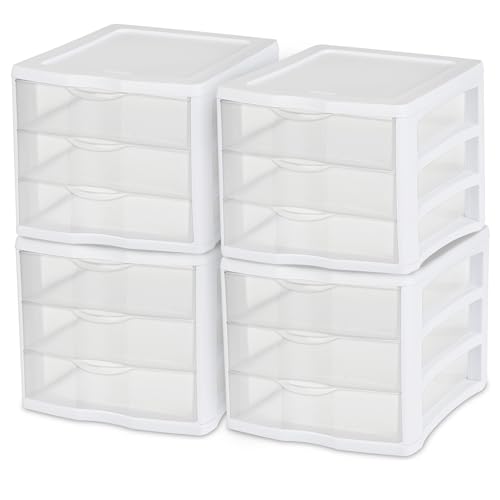
For those starting to amass a collection of knitting notions, the Sterilite 3-drawer unit offers a cost-effective way to get organized without overspending. These units provide a clear overview of supplies, allowing for a logical separation of items like felting needles, crochet hooks, and spare buttons.
Because they are lightweight, these units are easily tucked away on a shelf or inside a closet. They provide a clean, simple aesthetic that keeps the workspace looking tidy without taking up significant square footage.
The drawers can sometimes become stuck if overloaded with heavy metal tools or large amounts of fiber. For the best experience, reserve these for lighter items like patterns, measuring tapes, and lightweight knitting notions.
Elizabeth Ward Bead Storage: Perfect for Tiny Notions

Originally designed for jewelry makers, the Elizabeth Ward system is remarkably effective for the detailed knitter. Its system of tiny, individual lidded containers nested inside a larger outer tray is perfect for sorting different types of stitch markers.
Knitting with complex cables or stranded colorwork often involves managing a variety of specific markers, such as locking, ring, or bulb styles. This system prevents them from tangling and ensures the right marker is always accessible for a specific pattern repeat.
The lids on the inner containers are highly secure, which is a major advantage if the kit is accidentally tipped over. It provides a level of protection that ensures those tiny, essential tools are not scattered across the floor.
mDesign Stackable Plastic Bins: Sleek & Modern Option
mDesign bins offer a minimalist approach for knitters who prefer an open-top storage style. These are ideal for items that need to be grabbed quickly, such as skeins of yarn, large knitting needles, or project-specific notions that are currently in use.
The clear plastic construction keeps the inventory visible, which helps in tracking how many tools are available for future projects. Their ability to stack securely means they can be configured to fit perfectly within the specific dimensions of a craft cupboard.
Because they are open-topped, they are best suited for areas where dust is not a major concern. They offer the highest level of accessibility for the busy knitter who prefers efficiency over enclosure.
How to Choose the Right Organizer for Your Craft
The right organizer depends entirely on the rhythm of the knitting practice. A knitter who focuses exclusively on simple scarves has different needs than one who tackles complex colorwork that requires hundreds of tiny markers.
- Frequency of use: Keep frequently used items in easy-access, open-top bins.
- Item fragility: Use lidded or drawer-based systems for delicate items like fine-tipped tapestry needles.
- Total inventory: Assess the volume of the stash to ensure the selected system has room for growth.
Consider where the knitting happens. If the workspace is a small corner of a living room, vertical stacking solutions are essential for maximizing limited space.
Drawers vs. Bins: Which Is Right for Your Notions?
Drawers provide superior protection against dust and are excellent for keeping small items from migrating. They are the ideal choice for notions that are rarely used or need to be hidden away to maintain a clean environment.
Bins offer superior accessibility and are better for tools that are used in almost every project. A bin allows for a quick reach-in-and-grab motion that can be more efficient than sliding open a drawer, especially when hands are already occupied with yarn.
Combine both approaches for a balanced system. Use drawers for the long-term, specialized tool collection and open-top bins for the daily-driver essentials.
Pro Tips for Labeling Your New Storage System
Labels eliminate the guesswork and keep a collection organized in the long term. Even if the contents are visible, a label confirms the size of a tool, such as identifying a 2.5mm needle versus a 2.75mm needle, which can look identical to the naked eye.
Use removable adhesive labels so that the system can adapt as the tool collection changes. If tools are frequently moved between containers, consider using a tag-and-tie system on the bin handles for maximum flexibility.
Clear labeling also helps others understand the system, which is useful if the workspace is shared with other crafters. A well-labeled system reduces the time spent hunting for tools and increases the time available for actual knitting.
Maximizing Space: The Art of Stacking Securely
Secure stacking relies on a stable base and consistent weight distribution. Always place heavier, bulkier items at the bottom of the stack to prevent tipping, which could damage delicate tools or cause yarn to tangle.
Ensure that the stacking mechanism of the chosen product is compatible with other pieces. Avoid mixing brands unless they share a modular footprint, as mismatched dimensions create a wobble that puts the entire system at risk.
Check the height of the stacks periodically to ensure they do not exceed the stability of the shelf. By prioritizing balance and weight, the storage system remains a safe, organized foundation for every project.
An organized craft space is the secret to a stress-free knitting experience. By selecting the right storage containers and arranging them with intent, every tool becomes a reliable partner in the creative process. May this guidance help streamline the studio, leaving more time for the true joy of casting on and watching a project take shape.
