6 Metal Rulers For Straight Edge Tearing To Keep
Upgrade your craft station with our top 6 metal rulers for straight edge tearing. Discover the best durable tools for precise paper projects and buy yours today.
Achieving a perfectly straight edge on fabric is a fundamental skill that elevates any sewing or knitting project, particularly when preparing fabric for backing or borders. While rotary cutters are standard, a metal ruler paired with a precise tearing technique produces a grain-perfect line that scissors simply cannot replicate. Selecting the right tool depends on the weight of the textile and the frequency of use. These six rulers offer the structural integrity required to withstand the tension of tearing fabric along the grain.
Fiskars Metal Rule: The All-Around Workhorse


The Fiskars Metal Rule is a staple in most sewing rooms because it strikes a balance between durability and portability. It features a sturdy stainless steel construction that resists the nicks and dings often caused by repeated contact with steel tools.
This ruler is exceptionally reliable for general fiber arts projects where fabric must be squared off before quilting or applique. Its visibility remains high even under low light, and the etched markings are resistant to the wear and tear of a busy workshop.
The bottom line: It serves as a dependable, middle-of-the-road option that performs consistently across various fabric weights, from quilting cottons to heavier linens.
Westcott Stainless Steel Ruler: Budget-Friendly
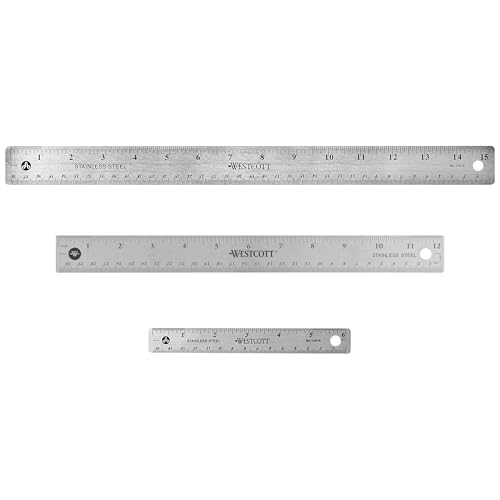
For those who view their fabric stash as an ever-growing investment, the Westcott Stainless Steel Ruler offers a high-value entry point. It provides a clean, rigid edge without the premium price tag attached to specialized drafting tools.
The stainless steel is thin enough to maintain close contact with the fabric, which is essential for minimizing slippage during the tearing process. While it lacks the heavy-duty reinforced backing of more expensive models, it remains perfectly adequate for casual use and smaller textile projects.
The bottom line: Choose this if the budget is better spent on high-quality yarn or specialty notions, as it gets the job done without unnecessary frills.
Omnigrid Metal Edge Ruler: For Quilting Fans
The Omnigrid Metal Edge Ruler is designed specifically for those who prioritize precision in complex quilting patterns. The integration of a metal edge onto an acrylic body provides the best of both worlds: high-visibility grid lines for alignment and a non-compressible edge for tearing.
This tool excels when squaring up pieces that require absolute grain alignment, which is critical for preventing bias-stretch in finished quilts. The metal insert ensures that the straight edge remains true, even after years of use against shears or rotary blades.
The bottom line: It is an essential investment for quilters who demand high-accuracy measurements and a long-lasting, reliable edge for fabric preparation.
Alvin Stainless Steel Edge: The Drafting Pro
Drafting tools are engineered for extreme accuracy, and the Alvin Stainless Steel Edge brings that same level of detail to the craft table. Because it is designed for architectural drafting, it is incredibly straight and remarkably rigid.
It is particularly useful when working with delicate or lightweight fabrics that might shift under a less sturdy tool. The weight of the metal helps hold the fabric flat against the table, reducing the need for an excessive amount of pins or weights.
The bottom line: This is a professional-grade tool that will likely outlive the person using it, making it a sound choice for those who value heirloom-quality equipment.
C-Thru T-Square: For Perfect 90-Degree Tears
A T-Square is indispensable when the goal is to create a perfectly perpendicular edge relative to the salvage of the fabric. The C-Thru design allows the user to see the grainline beneath the ruler, ensuring the tear is truly on the straight of grain.
Tearing fabric along the grain ensures that the finished edges will not distort or pucker during the blocking process. This is especially important for garments or items that require precise alignment to look professional after laundering.
The bottom line: Invest in a T-square if the primary goal is ensuring perfectly square pieces, as the physical geometry of the tool forces an accurate 90-degree angle.
Lineco Steel Edge Ruler: Archival Precision
The Lineco Steel Edge Ruler is built for durability, frequently finding a home in bookbinding and heavy-duty textile mounting. Its steel edge is reinforced and designed to remain perfectly flush against any surface.
It is arguably the best choice for heavier fabrics like canvas or heavy-weight denim, where the tension required to tear the material is significantly higher. The construction ensures that the ruler will not bend or bow when significant force is applied.
The bottom line: If the project involves heavy-duty materials that require serious physical effort to tear, this ruler provides the necessary structural support.
How to Choose the Right Metal Ruler for Tearing
Selecting the correct ruler starts with evaluating the density of the fabric. Lightweight silks and voiles require a thinner, lighter ruler to prevent the fabric from bunching under the edge, while heavy canvases demand a thick, rigid steel profile.
Consider the length of the fabric you typically work with. A 12-inch ruler is rarely sufficient for tearing yardage, so look for at least an 18-inch or 24-inch option to ensure a clean, continuous tear across the width of the fabric.
- Weight: Heavier is generally better for stability, but too heavy can be cumbersome for small projects.
- Edge: Ensure the edge is true metal; plastic edges will quickly fray and lose their straightness.
- Scale: Look for clear, etched markings that will not rub off over time.
The Technique: Tearing Fabric with a Straight Edge
The secret to a successful tear lies in the initial snip. Use sharp fabric shears to make a small incision at the exact point where you want the tear to begin, ensuring you are aligned with the grain.
Place the metal ruler firmly against the fabric, pressing down with your non-dominant hand to create a stable anchor. Use your other hand to grip the fabric firmly, pulling straight up and back in a sharp, quick motion to allow the fabric to “zip” along the grain line.
Avoid pulling at an angle, as this causes the grain to shift and results in an uneven edge. If the fabric is particularly wide, move the ruler and your hand position incrementally to maintain steady pressure throughout the tear.
Why Tear Fabric Instead of Cutting? A Quick Guide
Tearing fabric is the only way to guarantee a perfect 90-degree alignment with the straight grain. While scissors can follow a line, they often skew off-grain, leading to pieces that twist or hang improperly once sewn into a project.
- Grain Alignment: Tearing automatically finds the grain of the weave, ensuring the fabric is perfectly straight.
- Efficiency: For long cuts, tearing is significantly faster than using a rotary cutter or shears.
- Accuracy: It eliminates the human error associated with following a drawn chalk or pencil line.
Cork Back vs. Plain Steel: Which is Best for You?
The decision between a cork-backed ruler and a plain steel one comes down to grip versus precision. Cork backing is excellent for preventing slippage on smooth tabletops, but it creates a slight gap between the ruler and the fabric.
A plain steel ruler sits flush against the textile, which is superior for precise marking and tearing. However, it requires more focus to keep it from sliding if the tabletop surface is slick.
If you have a dedicated cutting mat, a plain steel ruler is usually preferred. If you are working on a standard wooden or laminate desk, the grip of a cork backing might be necessary to keep your work consistent.
Mastering the use of a metal ruler for tearing ensures that every piece of fabric is prepared with professional-grade accuracy. With the right tool in hand, the process becomes safer, faster, and far more precise. Invest in quality steel, respect the grain of the textile, and enjoy the satisfaction of a perfectly straight edge every time.