6 Tweezers For Delicate Decal Placement To Try
Struggling with tiny stickers? Explore our top 6 tweezers for delicate decal placement to achieve professional precision in your next craft project. Shop now!
Precision is often the difference between a professional-looking finish and a piece that looks homemade in the worst way. Whether applying leather labels to a finished sweater or adding decorative decals to a project box, the tools used for placement define the final aesthetic. A shaky hand combined with the wrong grip can ruin hours of work in a single second. The following selection of tweezers focuses on stability, material compatibility, and ergonomic ease for every level of crafter.
Vetus ESD-15 Fine Point: Best for Tiny Details


The Vetus ESD-15 features a sharp, curved tip that excels when working with microscopic components. In the world of fiber arts, this is the equivalent of using a fine-gauge nickel needle for delicate lace work where visibility is limited.
The curved design provides a clear line of sight, which is essential when positioning tiny metal charms or delicate decals onto a leather tag. Because it is anti-static, there is no risk of attracting stray fibers or dust during the process.
This tool is not intended for heavy-duty gripping, as the tips are thin enough to bend under excessive pressure. Treat these like high-end embroidery scissors: keep them reserved for the most intricate, small-scale placement tasks to ensure the tips remain perfectly aligned.
Cricut Fine-Point Tweezers: For Cricut Crafters
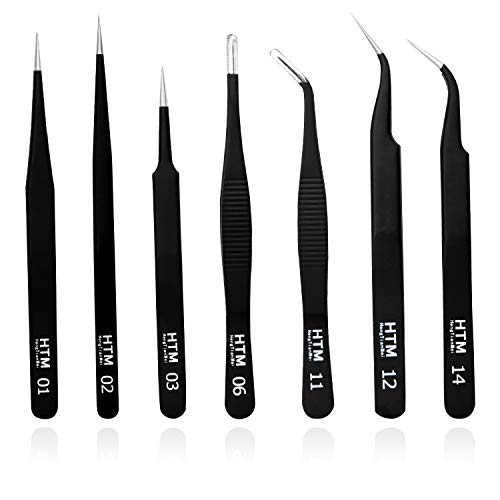
Cricut tweezers are specifically engineered with a wide grip area that transitions into a fine, precision tip. This tool bridges the gap between mechanical crafting and textile embellishment, offering a balance that feels familiar to those who already utilize digital cutters for applique patterns.
The tension on these is calibrated for consistent, light-pressure handling. When moving a vinyl decal or a delicate piece of silk organza for an applique project, the user can expect a steady release without the “spring-back” jerk common in cheaper alternatives.
While highly effective for vinyl and iron-on transfers, the tips are somewhat thicker than industrial-grade electronics tweezers. They are best suited for decals that have a bit of surface area, rather than tiny decorative rhinestones or beadwork.
Xuron 450S TweezerNose: The Cross-Lock Champ

The Xuron 450S utilizes a reverse-action mechanism, meaning the tweezers remain closed by default. This is a game-changer for anyone who has struggled with hand fatigue during a long session of placing multiple decals on a single garment.
Think of this like a tapestry needle holder; it does the heavy lifting so the muscles in the hand don’t have to maintain constant pressure. Once the decal is gripped, the tool holds it securely until the user decides to release it.
This tool is built for durability and comfort, utilizing soft rubber grips that prevent slipping during precise movements. It is the premier choice for crafters who have limited grip strength or who find themselves working on large-scale projects where placement accuracy must be maintained over long durations.
iFixit Angled Precision Tweezers: Top Ergonomics

iFixit tools are designed for the rigors of electronics repair, which translates beautifully to the high-stakes world of fine detail crafting. The angled tip offers a superior ergonomic posture, reducing wrist strain when working on flat surfaces like project journals or rigid knitting notions cases.
The build quality here is rigid, meaning the tips do not flex or splay when holding slightly heavier materials. This reliability ensures that once a decal is placed, it does not shift or twist while being pressed into position.
For those who treat their tool kit with the same care as their favorite set of interchangeable needles, the iFixit tweezers offer a long-term solution. They are robust, precise, and maintain their alignment through extensive, daily use.
EK Tools Craft Tweezers: The All-Purpose Pick
EK Tools provides a reliable, utilitarian option that is perfect for the crafter who needs one tool for every project. These feature a standard straight-tip design that is intuitive for anyone who has used basic household tweezers.
The primary benefit is simplicity. There is no learning curve; the tool behaves exactly as expected, making it an excellent starting point for those just beginning to customize their knitting accessories or storage systems.
Because they are not overly specialized, they may not offer the extreme visibility of a curved-tip tool or the convenience of a reverse-action grip. However, for general-purpose placement, they provide a clean, steady hold that works well with most standard vinyl and adhesive decals.
Tweezer Guru 4-Piece Set: Best Value Pack
Investing in a set allows for the selection of the specific tool geometry required by the project at hand. The Tweezer Guru 4-piece set includes various tip shapes, covering everything from slanted edges for wider stickers to fine points for intricate detail work.
Much like having a full range of needle sizes from 2.0mm to 8.0mm, having a range of tweezer styles allows for adaptability. A crafter can switch between a slanted tip for general positioning and a pointed tip for finishing touches without needing to switch brands.
While the individual quality of each tool in a value set may not match that of a single, specialized professional piece, the versatility is unmatched. This is the smartest purchase for someone establishing a new workspace or looking to troubleshoot different placement issues.
How to Choose the Right Tweezers for Your Craft
Selecting the right tweezers requires looking at the weight and material of the object being handled. If the decal is thin and fragile, like paper-based stickers, a soft-touch, fine-point tweezer prevents tearing.
For heavier vinyls or metal embellishments, reach for a tool with a sturdier grip and higher tension. Consider the physical workspace as well; if working on a vertical or angled surface, a curved or angled tip will provide a better line of sight than a straight one.
Finally, evaluate hand fatigue. If a project requires placing fifty individual stickers, a reverse-action tweezer will save the user from cramp and frustration. The goal is to match the tool’s mechanical advantage to the physical demands of the project.
Straight vs. Bent vs. Reverse-Action Tweezers
- Straight Tweezers: The standard choice for general-purpose placement on flat surfaces; offers the most intuitive handling.
- Bent/Curved Tweezers: Essential for working in tight corners or when you need to see exactly where the tip touches the material without the hand obscuring the view.
- Reverse-Action Tweezers: Designed to hold an item automatically; the user squeezes to release, making these ideal for delicate, time-consuming placement.
Keeping Your Precision Tweezers in Top Shape
Precision tools are only as good as their tips. Avoid using them to pry or scrape, as this will misalign the metal and lead to gaps in the grip. If the tips do become misaligned, many can be gently nudged back into place, but prevention is always superior.
Wipe the tips clean with a soft, lint-free cloth after each use to remove any adhesive residue. Sticky residue is the silent enemy of clean placement; it attracts dust and fibers that can then transfer onto your project.
Store the tweezers in a protective case or a dedicated slot in a notions bag. Keeping them loose in a junk drawer will inevitably result in dulled or bent tips, which compromises the accuracy required for professional results.
Tips for Flawless Decal Placement Every Time
Surface preparation is the foundation of a successful application. Always clean the project surface with a bit of isopropyl alcohol to remove oils from the skin, which can prevent adhesives from bonding correctly.
Use the “light touch” method: place the decal gently to verify positioning before applying firm, even pressure. If a mistake is made, having a small craft knife or a second pair of tweezers can help lift the edge for repositioning without damaging the base material.
For high-friction areas, such as a knitting project bag that gets tossed in a tote, consider a light topcoat or clear sealer over the decal. Precision placement is only as good as the longevity of the finished result, so ensure the environment for the decal is compatible with the adhesive being used.
The right pair of tweezers turns a frustrating, tedious chore into a seamless part of the creative process. By selecting a tool that suits the scale and mechanics of the project, the risk of error drops significantly. Approach your workspace with the same attention to detail that you bring to your yarn tension and gauge, and the final results will speak for themselves.