6 Embroidery Floss Storage Boxes For Thread Management
Tame your craft supplies with our top 6 embroidery floss storage boxes. Organize your thread collection efficiently and shop our expert recommendations today.
Embroidery floss management is the quiet foundation of any successful needlework project. Just as a disorganized yarn stash can lead to tension inconsistencies and forgotten dye lots, a jumbled mess of thread leads to wasted time and frayed fibers. Choosing the right storage system transforms a chaotic pile of skeins into a curated library of color. This guide examines the best boxes and methods to keep your thread pristine and ready for the next stitch.
DMC Floss Bobbin Box: The Tried-and-True Classic


The DMC Floss Bobbin Box remains the industry standard for a reason. Its rigid, clear plastic construction allows for quick visual inventory, which is vital when you are coordinating color palettes for intricate cross-stitch or embroidery patterns.
The interior partitions are specifically sized for standard cardboard or plastic bobbins. This creates a snug fit that prevents your thread from shifting or tangling during transport.
Reliability is the primary benefit here. Because the dimensions are standardized across the craft industry, this box will likely serve your needs for decades.
ArtBin Floss Finder Box: For On-the-Go Stitching
Portability is the greatest challenge for the mobile maker. The ArtBin Floss Finder Box excels because of its secure locking mechanism and compact footprint, making it ideal for those who stitch during commutes or at retreats.
The inclusion of movable dividers adds versatility beyond simple thread storage. You can easily carve out a space for embroidery scissors, needles, and a thimble alongside your thread.
This box trades maximum capacity for structural security. If your goal is to keep a specific project’s color palette contained and safe from being crushed in a project bag, this is the superior choice.
Creative Options Thread Organizer: Budget-Friendly Pick
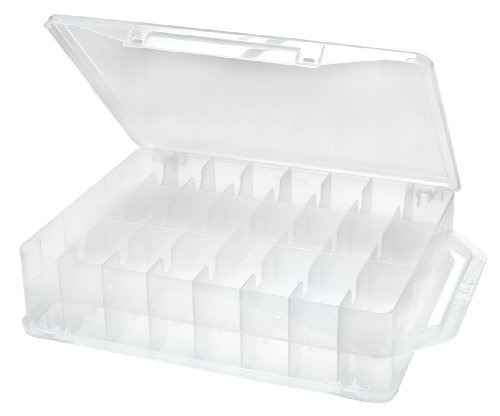
Not every collection requires a professional-grade archival system. The Creative Options Thread Organizer offers an accessible entry point for beginners who are just starting to build their stash.
While the plastic may feel thinner than premium alternatives, the functionality remains high. It effectively separates your colors, which prevents the “bird’s nest” effect that occurs when loose skeins are thrown into a drawer.
For those managing a smaller, revolving stash, this is a practical solution. It allows you to invest your budget into high-quality silk or linen threads rather than expensive storage hardware.
Akro-Mils Craft Cabinet: For Massive Collections

Serious collectors often find standard bobbin boxes restrictive once their inventory reaches the hundreds. An Akro-Mils cabinet, typically found in hardware sections, utilizes vertical storage to reclaim desk real estate.
Each small drawer acts as a categorized compartment for specific color families or thread brands. Labeling the front of each drawer provides a level of organization that flat boxes simply cannot match.
This approach is best suited for a dedicated craft room. Because the drawers are small, they are not designed to be moved; they are intended to anchor your workspace.
Pip & Chip Wooden Bobbins: An Heirloom-Quality Set
Standard plastic bobbins are functional, but they can sometimes cause delicate threads to crease or snag. Wooden bobbins from makers like Pip & Chip offer a smoother surface that is gentler on natural fibers.
The aesthetic appeal of wood is undeniable, especially for those who view their craft supplies as part of their home decor. These bobbins are durable, sustainable, and provide a tactile experience that plastic lacks.
Keep in mind that these require a larger storage footprint than thin cardboard bobbins. They are a premium choice for the maker who values longevity and the sensory experience of their materials.
Darice Floss Organizer: A Simple, No-Fuss System

Sometimes, the simplest tools are the most effective. The Darice Floss Organizer relies on a basic design that avoids unnecessary bells and whistles.
It provides a clear, partitioned container that is easy to stack and label. For the minimalist, this provides exactly what is needed—protection from dust and sunlight—without added complexity.
If you prefer to focus your energy on the actual stitching rather than the organization, this box provides a low-maintenance home for your supplies. It is the definition of utilitarian design.
How to Wind Floss Bobbins Without Knots or Tangles
Winding floss onto a bobbin is a meditative task, but it requires technique to prevent hidden tension issues. Always unwind the full length of the skein first, rather than pulling from the bundle, to avoid internal knotting.
Hold the thread with light, consistent tension. If you wind too tightly, you risk stretching the fibers, particularly with cotton blends, which can affect the final look of your stitches.
If you are using a mechanical bobbin winder, start slowly. Rapid winding can lead to the thread slipping off the side, which creates a tangled mess that is difficult to fix without cutting the strand.
Bobbins vs. Drops: Which Is Right for Your Style?
Bobbins are the traditional choice, wrapping the thread around a flat surface. They are space-efficient and perfect for maintaining long lengths of thread without them tangling.
Drops, or thread holders, involve hanging the thread in loops. This is often preferred for specialty threads that are prone to kinking, as it avoids the sharp bends inherent in winding onto a bobbin.
Consider your usage patterns: if you work through a full skein quickly, drops allow you to pull a length without removing the thread from storage. If you store colors for long periods, bobbins provide better protection against fraying.
Smart Labeling Systems for Your Embroidery Floss
A storage box is only as good as its index. Every bobbin should be marked with the manufacturer’s color code to ensure you can perfectly match a dye lot or color number for a future project.
Use acid-free labels or permanent fine-point pens to mark the bobbins. Avoid using masking tape, which can leave a sticky, yellowing residue on your threads over time.
Grouping by color family within the box makes finding the right shade intuitive. If you work from patterns, create a master list or use an app to track which colors are currently in your box versus what is needed for a specific design.
Storing Specialty Threads Like Metallics and Silks
Specialty threads demand different care than standard six-strand cotton. Metallics are prone to kinking and should be stored in loose loops or on larger spools rather than tight bobbins.
Silk thread is highly susceptible to oils from human skin and can degrade under direct sunlight. Keep these threads in opaque containers or away from windows to maintain their sheen and structural integrity.
Always store these high-value threads in a temperature-controlled environment. Extreme shifts in humidity can cause natural fibers to expand or contract, potentially weakening the thread over many years.
Proper storage is not merely about tidiness; it is an act of preservation for your materials. By selecting the right box and managing your threads with intention, you ensure that your next project begins with confidence rather than frustration. Whether you choose a classic bobbin box or a dedicated cabinet, the goal remains the same: protecting the fibers that bring your creative visions to life.