6 Best Felt Balls For Mixed Media Pom Pom Projects
Discover the 6 best felt balls for mixed media pom pom projects. Explore our top-rated picks to elevate your next creative craft and shop our favorites today.
Felt balls have transitioned from simple craft supplies into essential components for fiber artists looking to add structure and whimsy to their work. Whether anchoring a heavy wool garland or adding a playful weight to the ends of a scarf, these spheres provide a clean, tactile contrast to loose yarn. Selecting the right base material ensures the final piece maintains its integrity through handling and wear. Mastering the integration of these spheres into knit and crochet projects opens up entirely new dimensions of texture and color play.
Benzie Design Wool Felt Balls: Best Color Range


Color theory is the foundation of any successful fiber project, and Benzie Design provides the most expansive palette for matching or contrasting with specific yarn colorways. Their wool felt balls are consistently saturated, which is vital when mixing them into a complex intarsia or stranded colorwork piece where color fidelity is non-negotiable.

These balls are produced with a dense, uniform felt that resists pilling even when subjected to the friction of being pulled through yarn loops. Because the range is so extensive, they are the go-to choice for creating gradients—often called ombre effects—in mixed media wall hangings.
The high-quality wool fiber holds its shape well under the tension of a threading needle. For projects where you need a perfect match to a specific hand-dyed variegated yarn, the depth of this range is unmatched.
The Felt Pod Assorted Sizes: Most Versatile
Variety is the primary advantage when working on sculptural projects or mixed-media fiber art that requires different visual weights. The Felt Pod offers sets that mix sizes, allowing for a more organic and professional look in garlands or decorative fringes.
Using a single size of felt ball can sometimes make a piece look stagnant or overly uniform, especially when paired with hand-spun yarns of varying thickness. By incorporating smaller spheres alongside larger ones, the eye travels across the project with more interest and rhythm.
These are particularly useful for testing which scale works best for a specific gauge before committing to a bulk purchase. Use these variety packs to experiment with the drape of a piece; larger, heavier balls pull more on the fabric than smaller, denser ones.
Glaciart One Felt Balls: Best Budget Bulk Buy

When embarking on a large-scale installation—like a thick, chunky knit room divider or a massive pom-pom rug—the cost of materials adds up quickly. Glaciart One provides a consistent, high-quality product that bridges the gap between mass-produced craft supplies and artisan wool.
Consistency in diameter is the hallmark of a good bulk buy, and these maintain their shape exceptionally well even when compressed. They lack the surface fuzz of cheaper synthetic alternatives, meaning the finished project stays looking crisp rather than matted over time.
While they may lack the hyper-specific color nuances of boutique brands, they are perfectly suitable for projects where color blending or neutral bases are the goal. If the project requires dozens of balls to create a heavy weight or a specific texture, this is the most economical path.
Handbehg Felt Large Balls: For Statement Pieces
Large felt balls act as the anchor for a project, serving as the focal point around which finer yarn textures revolve. Handbehg offers larger-diameter options that command attention and provide a substantial structural element to soft fiber crafts.
These larger sizes are ideal for securing the ends of oversized chunky knit throws or creating weighted tassels for heavy-weight cowls. Because they are significantly heavier, ensure the yarn used to connect them is durable and won’t stretch or break under the ball’s weight.
Consider the visual balance; one large felt ball can replace a cluster of smaller, lighter pom-poms, creating a cleaner, more modern aesthetic. These serve as the perfect “caps” for fiber structures that need to hold a specific shape without collapsing.
Wooly Bunches Pastel Mix: For Nursery Crafts
Nursery items require specific safety considerations, and the soft, muted tones of the Wooly Bunches pastel mix fit the aesthetic perfectly. These balls feel softer to the touch than many other brands, which is a critical detail for items that might be handled by children.
The felting density is slightly more forgiving, making them easier to pierce with a large-eye tapestry needle. This reduces the strain on your hands during long sessions of stringing, which is a major benefit if you are assembling mobile components or crib bumpers.
When choosing items for children, prioritize natural wool over synthetic blends to ensure the material is breathable and less likely to hold onto static or allergens. These pastels provide a clean, gentle look that coordinates beautifully with organic cotton yarns.
Crafty Cuts Shimmer Balls: For Unique Textures
For fiber artists who enjoy playing with light and sheen, these shimmer-infused felt balls add a subtle sparkle that standard wool lacks. They catch the light in ways that mimic the inclusion of metallic threads or silk-mohair blends, elevating a standard project into something sophisticated.
The shimmer is integrated into the felt itself, meaning it won’t flake off or snag delicate yarns during the assembly process. They work beautifully as accents in holiday-themed knitting, adding a festive touch to simple garter-stitch ornaments.
Use these sparingly to create highlights in a project. If overused, the sparkle can overwhelm the natural, matte quality of the yarn, so they are best used as focal points rather than the base material for an entire piece.
How to Choose the Right Felt Ball Size and Density
Size is not just a matter of aesthetics; it dictates how the felt ball interacts with your stitches. Smaller balls (1cm) nestle into the gaps of a chunky-knit stitch, while larger balls (3cm+) sit on top, acting as buttons or weight-bearing anchors.
Density refers to how hard-packed the wool is during the felting process. A firm, high-density ball is necessary if you intend to sew through it repeatedly, as it will hold the thread tension without deforming.
If the ball is too soft, it will quickly distort into an oval shape when threaded, which ruins the geometry of the design. Always squeeze the ball before purchasing; if it collapses easily under light pressure, it is likely too loose for structural work.
Attaching Felt Balls: Needles, Thread, and Glue
The method of attachment defines the longevity of your project. Using a sharp, long-eye tapestry needle is the gold standard for passing through the center of the ball, as it prevents the yarn from shredding inside the felt.
When attaching to a knit fabric, always go through the fabric’s base—the V of the stitch—rather than just the yarn strand itself to prevent the weight of the ball from causing the fabric to sag. Use a heavy-duty nylon or waxed thread if the balls are large, as standard cotton thread may snap under the weight of wool over time.
Avoid heavy-duty glues unless they are explicitly meant for fiber, as most adhesives will harden the wool and create a visible, stiff “crust” at the point of contact. Stitching is always superior to gluing for items that require cleaning or long-term durability.
Wool vs. Acrylic Felt Balls: What’s the Difference?
The choice between wool and acrylic is fundamental to the feel and durability of the finished item. Wool felt balls provide a natural, matte texture that pairs seamlessly with animal fibers like alpaca, merino, and sheep’s wool.
Acrylic felt balls are often lighter and brighter in color, but they lack the structural “grip” of wool. When used in a mixed-media project, acrylic balls may slide along the thread more easily because the synthetic fibers are slicker than the interlocking scales of natural wool.
For heirloom-quality pieces, always opt for 100% wool. It resists pilling, holds its shape better in humid climates, and maintains a consistent, high-end appearance that synthetic fibers lose after a few washes.
Combining Felt Balls and Yarn for Better Pom Poms
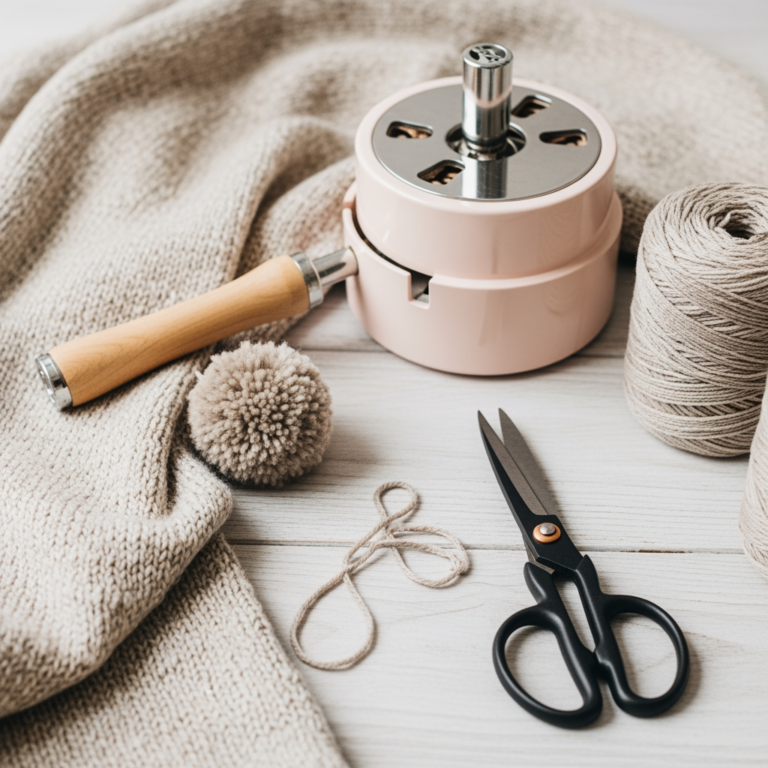
Think of felt balls as the skeleton of the pom-pom, providing a sturdy, uniform core that prevents the pom-pom from looking “floppy.” Instead of wrapping yarn around cardboard to create a hollow center, use a felt ball as your base and wrap yarn around it to create a dense, luxurious finish.
This technique is a game-changer for bulky projects, as it requires significantly less yarn to achieve a full, round look. It also makes trimming the pom-pom much faster, as the felt core acts as a guide to keep your snips even and circular.
The combination of natural felt and yarn textures allows for interesting color layering that is difficult to achieve with yarn alone. By using a felt ball as a core, you ensure the pom-pom stays perfectly round regardless of how much it is handled or compressed.
The integration of felt balls into knitting and fiber arts transforms flat, two-dimensional work into sculptural, tactile experiences. By carefully selecting your materials for density and color consistency, you ensure that every project stands the test of time while showcasing professional-grade attention to detail. Always prioritize the connection between the weight of your chosen ball and the drape of your yarn to maintain the structural balance of your work. With these foundational elements in place, the possibilities for creative, mixed-media fiber art are virtually limitless.