6 Best Jewelry Headpins For Custom Dangles To Use
Elevate your handmade designs with our expert guide to the 6 best jewelry headpins for custom dangles. Read our top picks and shop the perfect findings today.
Adding custom dangles to stitch markers or project bags provides a personal touch that elevates every knitting session. Choosing the right headpin is just as critical as selecting the perfect yarn for a complex lace shawl. These tiny pieces of hardware must withstand the tension of your project while remaining flexible enough for delicate beadwork. A well-constructed dangle ensures your progress tracking tools stay secure throughout the knitting process.
Beadalon German Style Pins: Pro-Level Sturdiness


German style wire is prized for its consistent temper, which holds its shape exceptionally well under pressure. These pins are ideal for knitters who want markers that do not deform when snagged on bulky wool or mohair fibers.
The increased sturdiness means these pins require a bit more force to manipulate with pliers, but the finished results are incredibly durable. They are the go-to choice for those creating long-term markers intended for heavy, frequent use.
For the best results, use these pins when working with heavy beads or charms that might pull a softer wire out of shape. They offer the reliability needed for complex, multi-strand designs that require structural integrity.
TierraCast Headpins: Best for High-End Markers

TierraCast produces premium components that offer a refined, finished look often missing from generic hardware. These are heavily plated and designed to resist tarnish, which is vital when markers come into contact with natural oils from your skin or lanolin from unwashed wool.
The aesthetic appeal of these pins makes them perfect for gifts or high-end project bags. Because the metal is high-quality, it takes a patina beautifully and feels substantial in the hand.
While they carry a higher price point, the longevity provided by the quality plating pays off. Use them for special project markers that need to withstand years of regular rotation between different knitting projects.
Vintaj Brass Headpins: For a Unique, Rustic Vibe
If you prefer an organic, antique look to complement earthy fibers like rustic wool or linen, Vintaj brass is unmatched. These pins come with a natural, darkened finish that adds an aged quality to any custom stitch marker.
Unlike bright silver-plated options, these brass pins do not look sterile against natural-colored yarns. They are slightly softer than German style wire, making them quite forgiving for those still mastering their loop-making technique.
Be aware that these pins will continue to develop a unique patina over time based on exposure to your environment. They are an excellent choice for knitters who appreciate the “lived-in” aesthetic of a well-loved project.
The Beadsmith Silver Pins: The Ultimate Upgrade

The Beadsmith offers a range of silver-plated pins that strike an ideal balance between pliability and strength. They are widely considered the standard for crafters who want a polished, professional look without needing industrial-grade tools.
These pins are reliable for everyday use on a variety of needle sizes. They slide easily through dense stitch patterns without catching, provided the loops are tucked tightly against the bead.
If you find yourself frequently creating batch sets of markers for knitting groups, these are the most consistent performers. They offer the best utility for the widest range of bead types and skill levels.
Artistic Wire Ball Head Pins: Best for Beginners
Ball head pins provide a sleek, minimalist aesthetic that looks intentional rather than like a craft-store afterthought. Because the ball acts as a natural stopper, you do not need to worry about complex wire-wrapping at the base of your bead.
These are exceptionally easy for beginners to use because they require only one loop at the top. If you are just starting to experiment with making your own markers, these minimize the frustration of trying to achieve perfect symmetry on both ends of a pin.
The wire is generally softer and very easy to manipulate with standard jewelry pliers. Start here if you want to produce clean, professional-looking dangles without spending hours practicing your wire-looping technique.
Beadalon Silver-Plated Eye Pins: Easiest to Use
Eye pins are technically different from headpins because they come with a pre-formed loop at one end. They are the most efficient option for connecting multiple dangles together or attaching a charm to an existing marker ring.
Using eye pins removes the need for one manual loop, effectively cutting your production time in half. This is a massive advantage when you are eager to get back to your knitting and do not want to spend the whole evening fiddling with metal wire.
They are less secure for single heavy beads than a traditional headpin, but they are unmatched for modular designs. Use these when you want to create a series of interconnected dangles that move freely as you knit.
How to Choose the Right Headpin for Your Project
Selecting the right pin comes down to the weight of your beads and the intensity of your knitting style. Heavy glass or stone beads require stronger, thicker wire to ensure the loop does not open during a marathon knitting session.
Consider the “tarnish factor” if your markers will live on your needles for months at a time. High-quality plated wires are worth the investment to prevent oxidation from transferring to delicate, light-colored yarns.
Always check the diameter of the hole in your chosen beads. If the hole is wide, the head of the pin might pass right through, requiring you to add a tiny seed bead as a spacer at the base.
Headpin Gauge and Length: What Do They Mean?
Gauge refers to the thickness of the wire, where a higher number indicates a thinner wire. Most standard jewelry work utilizes 22-gauge or 24-gauge wire, which is thick enough to be sturdy but thin enough to pass through most beads.
Length is equally important; you need enough excess wire to form your loop without creating a clunky, oversized shank. A 1.5-inch or 2-inch pin is usually sufficient for a single-bead dangle.
If you are incorporating multiple small charms, look for longer pins to accommodate the extra volume. Avoid using pins that are too long, as excess wire will eventually bend and snag on your yarn.
Making a Simple Loop vs. a Wrapped Loop
A simple loop involves bending the wire into a circle and tucking the end tightly against the shank. It is fast and works well for lightweight dangles that will not be subjected to heavy pulling or catching.
A wrapped loop involves circling the wire around the shank multiple times before trimming it. This is significantly more secure and is the preferred method for any stitch marker that will be handled constantly during complex colorwork or lace projects.
Mastering the wrapped loop takes practice, but it prevents your markers from falling apart mid-row. If your knitting style is aggressive or you tend to pull on your markers to check your tension, always choose a wrapped loop.
Essential Pliers for Making Your Own Dangles
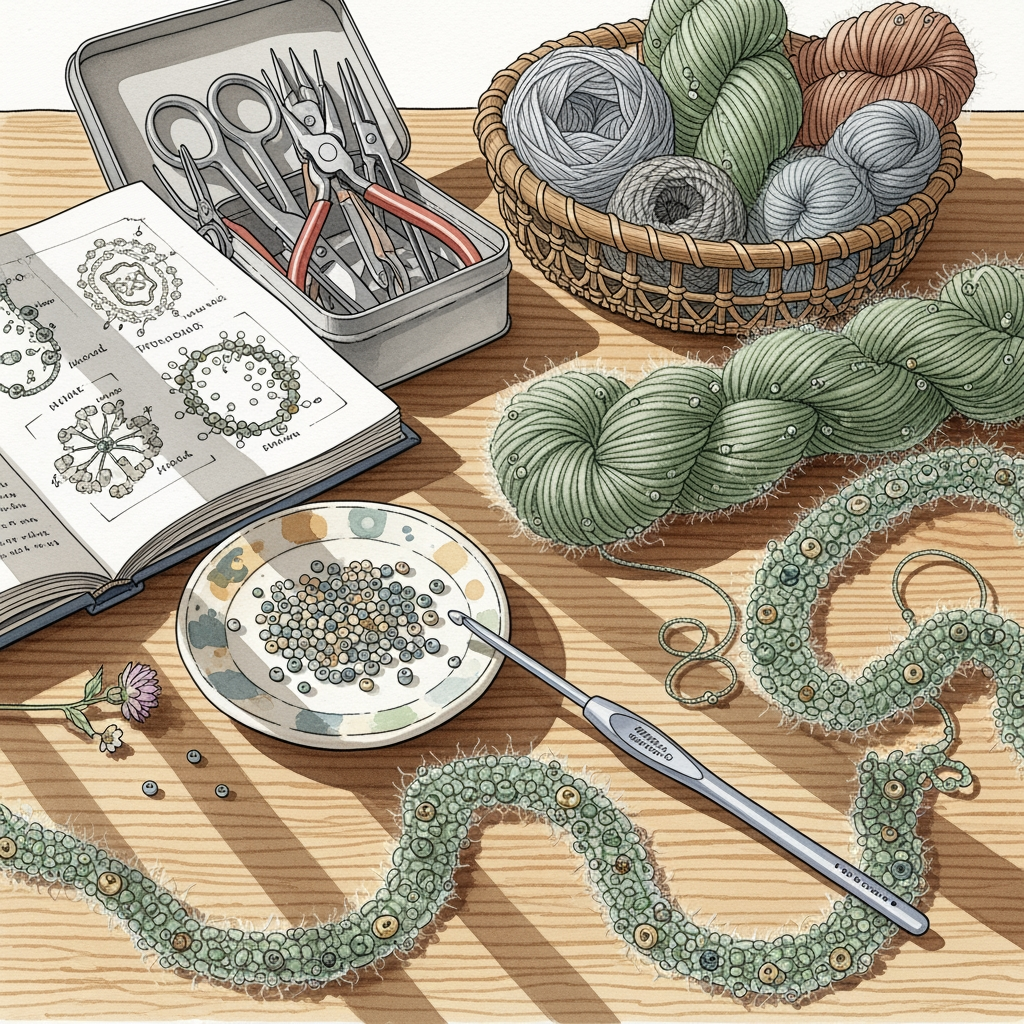
You need three fundamental tools to handle jewelry wire effectively: round-nose pliers, chain-nose pliers, and wire cutters. Round-nose pliers are essential for creating the perfect circular loop for your marker ring.
Chain-nose pliers have a flat interior surface that is perfect for gripping wire and making sharp, clean bends. Using improper pliers, such as household needle-nose tools, will often leave marring or scratches on the soft metal of your pins.
Invest in tools with ergonomic, non-slip handles to save your hands for knitting. Proper tool alignment makes the difference between a frustrating chore and a relaxing creative interlude.
Whether you are crafting a simple charm or an intricate set of progress markers, the right headpin ensures your gear is as reliable as your knitting. Choose materials that match your project’s needs, and always prioritize a secure loop to keep your stitch markers exactly where they belong. Happy crafting.