6 Best Document Folders For Pattern Storage Worth Using
Organize your craft space with the 6 best document folders for pattern storage. Choose the right durable options for your collection and shop our top picks today.
Navigating a complex lace shawl pattern or a multi-colored intarsia project requires more than just high-quality yarn and sharp needles. Without a reliable way to organize paper charts and written instructions, even the most meticulous knitter risks losing their place or damaging critical documentation. Finding the right folder turns a chaotic pile of printouts into a streamlined reference system. Here are the best solutions for keeping your knitting patterns safe, accessible, and ready for the next row.
Della Q Chart Keeper: Best for Complex Charts


The Della Q Chart Keeper functions as a magnetized workstation designed specifically for the rigors of lace and stranded colorwork. Its primary strength lies in its ability to hold a chart flat against a magnetic board, allowing for the use of magnet strips to track progress across complicated rows.
This tool shines when tackling intricate charts where losing one’s place can result in a catastrophic knitting error. Because the surface is metal, it keeps your place firmly fixed even when the pattern is tossed into a project bag between sessions.
While this is an investment piece, the durability of the construction justifies the cost for those working on long-term, sophisticated designs. The bottom line: if you rely on charted motifs, this magnetic system is the gold standard for accuracy.
Cocoknits Project Portfolio: Elegant & Simple
The Cocoknits Project Portfolio focuses on a clean, minimalist approach to organizing single-project documentation. It utilizes a durable, kraft-paper-based sleeve system that is both tactile and aesthetic, fitting perfectly into the refined organizational habits of the modern maker.
Designed to hold pattern pages alongside essential project notes, it keeps your gauge swatches, yarn labels, and charts in one cohesive unit. It is particularly useful for knitters who prefer to keep their project-specific paperwork separate from their wider pattern library.
The main tradeoff is that the portfolio is relatively static and doesn’t offer the expansive capacity of larger binders. It serves best as a dedicated home for one active project, providing a professional way to keep notes tidy.
KnitPro Magma Pattern Keeper: Top Budget Pick

For the knitter who wants functionality without a premium price tag, the KnitPro Magma Pattern Keeper offers a practical, no-nonsense solution. This tool provides a fold-out magnetic board that stands upright, turning any workspace into a miniature pattern-viewing station.
It is lightweight and easy to fold, making it an excellent companion for knitters who frequent local groups or enjoy working while traveling. The magnetic strip included ensures that even the smallest row increments remain clearly marked.
While the material might lack the long-term, heavy-duty feel of more expensive portfolios, it effectively keeps patterns clean and organized. It is the perfect choice for the knitter who values utility and needs a reliable, portable tool for daily use.
Smead Poly Organizer: The Most Versatile Pick
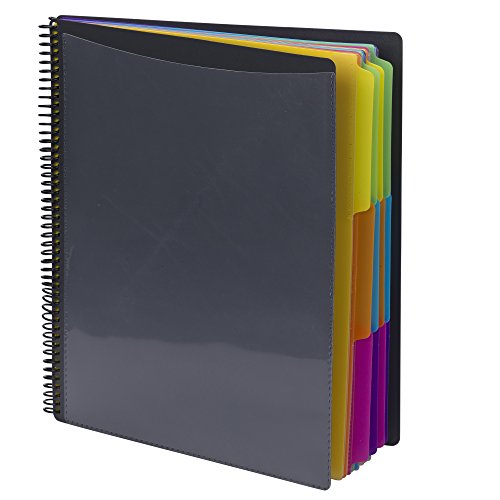
The Smead Poly Organizer is a staple for those managing a vast, growing collection of printed patterns. Unlike specialized knitting tools, this file utilizes a multi-pocket accordion structure that excels at categorization by project type, such as sweaters, socks, or accessories.
The acid-free poly material is an essential feature for long-term storage, as it prevents the chemical breakdown that often occurs with standard, cheap plastic sleeves. Its durability ensures that even if a stray drop of tea lands on your bag, your patterns remain pristine.
This organizer offers the best value for sheer volume, allowing you to categorize dozens of patterns in a small footprint. If you need to keep a large physical library sorted, this is the most efficient and protective choice available.
Globe-Weis File: For Large Pattern Collections
For the serious archivist who maintains a massive library of vintage, independent, and magazine-sourced patterns, the Globe-Weis file provides robust, industrial-grade storage. It is built to handle the weight of hundreds of pages without buckling or losing its shape.
This system is ideal for those who prefer to keep their entire collection in one central, accessible location rather than tucked away in various project bags. Its sturdy construction means you can leaf through your collection for inspiration without worrying about tearing delicate or older paper patterns.
While it lacks the portability of a project-specific pouch, it is an essential tool for the home-based studio. It is the ultimate solution for keeping a large reference library in perfect, order-driven condition.
Atenti Tool Pouch Tall: Clear & So Portable
The Atenti Tool Pouch Tall is a specialized bag feature that prioritizes visibility and portability. With a clear front panel, it allows you to identify your pattern or your project without needing to unzip and rummage through your gear.
This is particularly helpful when using multiple bags for different ongoing projects, as it eliminates the frustration of searching for specific paperwork. The height of the pouch is designed to accommodate standard letter-sized sheets comfortably, preventing the edges of your patterns from curling or creasing.
The tradeoff is that it lacks the internal dividers found in portfolio-style organizers. However, for the knitter who needs to grab a bag and go, its immediate accessibility is unmatched.
How to Choose Your Perfect Pattern Holder
Selecting the right folder depends entirely on how you interact with your patterns during the knitting process. If you are a “row-by-row” knitter, prioritize magnetic systems that allow for precise tracking of complex lace or colorwork motifs.
If you are a collector who enjoys browsing through back catalogs for inspiration, focus on capacity and ease of categorization. The following factors should guide your decision:
- Portability: Does the holder fit in your current knitting bag?
- Protection: Is the material acid-free to prevent yellowing over time?
- Accessibility: Does the folder allow you to view the pattern without removing it?
- Capacity: Do you need it for one project or an entire library?
Ultimately, the best holder is one that minimizes friction between you and the pattern. If the organizational system is cumbersome, you are less likely to use it, leading back to disorganized stacks of paper.
Digital vs. Physical Patterns: Which Is Best?
The debate between digital and physical patterns often comes down to the knitter’s preferred learning style and environment. Physical patterns are invaluable for those who like to physically write notes, adjust gauge math on the margins, and have a tangible backup that doesn’t rely on battery life.
Digital patterns offer the convenience of instant access and the ability to zoom in on complex charts on a tablet screen. However, digital files can be easily lost or forgotten in a deep folder structure on a computer.
The hybrid approach is often the most successful: keep the primary pattern in a secure digital cloud folder and print a copy for active use at your knitting station. This protects your original file while giving you the tactile freedom to mark up your active working copy.
Tips for Organizing Your Entire Pattern Library
An organized library is a source of inspiration rather than a source of stress. Start by grouping patterns by category: sweaters, socks, hats, and shawls. This simple categorization makes it much easier to select a project based on the yardage you currently have on hand.
Utilize clear, durable tabs to divide your folders, and consider keeping a small “notes” sheet in the front of each section. This sheet can track the yarn brand, needle size, and actual gauge used, which serves as a reference for future projects using similar techniques.
Once a month, audit your library to ensure that active projects are separated from completed ones. Moving finished patterns into a permanent, archival-grade binder prevents your working space from becoming cluttered with extraneous paper.
How to Protect and Preserve Paper Patterns
Protecting paper patterns is essential, especially for out-of-print designs or rare vintage booklets. The most significant threat to paper is acidity, which causes yellowing, brittleness, and eventual disintegration over time.
Always choose sleeves or folders labeled “acid-free” or “archival quality.” Avoid using standard scotch tape for repairs, as the adhesive will yellow and eat through the paper; opt for archival-safe document repair tape instead.
Finally, keep your pattern storage away from direct sunlight and humidity. A cool, dry environment will keep your patterns in usable condition for decades. With consistent care, your pattern library can become a lifelong resource for your knitting journey.
Investing in a proper organizational system is just as important as investing in premium fiber or ergonomic needles. By choosing the right folder, you protect your hard work and ensure that every pattern remains a clear, reliable guide for your next stitch. Choose a system that matches your habits, and you will find that your knitting process becomes significantly more enjoyable.