7 Best Led Work Lights For Workbench Visibility
Illuminate your workspace with precision. Explore our expert review of the 7 best LED work lights for workbench visibility and upgrade your shop lighting today.
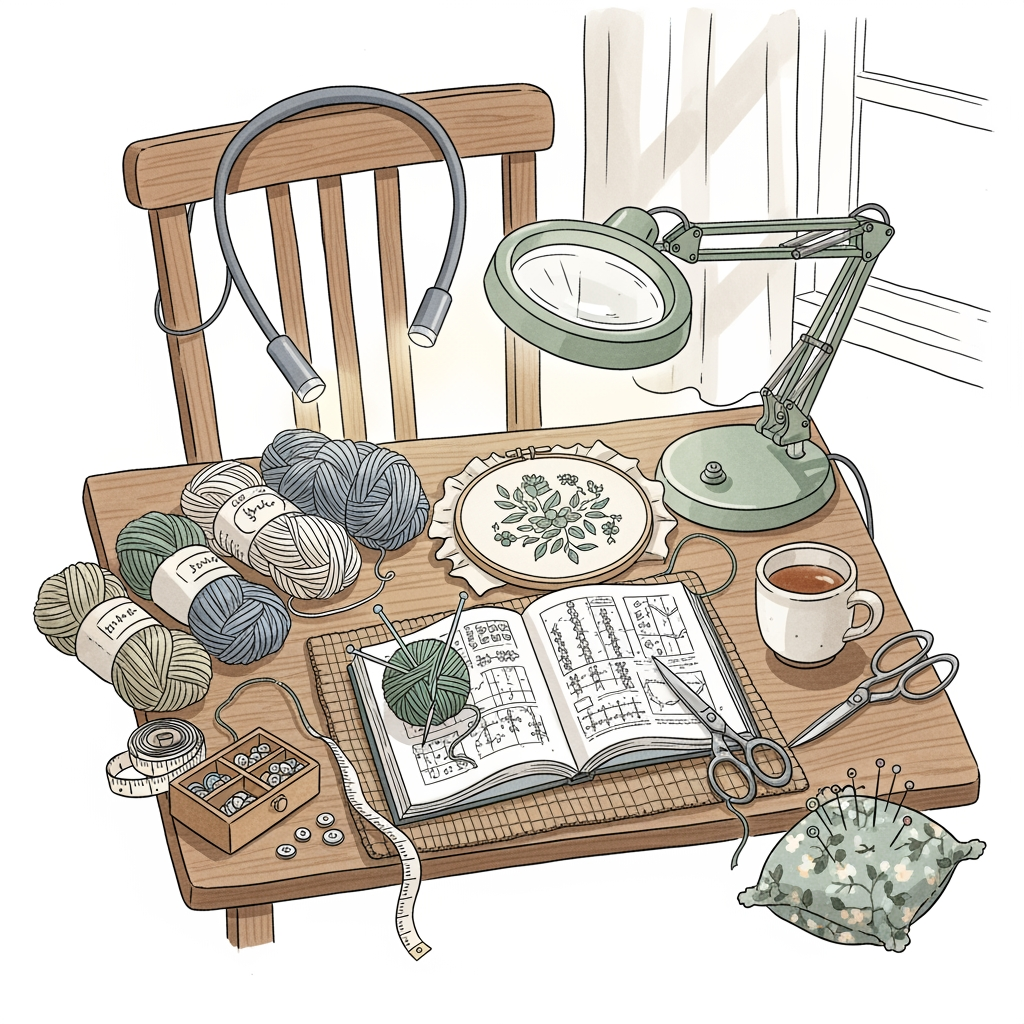
Staring at dark-colored mohair or intricate black cabling under dim room lighting is a recipe for dropped stitches and irreparable mistakes. Proper illumination is as essential to a successful knitting project as high-quality needles or consistent tension. The right workbench light transforms a squinting, frustrating session into a fluid, enjoyable experience. These seven LED solutions ensure every stitch is visible, preventing fatigue and ensuring the integrity of even the most complex lace patterns.
OttLite Dual Head LED Floor Lamp: Best Overall


This lamp features two independent, flexible heads that provide unparalleled coverage across an entire knitting surface. When tackling a large project like a cabled blanket, having the ability to angle one light source on the pattern and the other directly on the working needles is a massive advantage.
The dual-head design eliminates the deep shadows that single-source lights often cast across textured stitches. It is particularly effective for knitters who work with dark, high-twist yarns where stitch definition is naturally difficult to perceive.
Because it is a floor lamp, the base requires zero workbench footprint, which is ideal for those who prefer to keep their knitting notions and yarn cakes close at hand. While the footprint is clear, ensure the base sits on a stable surface to avoid any accidental tipping during vigorous knitting sessions.
Brightech Litespan LED Lamp: Top Crafter Pick
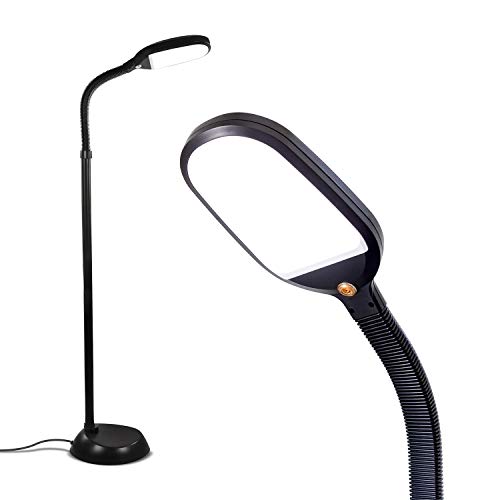
The Litespan offers a highly focused, adjustable beam that excels at highlighting fine detail work. If the current project involves intricate, lace-weight yarn or tiny 2.00mm needles, this lamp provides the crisp clarity needed to catch a dropped stitch before it travels down the fabric.
Many knitters appreciate the sheer brightness, which cuts through the visual noise of multicolored or variegated hand-dyed yarns. The lamp uses a flexible gooseneck that holds its position reliably, even after weeks of constant adjustment.
A minor trade-off is the intensity of the light, which some may find too harsh for long-term evening use. However, for identifying subtle texture changes in alpaca or angora, this level of illumination is difficult to beat.
Neatfi XL Lumens Task Lamp: Widest Illumination

The Neatfi XL features an extra-wide head that spans nearly the entire width of a standard knitting tray or lap desk. This wide-angle projection is perfect for those who work across long circular needles, ensuring even lighting from the first stitch to the last.
By covering a larger area, this lamp reduces the need to constantly adjust the light head as the fabric grows or shifts. It is an excellent choice for knitters who frequently switch between large-scale garments and smaller accessories without wanting to move their equipment.
The significant size of the lamp head requires a sturdy mounting surface to prevent wobbling. Once secured, it offers a consistent, shadow-free environment that mimics natural daylight, which is essential for accurate color matching.
BenQ e-Reading LED Desk Lamp: Premium Choice

The BenQ e-Reading lamp utilizes a specialized curved design that illuminates a wide, asymmetric range, specifically engineered to reduce eye strain. For the knitter who spends hours working on complex colorwork or long-form knitting, this light offers a noticeably more comfortable visual experience.
The intelligent mode automatically adjusts brightness based on ambient conditions, ensuring the light remains consistent even as the sun sets. This feature helps prevent the “eye fatigue” that occurs when the light source contrast against a dark room becomes too severe.
While this is a premium investment, the build quality and specialized lens technology protect the longevity of one’s eyesight. It is the gold standard for those who treat their knitting space as a dedicated studio rather than a casual corner.
Tomons Swing Arm Desk Lamp: Best Budget Option

The Tomons Swing Arm lamp offers a classic, minimalist aesthetic with the mechanical reliability of a traditional desk lamp. Its simple adjustment knobs make it easy to position the light exactly where the needle tips meet the yarn, providing a cost-effective solution for beginners.
Because it accepts standard LED bulbs, one can easily swap the bulb to control the exact color temperature and brightness. This allows for a customized knitting environment without the complexity of integrated digital controls.
Keep in mind that the light coverage is more focused than the premium models, meaning it is better suited for smaller projects like socks or hats. For a budget-conscious knitter, it provides the necessary light without any unnecessary bells and whistles.
Daylight Luminos LED Lamp: For Maximum Brightness

When working with black or navy blue yarn, standard lighting often fails to show the depth of the stitch. The Daylight Luminos is designed specifically for high-contrast visibility, utilizing a powerful LED array that reveals every twist and loop in the fiber.
The large, circular head design provides omnidirectional lighting, which is incredibly useful for seeing through dense fabric or complex cable crossings. It effectively mimics high-noon sunshine, the best possible light for discerning subtle variations in yarn color or texture.
Be aware that this lamp is quite large and bright; it is a serious tool for serious knitting. It may overpower a small, cozy space, but for high-stakes projects where every stitch must be perfect, the clarity it offers is unmatched.
Phive CL-1 Architect Lamp: Most Versatile Clamp
The Phive CL-1 utilizes a powerful, slim-profile clamp that attaches to almost any table edge, saving valuable space for yarn bowls and pattern charts. Its articulating arm allows the light to be tucked away entirely when the project is stored.
The touch-sensitive dimming feature is particularly useful for transitioning from afternoon sunlight to nighttime crafting. Simply sliding a finger along the control panel changes the light level without needing to move the lamp head.
This lamp is perfect for the knitter who works in tight quarters or shares a desk with other hobbies. Its ability to fold flat and disappear makes it the most unobtrusive option for small-home environments.
Choosing Your Light: Clamp, Base, or Floor Model?
The decision between a clamp, base, or floor model depends entirely on the physical layout of the knitting area. A clamp model is superior for small tables where every inch of surface is needed for yarn swifts or ball winders.
Base models provide more flexibility, as they can be moved between different stations, such as a favorite armchair or a kitchen table. However, they can sometimes feel unstable if the neck is extended too far or at an awkward angle.
Floor lamps are the best choice for those who knit primarily on a sofa or in a dedicated lounge chair without a nearby table. Always assess the floor space and potential tripping hazards before selecting a floor-based unit to ensure the cord remains safely tucked away.
What Are Lumens and Color Temperature (CRI)?
Lumens measure the total amount of light emitted; for knitting, aim for at least 800-1000 lumens to ensure deep detail is visible. More lumens are generally better for dark fibers, while lower settings prevent glare on lighter yarns or reflective metallic needles.
Color temperature is measured in Kelvins (K) and dictates the “warmth” or “coolness” of the light. A range between 4000K and 5000K is ideal, as it mimics daylight and keeps colors accurate—crucial when working on multi-colored projects.
CRI, or Color Rendering Index, measures how accurately the light displays colors compared to natural light. Look for a CRI rating of 90 or higher to ensure that the yarn color you see is the true color, preventing a nasty surprise once the project leaves the craft room.
Positioning Your Light for Shadow-Free Knitting
To achieve shadow-free knitting, the light source should ideally be positioned to the side and slightly behind the dominant hand. This setup directs light onto the needles without the hand itself blocking the illumination or casting a dark shadow over the active stitch.
If the lamp is positioned directly in front, it often creates a glare off slick needle surfaces, such as stainless steel or nickel-plated options. By moving the light source, one can eliminate this distracting “hot spot” while maintaining excellent visibility of the yarn’s ply and texture.
Finally, adjust the height periodically as the project grows in size. As the fabric gets heavier and sits higher on the lap, the light head may need to be tilted upward to maintain an optimal angle on the work.
Finding the perfect light is as personal as choosing the right yarn weight for a sweater. By prioritizing high-CRI LEDs and adjustable positions, one can ensure that eye strain never dictates the end of a productive knitting session.