6 Best Soft Sleeves For Bag Storage To Protect Gear
Keep your equipment scratch-free with these 6 best soft sleeves for bag storage. Explore our top-rated picks and protect your valuable gear during travel today.
A project bag filled with loose stitch markers, tapestry needles, and measuring tapes is a recipe for frustration when searching for tools mid-row. Protecting high-end needles and specialized gear requires more than just a deep pocket; it demands dedicated organization. Proper storage prevents delicate needle tips from snapping and keeps essential notions from snagging on precious hand-dyed wool. Investing in a quality soft sleeve ensures that every session starts with the right tool immediately at hand.
Della Q Maker’s Buddy Case: Best for Notions
The Maker’s Buddy Case serves as the gold standard for those who struggle with “notion drift” at the bottom of their knitting bags. Its structured, zippered design keeps small items like point protectors, cable needles, and row counters contained in a single, accessible space.
The interior pockets are specifically sized for the typical knitter’s toolkit. By segregating sharp metal tools from yarn-based projects, the risk of snagging a delicate mohair lace shawl is significantly reduced.
While it is compact enough for portability, the rigid shape protects the contents from being crushed. If you frequently carry delicate items like wooden stitch markers, this case provides a buffer against the weight of heavy ceramic mugs or water bottles inside your main bag.
Cocoknits Accessory Roll: Most Versatile Option
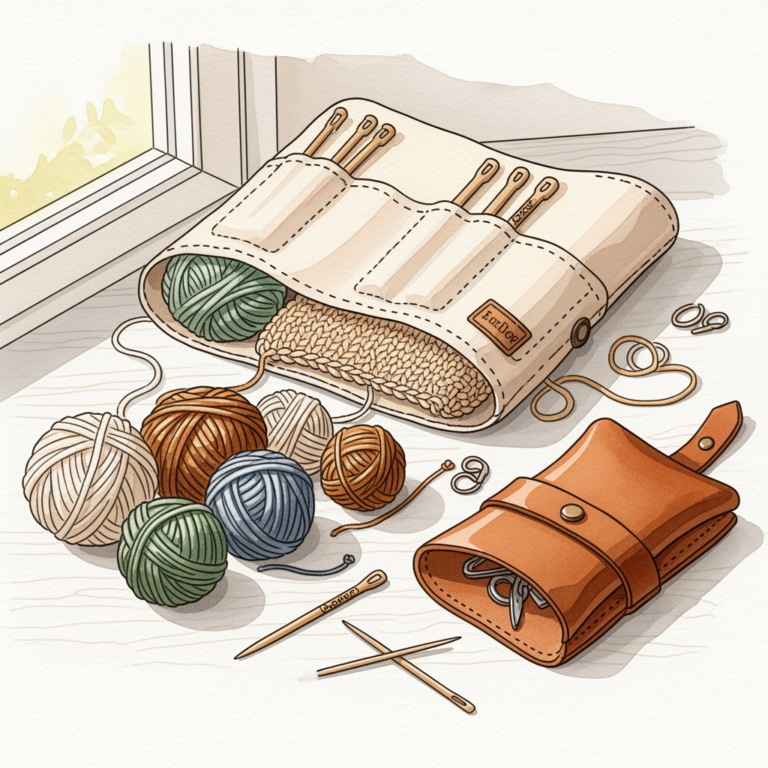
The Cocoknits Accessory Roll functions as a modular system for the minimalist knitter. It utilizes a clever folding mechanism that expands or contracts based on exactly what is packed, making it ideal for those who prefer to carry only the essentials for a specific project.
Versatility here comes from the internal compartments that accommodate everything from tape measures to small scissors. Because it rolls up tightly, it fits into the tightest corners of a tote or backpack, ensuring that even a small project bag remains organized.
It is particularly effective for those who swap projects frequently. Simply move the roll from one bag to another, and the entire suite of necessary accessories travels intact.
Tom Bihn Ghost Whale Pouch: Best for Travel


When traveling with knitting gear, security and visibility are paramount. The Ghost Whale Pouch features a unique, transparent design that allows for an immediate inventory of contents without the need to dump the entire pouch out in public.
The construction is rugged, designed to withstand the wear and tear of being tossed into carry-on luggage or TSA bins. It easily holds larger items like circular needle cases or small skeins of yarn, offering a high-visibility solution for complex travel setups.
For knitters worried about security checkpoints, the ability to see exactly what is inside simplifies the inspection process. It is a no-nonsense, highly durable choice for the knitter on the move.
muud Espoo Needle Case: Top Premium Leather Pick
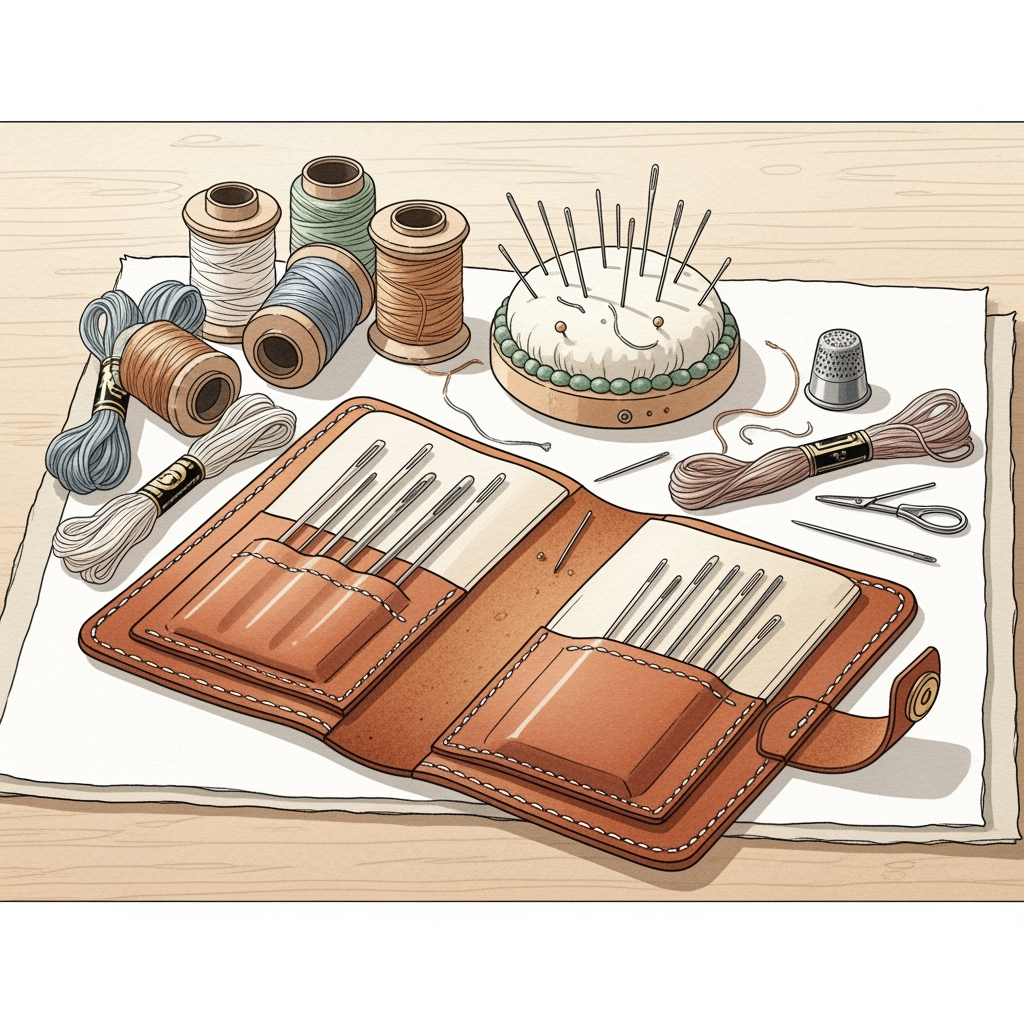
For those who view their needles as lifetime investments, the muud Espoo Needle Case offers both aesthetic beauty and superior protection. Leather provides a natural, durable barrier that softens over time while remaining tough enough to prevent needle tips from poking through.
This case is designed for circular needles, organizing them in a way that minimizes cable coiling and memory issues. By keeping the cables relatively straight, you reduce the time spent steaming or soaking them to remove kinks before a cast-on.
While it represents a significant investment, the longevity of premium leather makes it a sustainable choice. It protects gear from temperature fluctuations and prevents the fine wood or carbon fiber of luxury needles from sustaining damage.
Thread & Maple Needle Slip: Most Compact Design
The Needle Slip is the ultimate solution for the “purse knitter” who wants to keep a pair of needles and a few stitch markers at the ready without carrying a full kit. Its slim profile barely takes up more space than a standard wallet.
Its primary benefit lies in its low-profile footprint. It eliminates the “bulk” that often plagues project bags, leaving more room for the actual yarn.
This is best for knitters who stick to one or two needle sizes for the majority of their work. If you are a dedicated sock knitter who rarely deviates from 2.25mm needles, this provides just enough protection without overcomplicating your carry.
Felt Organizer Insert: Best Customizable Choice

Felt inserts transform the interior of any bag into a custom storage environment. By acting as a secondary structure, these inserts create “walls” that prevent needles and notions from shifting during transit.
Felt is naturally cushioning, providing a soft landing for delicate equipment. It is particularly forgiving, as it allows for the pinning of progress keepers or stitch markers directly into the material for quick retrieval.
For those who have a favorite tote that lacks pockets, an insert is the most effective way to add organization without buying a new bag. It adapts the bag to the gear, rather than forcing the knitter to adapt their gear to the bag.
How to Pick the Right Sleeve for Your Project Bag
Choosing the right sleeve requires an honest assessment of how you move through your day. If you are a commuter, prioritize rugged materials like Cordura or nylon that can handle being jostled. If you work from a dedicated studio, aesthetics and ease of access take precedence.
Consider the “needle footprint” of your current projects. If you are knitting a sweater on multiple circulars, you need an organizer that accommodates cables without forcing them into tight, damaging bends.
Always account for expansion. A sleeve that is perfectly full today will feel like a burden when you need to add one more stitch marker or a pair of folding scissors tomorrow.
Material Matters: Canvas, Leather, and Felt Compared
Materials dictate both the lifespan of the organizer and the safety of your tools. Canvas is the reliable workhorse; it is machine washable, durable, and lightweight, making it perfect for everyday project bags.
Leather is the premium choice for long-term storage, as it offers a stiff, protective shell that naturally guards against impact. However, it requires maintenance and is generally heavier than fabric alternatives.
Felt offers unparalleled softness, making it the top choice for preventing scratches on delicate bamboo or resin needles. While it is excellent for internal organization, it can attract lint and is harder to clean than synthetic or coated fabrics.
Key Features to Look For in a Gear Protector
When evaluating any sleeve, look for the quality of the closure mechanism. A heavy-duty zipper is essential for a bag that will be turned upside down, while a magnetic snap might be acceptable for a tabletop organizer.
Check for interior lining. A smooth lining prevents snagging, which is vital when you are packing notions alongside textured yarn or delicate lace projects.
Prioritize “lay-flat” designs for ease of use. If a case requires you to dig deep or pull out all your contents to reach a specific needle, it will eventually become a source of annoyance rather than a tool for efficiency.
Cleaning and Caring For Your New Storage Sleeves
Storage sleeves are magnets for yarn dust, fiber bits, and the occasional errant stitch marker. Regularly empty your cases and turn them inside out to shake out residual debris that could potentially stain your yarn.
For canvas or nylon, a damp cloth with mild soap is usually sufficient for spot cleaning. Avoid submerging leather cases, as water can cause the material to stiffen or crack; instead, use a dedicated leather conditioner to keep the fibers supple.
Periodically inspect the structural integrity of your cases. A loose thread on an interior pocket can quickly lead to a missing needle or a broken tip, so trimming loose ends as they appear is a simple bit of preventive maintenance that extends the life of your storage.
Selecting the right sleeve is about more than just aesthetics; it is about creating a streamlined environment that supports your creative process. When your tools are protected and easily accessible, you spend less time searching and more time enjoying the rhythm of your stitches. Take the time to evaluate your specific habits, and you will find an organizational partner that lasts as long as your passion for knitting.