6 Best Wool Rovings For Needle Felted Pom Pom Details
Discover the 6 best wool rovings for needle felted pom pom details. Master your textures and elevate your craft with our expert recommendations. Shop the list now!
Adding a sculpted felted element to a yarn pom pom transforms a standard accessory into a high-end, bespoke creation. Needle felting allows for precise details—like eyes, noses, or floral motifs—that simple yarn snips cannot achieve. Selecting the correct wool roving is the fundamental step to ensuring these details bond securely to the pom pom’s fiber core. Choosing a fiber that matches the pom pom’s density and texture is the difference between a professional finish and a shedding mess.
Dimensions Multi-Color Roving: Best for Beginners


Small, curated packs of multi-colored roving are the ideal starting point for crafters experimenting with pom pom embellishments. These bundles prevent the need for purchasing large quantities of wool that might go unused.
Beginners often struggle with knowing how much fiber is required for small details like whiskers or petal centers. These multi-color packs remove the guesswork by offering limited amounts of various hues.
Expect a slightly coarser texture in these mass-produced bundles, which actually aids beginners. The coarser scales on the fiber fibers interlock more quickly under the needle, providing immediate feedback for those still mastering their hand pressure.
Living Dreams Audra’s Blend: For Artistic Effects
Audra’s Blend incorporates various fibers, including sparkles and silk, to create unique visual depth on a pom pom. This is the go-to choice when the design calls for texture beyond basic solid wool.
Because this blend includes non-wool fibers, it behaves differently during the felting process. The silk components do not felt as aggressively as pure wool, requiring more patience and consistent needle strikes.
This fiber is best reserved for accents where visual interest outweighs the structural need for a deep, felted bond. Utilize these for surface decoration rather than structural components that must endure heavy wear.
Ashford Corriedale Sliver: Best for Quick, Firm Details
Ashford Corriedale is a mid-range fiber that strikes a perfect balance between softness and structural integrity. It is exceptionally popular because it felts rapidly without losing its shape.
When applying details to a pom pom, speed is essential to prevent the needle from damaging the underlying yarn structure. The medium crimp of Corriedale fiber catches the needle barbs efficiently, drawing the wool into the pom pom core in just a few strokes.
This fiber is forgiving for those who tend to over-felt or struggle with surface distortion. It holds crisp edges, making it ideal for geometric shapes or defined facial features on character pom poms.
Paradise Fibers Merino Top: For Super-Smooth Felting
Merino top is characterized by its ultra-fine diameter, resulting in an exceptionally smooth, professional surface. When a project requires a seamless, polished look, this is the superior material choice.
The fineness of the fiber requires more care, as it is prone to flying or thinning if handled too aggressively. However, the result is a velvet-like finish that perfectly hides the individual yarn strands of the pom pom beneath.
Use Merino when creating intricate, miniature details where bulk would be a hindrance. It is less suitable for large, structural components but excels at fine-tuning shapes that have already been roughed out with a coarser wool.
Clover Natural Wool Roving: Best for Small Projects
Clover roving is specifically packaged for precision work, making it a reliable staple for crafters who focus on small-scale embellishments. The fibers are neatly organized, which simplifies the process of pulling off tiny, consistent amounts of wool.
The consistency of this roving minimizes the time spent preparing the fiber before it ever touches the needle. If the goal is a quick, one-off project rather than bulk production, the efficiency of this packaging is unmatched.
While the cost per ounce may be higher than bulk spinning fibers, the lack of waste makes it economical for small details. It is a highly predictable material that rarely surprises the crafter with uneven clumps or stray debris.
WoolyMossRoots Corriedale: Best Hand-Dyed Colors
Hand-dyed fibers offer a range of subtle, variegated tones that mass-produced rovings simply cannot replicate. For artistic projects that require a painterly effect, these colors add genuine character to the finished piece.
These fibers often possess a slightly more rustic quality, which allows for a sturdier bond with the yarn of the pom pom. The variation in color can also disguise minor imperfections in the felting process.
Because every batch of hand-dyed fiber is unique, ensure enough is purchased for the entire project at once. Consistency across a set of pom poms depends on using the same dye lot for matching elements.
Choosing Your Roving: Merino vs. Corriedale
The primary decision in roving selection rests between Merino (fine) and Corriedale (medium). Merino fibers are thinner and softer, while Corriedale offers more resilience and structural support.
- Merino: Ideal for surface details, fine lines, and smooth transitions. It is prone to stretching and requires more needle strikes to achieve a dense, firm structure.
- Corriedale: Ideal for the base of shapes, noses, ears, or structural elements. It is the workhorse fiber that provides stability and durability for items that might be handled often.
For most pom pom projects, a hybrid approach works best. Start with a Corriedale base for structure and finish with a thin layer of Merino to achieve a smooth, refined surface.
Tips for Felting Details onto a Yarn Pom Pom
The most significant challenge when felting onto a pom pom is ensuring the wool anchors into the yarn rather than just sitting on top. Push the needle deep into the center of the pom pom, catching the internal structure to prevent the detail from peeling away.
Always compress the wool shape in your hands before attaching it to the pom pom. A pre-shaped element is significantly easier to secure than loose, unformed fluff.
Avoid felting directly over the plastic core or binding string of the pom pom, as the needles will break against these hard surfaces. Aim for the “fluff” of the yarn to ensure the felting needle can travel freely.
Beyond Roving: Needles, Mats, and Finger Guards
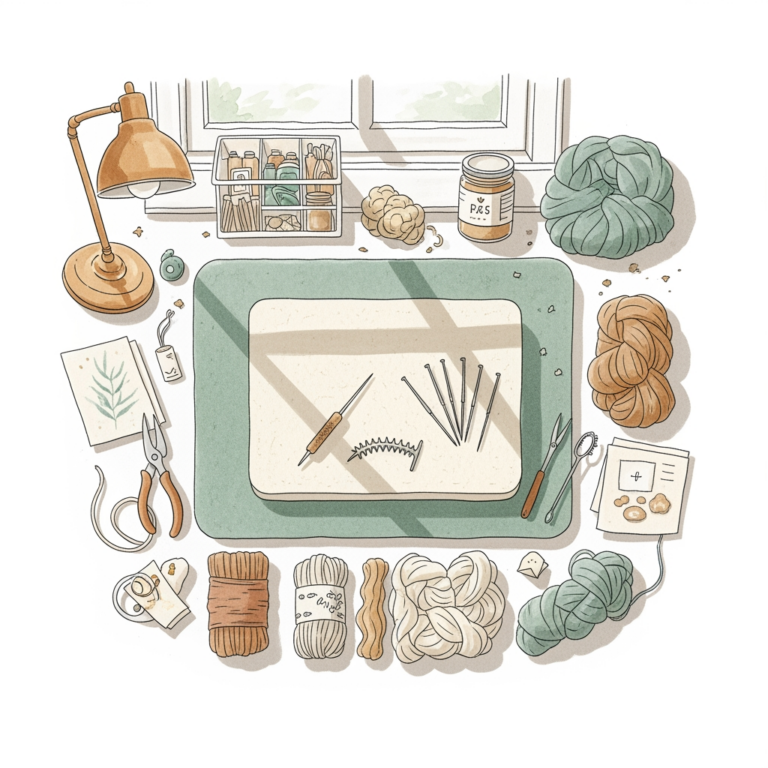
The equipment used for felting is as vital as the wool itself. A high-quality felting needle with sharp, uniform barbs is non-negotiable for clean results.
Use a foam or brush mat to protect the work surface and needle tips. A brush mat is particularly effective for pom pom work because it allows the needles to pass through the yarn without resistance, reducing the risk of snapping.
Leather or silicone finger guards are mandatory for safety. The repetitive, blind stabbing motion required to fix fibers into a rounded pom pom makes it dangerously easy to catch a finger.

How to Make Your Felted Details More Durable
The durability of a felted detail is determined by how deeply and thoroughly it is integrated into the pom pom. If the detail feels loose or “wobbly,” simply continue needle-felting the edges into the pom pom until they are flush.
Avoid over-felting to the point where the fibers become brittle or snap. If the detail is meant to withstand heavy use, such as a child’s toy or a bag charm, add a tiny drop of fabric glue or a small stitch of thread to anchor the center.
Regular maintenance is simple; if the fibers start to pull away, a few extra needle strikes will usually pull the detail back into alignment. Proper technique during the initial assembly is the best preventative measure against future wear.
By mastering the selection of your wool and the mechanics of the needle, you elevate your pom poms from simple yarn balls to professional, tactile art. Start with the right fiber for your skill level, prioritize safety during the process, and focus on deep structural attachment to ensure your work stands the test of time.