6 Best Dot Grid Templates For Bullet Journals To Try
Elevate your planning with our 6 best dot grid templates for bullet journals. Download these versatile layouts today to organize your tasks and boost creativity.
Effective project tracking is as essential to a finished sweater as a well-calibrated tension square. Much like selecting the right needle material for slippery silk or rustic wool, choosing a dot grid journal requires balancing tactile preference with functional needs. Bullet journals serve as the pattern library and gauge diary for the discerning maker, providing a space to document yarn substitutions and stitch counts. Finding the right template ensures that every increase, decrease, and color transition is recorded with clarity and precision.
Leuchtturm1917 Dotted: The BuJo Community Fave
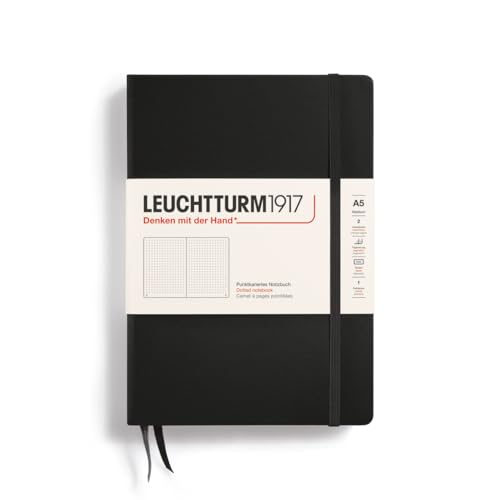

The Leuchtturm1917 is the gold standard for those who value consistency and a reliable layout. Much like a classic nickel-plated needle, it performs predictably across a wide range of projects.

Its numbered pages and pre-printed table of contents eliminate the need to manually index complex sweater construction notes. The paper quality handles standard ballpoint and fineliner ink well, ensuring that charts drawn by hand remain crisp and legible.
However, the paper is relatively thin. If high-pigment markers or heavy-flow fountain pens are part of the process, expect significant ghosting on the reverse side.
Rhodia DotPad N°16: Best for Fountain Pen Ink
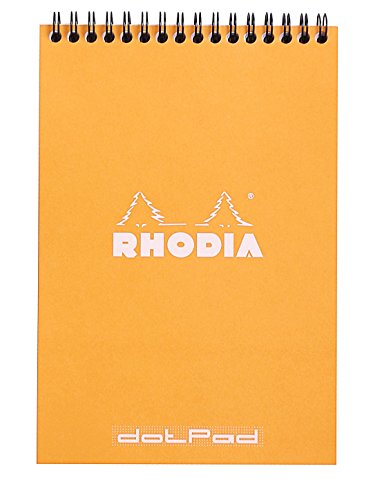
The Rhodia DotPad is the equivalent of a perfectly smooth bamboo needle that refuses to snag, even with the most delicate lace-weight mohair. Its proprietary 80g acid-free paper is legendary for preventing ink feathering and bleed-through.
This is the optimal choice for those who document their fiber arts journey with precision instruments. When recording the complex math of a custom-fitted raglan sleeve, the smoothness of the paper allows for rapid, fluid writing without ink catching on paper fibers.
Because it is a pad rather than a bound book, it lacks the longevity of a permanent archive. Use this for sketching motifs or calculating yardage requirements before transferring final data into a permanent journal.
Moleskine Classic Dotted: The Timeless Option

Moleskine journals offer a minimalist aesthetic that appeals to the traditionalist. Think of this as the reliable hardwood swift—it provides a sturdy, dependable structure without unnecessary bells and whistles.
The off-white, slightly textured paper provides a pleasant tactile experience that feels substantial under a fountain pen or graphite pencil. It is a sturdy companion for long-term project planning, such as mapping out a multi-year temperature blanket or a complex Aran collection.
The primary tradeoff is the paper thinness, which is more prone to ink show-through than its competitors. Those who prefer minimalist, single-sided ink work will find this journal ideal.
Archer & Olive Dot Grid: For Heavy Media & Art
If the bullet journal acts as a visual sketchbook for swatches and color palette tests, the Archer & Olive journal is the only choice. The thick, 160gsm paper is heavy enough to handle watercolor washes for yarn color mapping without warping or soaking through.
This journal provides the structural integrity needed to glue physical yarn samples, fabric labels, or swatches directly onto the page. It functions effectively as a “maker’s scrapbook,” bridging the gap between data-driven logging and artistic expression.
The heavy paper stock does result in a larger, heavier book. Consider if portability is more important than the ability to use mixed media when deciding on this investment.
Scribbles That Matter: Best All-in-One Journal
Scribbles That Matter is designed specifically for the BuJo enthusiast who wants an exhaustive feature set right out of the gate. It comes equipped with test pages, key indexes, and pocket storage, functioning like an interchangeable needle set that includes every conceivable adapter and cable.
The paper is thick enough to prevent bleed-through, catering to those who use heavy-duty markers to color-code their project stages. It offers an organized framework that removes the stress of setting up layouts from scratch.
While the feature density is high, the aesthetic is very specific. Those who prefer a blank canvas might find the pre-printed sections slightly intrusive to their personal note-taking style.
GoodNotes Digital Template: For Your iPad BuJo
Digital planning offers infinite space, much like a digital pattern reader that allows for zooming in on intricate chart details. With a GoodNotes template, the “paper” never runs out, and mistakes are erased with a single tap.
This is the ultimate solution for the maker who travels frequently. It saves the physical weight of carrying multiple notebooks to a knitting retreat while allowing for organized folders of digital patterns and yarn inventories.
The tradeoff is the absence of tactile feedback. For those who find the physical act of writing with a pen to be part of the creative process, the glass screen may feel detached compared to ink on physical paper.
Choosing Your Dot Grid: Key Factors to Consider
- Binding: Lay-flat bindings are essential for jotting down notes while managing a complex knitting chart on one’s lap.
- Paper Weight: Measured in GSM (grams per square meter), higher numbers offer better protection against heavy inks.
- Grid Density: The standard is 5mm, but test to ensure the spacing doesn’t clash with the size of handwritten numbers or chart symbols.
- Portability: Consider whether the journal will live on a desk or be tossed into a project bag alongside sharp needles and metal notions.
Paper Weight and Ghosting: A Quick Explainer
Paper weight is the secret variable that determines if a journal will survive a fountain pen. A lower GSM might be thin and flexible, but it will ghost—meaning the writing on the front shows through the back.
For fiber artists who use color-coded pens to denote different yarn weights or needle sizes, anything below 100gsm is often a liability. Always check the GSM rating before purchasing to ensure the journal supports the specific pens preferred for record-keeping.
Dot Spacing and Color: Why the Details Matter
The light-gray, subtle dots found in quality journals are designed to provide structure without overpowering the page. Darker or bolder dots can visually compete with intricate cabling charts or handwritten gauge formulas.
Five-millimeter spacing is the industry standard for a reason. It is close enough to allow for detailed sketching but wide enough that writing remains legible and neat.
Physical vs. Digital Bullet Journaling Compared
Physical journals offer a permanent, analog archive of a knitting career that can be passed down or referenced years later without power. They provide a sensory experience that digital tools cannot replicate, serving as a physical manifestation of time spent at the craft.
Digital journaling provides unmatched organizational power, allowing for instant searching of specific yarn brands or pattern modifications. Ultimately, the best choice depends on whether the goal is a tactile, heirloom-style record or an efficient, searchable database.
Choosing the right journal is as personal as selecting the perfect yarn for a signature sweater. Assess the requirements of the project—whether that be heavy charting, visual color mapping, or simple row counting—and select the tool that supports that workflow without friction.