
6 Best Floral Hooks For Hanging Installations Professional Florists Use
Discover the 6 best floral hooks for hanging installations that professional florists trust. Read our expert guide and elevate your floral designs today.
Creating stunning floral installations requires the same meticulous attention to structural integrity that a complex, cabled heirloom sweater demands. Just as the wrong needle material can ruin the tension of a delicate lace shawl, a poor-quality hook can lead to a catastrophic collapse of a floral centerpiece. Professional florists rely on specialized hardware to ensure that blooms, stems, and foliage remain perfectly suspended without damaging the venue or the arrangement. Choosing the right tool is the difference between a project that holds its shape and one that unravels before the event even begins.
Oasis Magnetic Hooks: Best for Metal Surfaces


Magnetic hooks are the gold standard when working in venues with industrial steel infrastructure, such as modern lofts or refurbished warehouses. These hooks offer an incredible holding force without the need for drilling, taping, or damaging existing surfaces.
Think of these like the magnetic needle minders used to hold tapestry needles; they are unobtrusive yet surprisingly strong. When selecting a magnet, verify the pull strength against the saturated weight of the floral foam or moss base. Remember that water weight is significant—a wet block of foam is vastly heavier than a dry one.
Use these magnets only on high-quality steel surfaces to ensure the magnetic field is fully engaged. Avoid painted steel, as the coating can create a gap that reduces holding power significantly.
Lomey Suction Hooks: Top Choice for Glass
Suction hooks provide an elegant, invisible support system for windows and mirrors. They rely on creating a vacuum seal, which makes them perfect for pristine, non-porous surfaces where mechanical fasteners are prohibited.
Just as blocking mats require a smooth surface to maintain the shape of a sweater, suction hooks require a clean, grease-free environment to function. Wipe the glass with isopropyl alcohol before application to remove any invisible film or residue.
Moisture is the enemy of a long-term seal, so avoid using these in high-humidity areas where condensation might break the vacuum. For heavier arrangements, use multiple suction points to distribute the weight evenly, much like how you would add support threads to a heavy, oversized garment.
Syndicate Sales C-Hooks: Best for Grid Walls
C-hooks are the go-to tool for wire grid panels, a staple in both florist shops and event displays. These hooks provide a reliable, modular way to hang individual floral vessels or greenery swags.
These hooks snap firmly onto grid wires, preventing the slipping that often happens with makeshift hangers. Much like choosing the correct needle size for a specific yarn weight, matching the hook gauge to the wire grid diameter is crucial for a stable fit.
They allow for rapid repositioning, which is invaluable when fine-tuning the placement of floral elements. For a symmetrical look, keep these hooks aligned to avoid uneven tension, which could cause the grid to lean or sag.
The Hillman Group Steel S-Hooks: Most Versatile
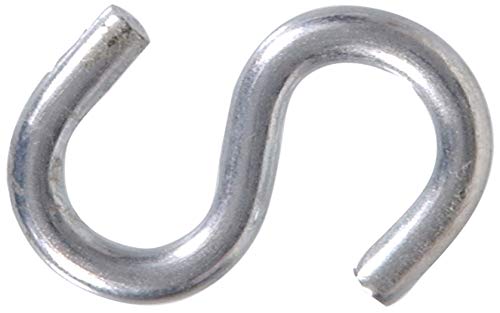
Steel S-hooks function as the universal connectors of the floral world. They are perfect for linking chains, suspending baskets, or creating makeshift loops for hanging wire.
Think of an S-hook as a temporary stitch marker in a complex knitting pattern; it is simple, reusable, and holds components together until the final assembly is secured. These hooks are best used for applications where weight is distributed vertically.
Avoid using them where there is significant lateral movement or vibration, as the weight can shift and cause the hook to unseat. For high-traffic areas, pinch the ends of the S-hook closed with pliers to ensure the arrangement stays securely in place.
Koch Industries J-Hooks: For Heavy-Duty Needs
J-hooks offer a deep, secure cradle that is ideal for heavy, water-logged arrangements or massive branch installations. Their structure allows the weight to sit squarely in the base of the hook, preventing the sliding or slipping common with shallower designs.
When working with heavy materials—similar to how you would choose a metal needle over wood for a heavy, draping wool project—prioritize the rigidity of the steel. A J-hook will not bend under the weight of large, saturated floral designs, keeping the installation safe.
These are best for permanent or semi-permanent installations where high weight capacity is non-negotiable. Ensure the anchor point for the J-hook is as strong as the hook itself, as the hardware is only as effective as the surface it is mounted into.
Liberty Hardware Carabiner Clips: Secure & Fast
Carabiner clips provide a locking mechanism that makes them essential for high-movement environments. When an installation must be secure against gusts of wind or incidental bumping, the locking gate of a carabiner is the superior choice.
Using a carabiner is like using a locking cable needle; it guarantees that the tool will not accidentally open or drop the work. This added security is worth the slight increase in bulk compared to a standard S-hook.
These are excellent for attaching floral swags to existing railings or tension cables. Always ensure the carabiner is rated for the total weight of the arrangement, including the water and the container.
How to Choose the Right Hook for Your Venue
Selecting the right hardware requires assessing the mounting surface, the total weight of the arrangement, and the required duration of the display. Before purchasing, verify whether the surface is magnetic, porous, or load-bearing.
- Weight: Always calculate the wet weight of your arrangements.
- Surface Texture: Smooth surfaces favor suction; metal favors magnets; wire grids favor C-hooks.
- Accessibility: Choose clips or hooks that allow for easy installation and removal without damaging the venue infrastructure.
Always lean toward over-engineering your support system. A failed installation is the floral equivalent of a dropped stitch in a delicate pattern—expensive, frustrating, and often difficult to repair.
Understanding Hook Weight Limits for Safety
Every hook, no matter the material, has a maximum load rating that should never be ignored. Weight limits are calculated for static loads, not moving or swaying arrangements.
Much like a sweater’s fiber content dictates its care and longevity, the material of the hook dictates its failure point. Steel holds more weight than plastic, and forged hooks outperform bent wire.
If an installation weighs more than five pounds, it is wise to distribute the weight across multiple points of contact. Never exceed the manufacturer’s specified weight limit, as structural failure can happen instantaneously.
Hanging on Different Surfaces: A Quick Guide
- Drywall/Plaster: Requires toggle bolts or specialized drywall anchors.
- Concrete: Needs masonry drill bits and expansion anchors for permanent installations.
- Wood Beams: Strong screw eyes or hooks are the safest method for overhead work.
- Drop Ceilings: Use specialized ceiling grid clips that distribute weight across the T-bar frame.
Always test a small area for surface damage before committing to an installation. When in doubt, consult the venue management regarding allowable mounting methods to avoid costly repair bills.
Non-Damaging Hooks for Historic Locations
Historic venues often prohibit drilling or aggressive adhesives, forcing creativity. In these cases, look for tension rods, command-style adhesive hooks designed for easy removal, or clamps that attach to existing molding.
Approach these locations with the same care one would use when working with antique, fragile lace. Respect the integrity of the architecture by choosing non-invasive mounting hardware that leaves no trace behind.
Temporary tension systems, such as pole-and-socket configurations, are excellent alternatives to traditional mounting. These allow for impressive displays without impacting the venue’s historic finishes.
The right floral hardware ensures that your creative vision is displayed with stability and professional polish. By selecting the correct hook for the environment, you ensure that the effort spent on your artistry is matched by a secure and reliable installation. Happy arranging!