7 Best Instruction Books For Loom Knitting Techniques
Master loom knitting with these 7 top-rated instruction books. Discover expert techniques for all skill levels and start your next cozy project today. Shop now!
Loom knitting offers a rhythmic, accessible entry point into fiber arts, stripping away the complexity of needle manipulation while maintaining the integrity of beautiful, hand-crafted textiles. Choosing the right instructional resource is the difference between a frustrating pile of tangled yarn and a finished garment that sparks pride. Whether aiming to master basic stitches or construct complex, fitted pieces, the literature available can transform how tension and yarn weight are managed on a loom. This guide highlights seven essential titles that serve as foundational pillars for any loom knitter’s library.
Loom Knitting Primer by Isela Phelps: Best Overall
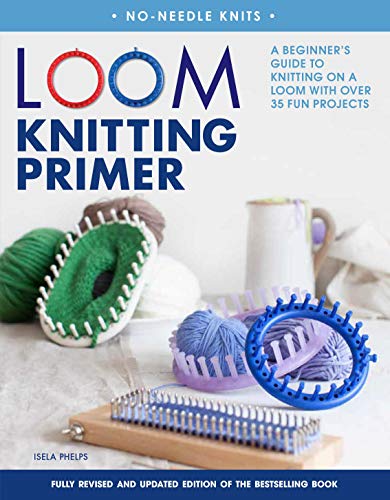

This volume is widely considered the definitive manual for the craft. It bridges the gap between rudimentary loom use and professional-grade finishing techniques.
The content provides a comprehensive breakdown of stitch mechanics, from the simplest e-wrap to complex cables and lace. It is particularly effective at explaining how to transition between different loom gauges—the spacing between pegs—which is vital for achieving the correct drape in a finished piece.
- Key Advantage: Exceptional clarity on stitch conversion and garment construction.
- Tradeoff: The breadth of information can feel overwhelming to those who prefer small, project-based learning over theory.
Bottom line: If a singular resource is needed to understand the “why” behind every stitch, this is the essential choice.
I Can’t Believe I’m Loom Knitting: Best Beginner

New knitters often struggle with the mechanics of the hook tool and the rhythm of moving yarn across pegs. This book focuses on simplifying those initial movements into a repeatable process.
The instructions emphasize tactile comfort, helping beginners understand how much tension to apply to prevent “laddering”—the unsightly vertical gaps that occur when yarn is pulled too tightly. It avoids overly technical jargon, keeping the focus on successful project completion.
- Key Advantage: Highly visual, step-by-step guides for the absolute novice.
- Tradeoff: The projects are relatively simple, meaning readers will likely outgrow the techniques quickly.
Bottom line: This is the perfect starting point for building the confidence required for more advanced loom work.
Loom Knit Stitch Dictionary: Best for New Stitches

Once the basic flat and circular stitches are mastered, the desire to add texture and complexity naturally follows. A stitch dictionary acts as a technical library for expanding a project’s aesthetic potential.
This resource categorizes stitches by texture, relief, and openness, allowing knitters to customize plain patterns with intricate cables or eyelets. It encourages experimentation with yarn types, such as choosing a smooth, high-twist wool for sharp stitch definition versus a fuzzy mohair for a softer look.
- Key Advantage: A massive collection of stitch patterns that can be applied to any loom gauge.
- Tradeoff: It provides the “how,” but not necessarily the “where” or “when,” requiring the knitter to understand garment shaping independently.
Bottom line: An essential reference for the intermediate knitter looking to move beyond simple garter stitch scarves.
Loom Knitting for Babies & Toddlers: Best for Gifts
Knitting for the youngest recipients requires specific considerations regarding yarn choice and safety. This book focuses on soft, washable fibers and fast-to-knit projects that account for rapid growth.
The patterns often utilize lighter-weight yarns and finer loom gauges to ensure the fabric remains breathable and gentle against sensitive skin. It serves as an excellent guide for selecting appropriate materials, such as soft cotton blends or superwash wools that can withstand frequent machine washing.
- Key Advantage: Practical, scalable designs that are quick to complete.
- Tradeoff: Focuses exclusively on small-scale items, limiting its utility for adult garment makers.
Bottom line: A must-have for those who prioritize functional, giftable items over complex technical challenges.
Amazing Loom Knitted Afghans: Best Large Projects

Scaling up from small accessories to full-size blankets is a significant step in any knitter’s journey. Managing hundreds of stitches requires a strategy for loom organization and yarn management.
This book addresses the unique challenges of large-scale projects, such as joining panels and selecting fibers that provide warmth without excessive weight. It teaches how to manage gauge consistency over long sessions, a critical skill when working on a piece that may take weeks to complete.
- Key Advantage: Expert guidance on finishing techniques and structural integrity for large items.
- Tradeoff: Requires a significant investment in both time and yardage, which can be daunting for those used to quick projects.
Bottom line: The definitive guide for makers ready to commit to long-term, heirloom-quality projects.
Loom Knitting Socks: A How-To Guide: Best for Socks

Socks represent the ultimate test of tension and shaping accuracy. Achieving a heel turn that fits correctly is notoriously difficult on a loom, and this guide breaks that process down into logical, achievable steps.
It explores the nuances of heel and toe construction, helping the knitter avoid common pitfalls like sagging heels or overly tight cuffs. The advice on using nylon-reinforced yarns is particularly useful for ensuring longevity in high-wear areas.
- Key Advantage: Targeted, specialized instruction for one of the most technical areas of knitting.
- Tradeoff: The focus is very narrow; the techniques here do not easily translate to other garment types.
Bottom line: The gold standard for anyone serious about creating professional-looking, fitted footwear on a loom.
Learn to Loom Knit for the Family: Best for Variety

For a household with multiple skill levels, this book offers a wide range of projects that suit various tastes. It covers items for men, women, and children, ensuring there is always a relevant project at hand.
The diversity of patterns allows the user to practice different techniques—cables, ribbing, and basic colorwork—without needing to purchase multiple specialized books. It emphasizes accessibility, making it easy to pick up a project while traveling or relaxing in the evening.
- Key Advantage: An excellent mix of beginner-friendly and intermediate patterns.
- Tradeoff: Because it covers so much ground, it does not dive as deep into complex technical theory as a specialized manual.
Bottom line: The best “all-in-one” solution for knitters who value variety and project breadth.
How to Choose Your First Loom Knitting Book
Selecting a book should be based on current skill level and personal interest. If the goal is to master the craft from the ground up, prioritize comprehensive primers that cover loom types and yarn mechanics.
If the goal is immediate satisfaction, choose a project-based book that matches an intended output, such as hats or blankets. Always look for books that include clear photographs of both the process and the final result.
- Check the index: A good book should have a clear, easy-to-navigate index for quick reference.
- Evaluate the imagery: Technical processes are best learned when documented with high-contrast, clear photography.
- Consider the gauge: Does the book explain how to adapt patterns for the looms currently owned?
Bottom line: Select a resource that challenges existing skills just enough to be educational, but not so much that it becomes discouraging.
Decoding Loom Knitting Book Pattern Symbols
Knitting patterns often use a specialized shorthand to save space and streamline instructions. Learning to read these symbols is essential for moving from basic “recipe” patterns to more advanced, professional designs.
Common symbols indicate specific movements like “knit,” “purl,” or complex maneuvers like “k2tog” (knit two together, a decrease) or “yo” (yarn over, an increase). These abbreviations are universal across most instructional materials, and mastering them allows for the use of resources beyond those designed specifically for loom knitters.
- The Key: Always look for the abbreviations key at the start of the book.
- The Translation: If a pattern is written for needles, it can often be translated for looms if the stitch count and sequence are understood.
Bottom line: Spend time learning the shorthand early; it opens the door to thousands of patterns that are otherwise inaccessible.
Beyond the Book: Where to Find Loom Knit Patterns
Once the techniques are mastered, a wealth of independent patterns exists online. Peer-to-peer design platforms offer a massive, searchable database of patterns often accompanied by user reviews and photos of completed projects.
These platforms are invaluable for seeing how different yarns affect a pattern’s appearance before starting. Furthermore, video tutorials can supplement written books, providing a real-time view of difficult maneuvers like binding off or joining yarn ends.
- Community Forums: Engage with others to troubleshoot specific pattern issues.
- Designers: Many designers offer both books and individual digital patterns that are updated regularly.
- Fiber Blogs: Follow professional bloggers for tips on testing new yarns and maintaining looms.
Bottom line: Use books for foundational knowledge and online platforms for inspiration and project-specific patterns.
The world of loom knitting is vast, blending technical precision with creative expression. By grounding the practice in solid instructional literature, even the most complex designs become attainable. May these selections provide the guidance needed to turn every skein of yarn into a masterfully crafted success.