7 Best Spool Organizers For Thread Storage To Try
Tired of tangled threads? Discover the 7 best spool organizers to keep your sewing supplies neat and accessible. Read our expert guide and shop your favorite.
Managing a growing thread collection is as essential to a crafter’s workflow as maintaining a proper stash of wool, alpaca, or silk. When thread becomes tangled or dusty, the quality of decorative stitching or repair work suffers, much like knitting with uneven, poorly stored yarn. A structured storage system prevents the frustration of mid-project snags and helps maintain color consistency over time. Finding the right organizer transforms a chaotic jumble of supplies into a functional, inspiring workspace.
ArtBin Super Satchel Thread Box: Best Overall
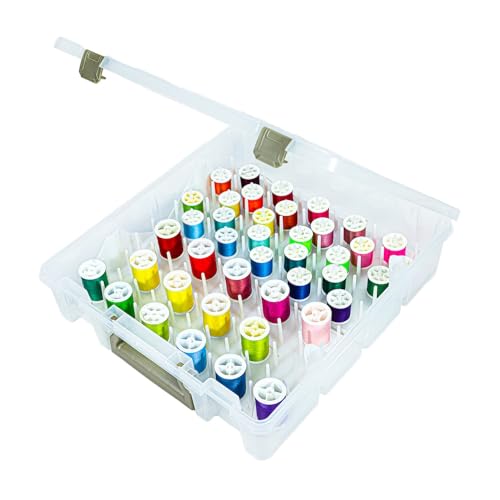

This container excels by protecting delicate threads from the two biggest enemies of fiber: UV light and dust. The interior features removable dividers that allow for custom spacing, making it highly adaptable for various spool sizes.
Think of this like a protective project bag for your most precious hand-dyed yarns. It shields threads from color fading while keeping them organized in a way that prevents snagging or fraying.
The hard-shell plastic construction provides structural integrity, ensuring that heavy spools do not crush the contents beneath them. For long-term preservation of high-quality thread, this is the gold standard.
June Tailor Mega-Rak II: Best Wall-Mounted

Wall-mounted racks provide immediate visual access to your entire color palette, which is invaluable when planning complex embroidery or visible mending projects. This unit maximizes vertical space, keeping your primary work surface clear for stitching or assembly.
Visibility is a massive advantage here, similar to how keeping needles organized by size encourages better gauge management. When you can see your thread options at a glance, you are more likely to select the perfect color match rather than settling for “good enough.”
Keep in mind that exposed racks do not protect against dust or direct sunlight. If your sewing area is near a window, consider a wall-mounted rack only for threads you use frequently.
Singer ProSeries Thread Spool Holder: Best Budget
This simple, straightforward holder is a reliable entry point for crafters who have outgrown a small shoebox but aren’t ready for professional-grade storage systems. It offers a clear, functional way to keep thread upright and tangle-free.
Budget-conscious choices are often the most practical starting point. Just as a knitter starting out doesn’t need a collection of artisanal needles, a hobbyist doesn’t need high-end cabinetry for a modest thread supply.
This holder effectively keeps spools from rolling away across the floor. It is the most efficient choice for keeping a core set of neutral sewing threads organized and ready for quick repairs.
120-Spool Thread Rack Organizer: High Capacity
Large-scale racks are intended for the serious enthusiast who maintains a diverse inventory for frequent machine work or intricate detail projects. Having 120 slots allows for a logical color-gradient arrangement, which simplifies the process of finding the right shade for a specific fabric blend.
This is the storage equivalent of having a full rack of every needle size and material type imaginable. It removes the friction of searching, allowing the mind to stay focused entirely on the construction of the piece.
Be aware that these racks require significant wall real estate and can be difficult to manage if they are not mounted securely. Ensure the wall surface can support the weight of 120 full spools before installation.
Embroidex 60-Spool Thread Case: Best Portable

Portability is vital for those who carry their projects between rooms or to guild meetings and workshops. This case keeps threads secure during transit, ensuring that spools remain in their designated spots rather than becoming a jumbled heap.
Just as a soft-sided project bag keeps your knitting project safe from commuting, this case acts as a protective shell. The clear lid is particularly helpful for performing a quick inventory check before heading out the door.
The compact design also slides neatly onto a bookshelf or into a closet. If your crafting space is mobile or shared, this portable case offers the best balance of protection and convenience.
Wooden Fold-Out Thread Rack: Most Versatile

Wooden racks provide a sturdy, aesthetic solution that stands upright on a desk or folds down for storage. The tactile nature of wood often appeals to traditionalists who appreciate classic tools.
Wood is less likely to slip compared to polished plastic, and it adds a warm, professional feel to any craft room. If you enjoy the rhythmic clicking of wooden knitting needles, the aesthetic of a wooden rack will likely feel more at home in your workspace.
These racks often double as a display piece for a collection of high-quality threads. Choose this option if you want a tool that functions as both an organizer and a design feature in your studio.
Dritz Bobbin Box with Foam: For Small Bobbins
Bobbins require a completely different storage strategy than full spools because of their small size and the tendency for thread tails to unravel. The foam inserts in these boxes grip the bobbins firmly, preventing the “birds-nesting” effect that occurs when they get loose.
Think of bobbin management like storing double-pointed needles; if they aren’t contained properly, they inevitably end up everywhere. This box keeps them uniform, sorted, and easy to grab without having to unravel a knot.
Investing in a dedicated bobbin box is a non-negotiable for anyone doing machine work. It is a small purchase that prevents immense amounts of mid-project frustration.
How To Choose The Right Thread Spool Organizer
- Evaluate your volume: Are you a casual fixer or a dedicated sewist? A larger collection necessitates a rack, while smaller collections thrive in boxes.
- Check your space: If your floor space is limited, look to the walls; if you have deep shelves, look to stackable boxes.
- Consider accessibility: Do you need to grab specific colors constantly? Open racks are faster. Do you only sew occasionally? Enclosed boxes prevent dust buildup.
Wall-Mount Racks vs. Boxes: Which Is Better?
Wall-mount racks are best for frequently used thread, as they eliminate the need to open lids or move containers. They allow for instant color comparison, which is essential for matching threads to varied fabric weights or fiber types.
Boxes offer superior protection, which is critical for threads you use less often. Just as wool should be stored in airtight containers to prevent moths, luxury or specialty threads benefit from the light and dust protection a closed box provides.
A well-balanced collection often uses both. Store your go-to neutrals on a wall rack for efficiency and your specialty or high-volume stash in boxes for preservation.
Tips to Protect Your Thread from Dust and Light
Dust is more than a nuisance; it acts like an abrasive over time, potentially weakening the thread fibers and causing buildup in your machine’s tension discs. Light, particularly UV radiation, will eventually break down the dyes in your thread, leading to uneven colors in a finished garment.
- Keep thread in the dark: If you use open racks, place them away from windows or use blinds to control sun exposure.
- Use covers: If you must keep thread on a rack, drape a light cotton cloth over the top to keep the dust off the spool heads.
- Maintain humidity: Ensure your storage area is cool and dry, as excessive humidity can degrade organic threads like cotton or silk.
Proper thread storage is an investment in the longevity of your craft, ensuring that every project starts with materials in peak condition. Whether you choose the visibility of a wall rack or the security of a hard-shell case, the ultimate goal is to remove friction from your creative process. Take the time to set up an organized system, and you will find yourself reaching for your sewing machine with renewed focus and confidence.